A Healthy Respect for Limits: Recovering the American Founding

By |2023-07-03T16:24:32-05:00July 7th, 2022|Categories: American Founding, American Republic, Declaration of Independence, Independence Day, Mark Malvasi, Timeless Essays|

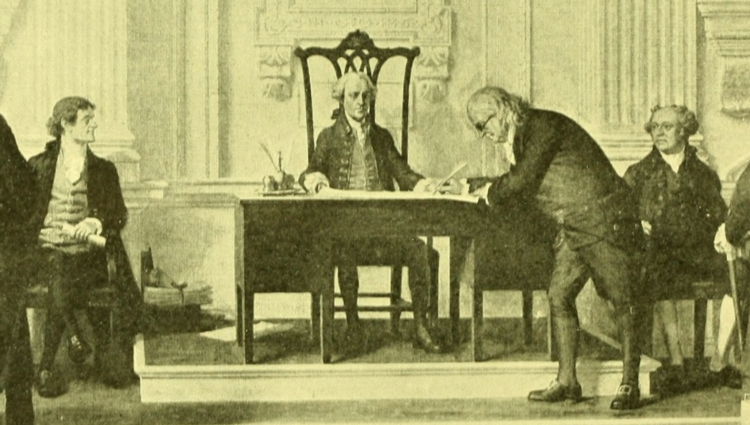
The Founding Fathers and their heirs wanted to establish and maintain a prosperous republic, yet they welcomed limitations on prosperity as much as they had welcomed restraints on power. This healthy respect for limits offers a way to recover the political and moral realism that contemporary Americans have lost. Somewhere I recall reading the poet [...]

The 1619 Project & the Battleground of History

By |2022-06-06T21:05:37-05:00June 6th, 2022|Categories: American Founding, American Republic, Education, History, Jamestown, Mark Malvasi, Senior Contributors, Slavery|

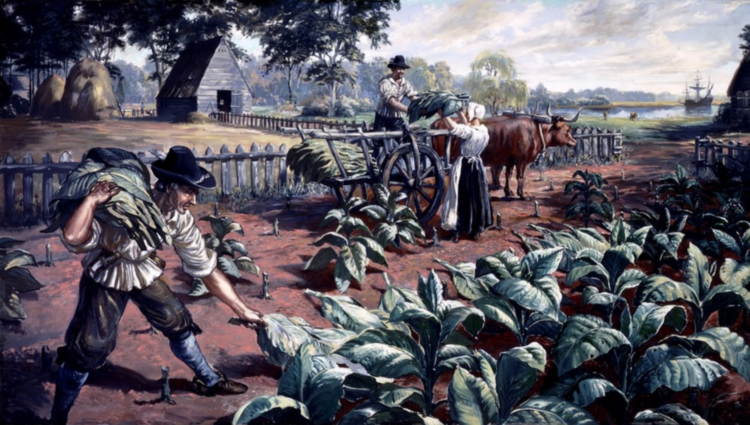
Nikole Hannah-Jones is right and wrong. Although the first slaves arrived in Jamestown in 1619, the year and the event carry less significance than she imagines. Although neither deceptive nor careless, she is uninterested in facts in a conventional sense. Her principal objective is not to understand the past but to rebuke the present and, [...]

“Cancel Culture” and the Great Men of the West

By |2022-05-31T18:11:00-05:00May 31st, 2022|Categories: Mark Malvasi, Senior Contributors, Timeless Essays, Western Civilization, Wokeism|

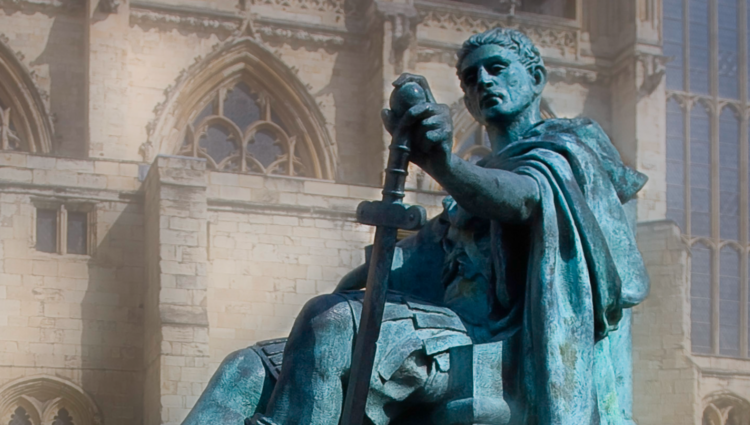
The West above all developed the capacity for self-reflection and self-criticism, acknowledging that what is, if wicked or decrepit, can be changed or replaced, and that what is not, however improbable or preposterous, can be brought into being. This recognition filled the world with a host of new possibilities. To many in the United States [...]

Andrew Lytle & the Politics of Agrarianism

By |2022-02-07T16:01:13-06:00February 7th, 2022|Categories: Agrarianism, Andrew Lytle, History, Literature, Mark Malvasi, Senior Contributors, South, Southern Agrarians|

Automated and impersonal, American society, Andrew Lytle feared, was coming to be peopled by the rootless masses ensnared in dreary, routine, unimaginative, and irrelevant occupations—a society of interchangeable parts and interchangeable men. This condition was the very antithesis of the Christian economy. I. By the 1930s, Andrew Lytle thought the signs of impending disaster everywhere [...]

All’s Well That Ends Well? Reflections on Liberalism and Race

By |2022-01-17T08:36:18-06:00January 16th, 2022|Categories: Classical Liberalism, Mark Malvasi, Martin Luther King Jr., Rights, Senior Contributors, Timeless Essays|

To study the past requires a sense of tragedy and perhaps a belief in original sin, “the imagination of disaster” as Henry James called it. The celebration of Martin Luther King Jr. Day, our annual exercise in national amnesia and self-congratulation, by contrast, promotes the myth that “all’s well that ends well.” Only the most [...]

Andrew Lytle and the Order of the Family

By |2022-02-07T15:58:47-06:00November 14th, 2021|Categories: Agrarianism, Andrew Lytle, Family, History, Literature, Mark Malvasi, Senior Contributors, South, Southern Agrarians|

Andrew Nelson Lytle—novelist, dramatist, essayist, and professor of literature—extolled the order of the family, which by the 1930s he thought all but spent, precisely because it was rooted in the very concept of divine order that the modern world had decried and rejected. As patriarchy deteriorated, as acceptance of divine supremacy vanished, the family languished, [...]

Autumnal Reflections on America

By |2021-10-05T14:38:25-05:00October 5th, 2021|Categories: American Republic, History, Mark Malvasi, Senior Contributors|

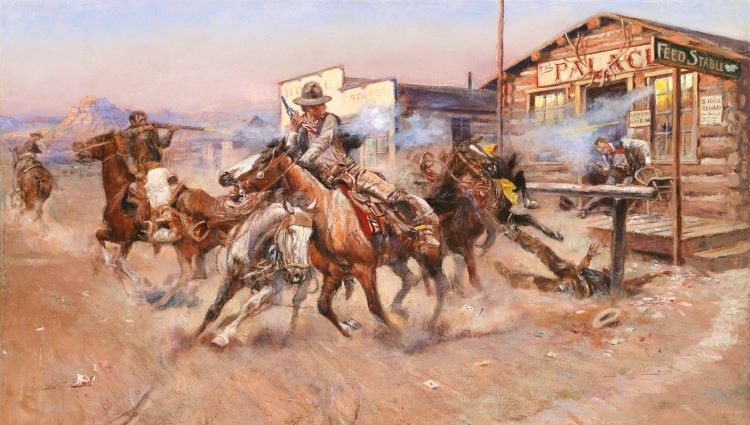
Although Gnosticism has conditioned the American mind and dominated the American character, the United States itself, as we are once again discovering, is a historical, not a providential nation uniquely blessed of God. Nothing makes inevitable continued American prosperity or even American survival. What I write here is not my teaching, but my study; it [...]

The War Against Science

By |2021-09-08T16:01:54-05:00September 8th, 2021|Categories: History, Mark Malvasi, Science, Senior Contributors|

If we do succeed in killing ourselves and destroying the world, then it will not matter who was right and who was wrong about science, the pandemic, climate change, or a host of other problems and afflictions. Our vicious quarrels, which at the moment so distort our perspective and seem so vital to our identity, [...]

“A Polyglot Boardinghouse”: The 1920s Debate Over Immigration

By |2021-07-26T08:43:22-05:00July 25th, 2021|Categories: History, Immigration, Mark Malvasi, Senior Contributors|

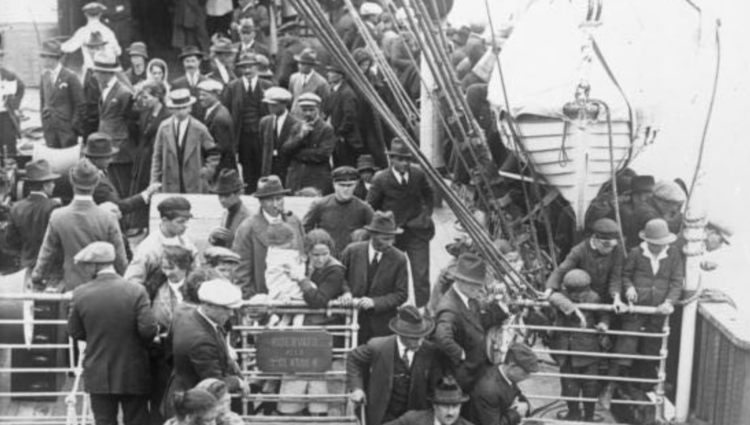
By turns eager and reluctant to embrace newcomers, Americans in the twentieth century followed no uniform course of action. In 1919, when sections of almost every major American city were teeming with men and women who spoke a multiplicity of languages, former president Theodore Roosevelt, wondered whether the United States had not become a “polyglot [...]

Prohibition, Democracy, and the State

By |2021-05-04T16:30:38-05:00May 4th, 2021|Categories: American Republic, History, Mark Malvasi, Politics, Progressivism, Senior Contributors|

Prohibition had cultivated both a growing mistrust and a growing acceptance of state power. It was becoming not only a legal and political mechanism to regulate personal habits and to modify social customs but also a means to impose cultural unity. Whatever dangers it posed to liberty, government regulation was by the 1920s a fact [...]

Violence and Savagery

By |2021-04-08T10:13:28-05:00April 11th, 2021|Categories: 2nd Amendment, American Republic, Mark Malvasi, Senior Contributors|

In the process of taming the wilderness of the New World by violent means, Americans absorbed and bequeathed to future generations some of the savagery that they determined to eliminate. Their purpose was to establish and maintain a civilization, but we have now lost this sense of purpose. Savagery is the product, then, not of [...]

Beethoven: The Price of Genius

By |2021-06-08T22:20:14-05:00December 30th, 2020|Categories: Beethoven 250, Ludwig van Beethoven, Mark Malvasi, Music, Senior Contributors|

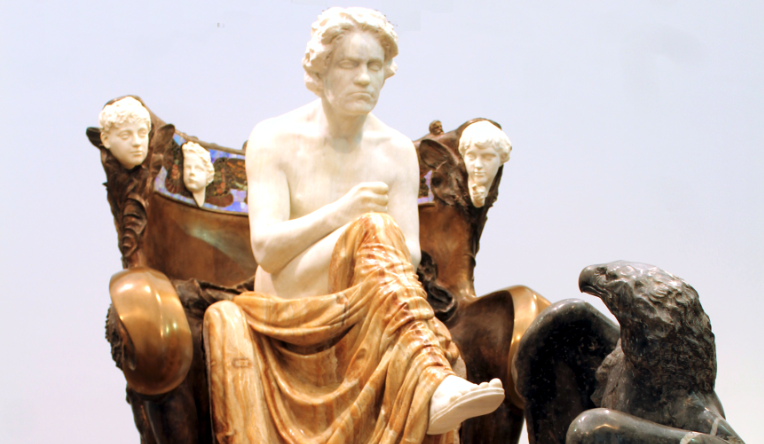
Beethoven’s eccentricities only enhanced his reputation. They confirmed the divine madness that propelled his creative genius. He was a martyr to his art, a new kind of saint whose agonies and ecstasies brought him neither peace of mind nor purity of soul, but an admixture of public renown and disrepute. Sculpture by Max Klinger [...]

Go to Top