Music of the Declaration

By |2026-07-03T10:51:31-05:00July 3rd, 2026|Categories: American Republic, Christianity, Declaration of Independence, John Locke, Liberty, Socrates|

If we reject the Christian account of liberty, the Declaration ceases to cohere. If we accept the Christian account of liberty, we can recover a Declaration that is both philosophic and poetic. The most famous sentence of the Declaration of Independence attempts to be a work of poetry and philosophy: “We hold these truths to [...]
Celebrating the Fourth

By |2026-07-03T10:51:07-05:00July 3rd, 2026|Categories: American Founding, American Republic, Community, Declaration of Independence, Nature of Man|

Our continued success as a country is dependent upon a recovery of our appreciation of liberty, the original division of power, and the renewal of personal responsibility for perpetuating the regime. As we celebrate American Independence, it is appropriate to reflect upon the foundations of our liberty that the American Founding—especially the Founders' Declaration of [...]

The Declaration of Independence: Translucent Poetry

By |2026-07-03T07:52:15-05:00July 3rd, 2026|Categories: American Founding, Constitution, Declaration of Independence, E.B., Essential, Eva Brann, In Honor of Eva Brann at 90 Series, James Madison, Samuel Adams, Senior Contributors, St. John's College, Thomas Jefferson, Timeless Essays|

The Declaration of Independence, intended as an expression of the common opinion, is truly a text of "right opinion," a benign practical text which also has a peculiarly sound relation to the realm of thought. Section I:  The Legacy of the Declaration When American schoolchildren first discover that they have a place in the world they [...]

A Toast: To the Pursuit of Happiness

By |2026-07-02T13:50:00-05:00July 2nd, 2026|Categories: American Republic, Aristotle, Cicero, Declaration of Independence, Happiness, Thomas Jefferson|

“The city comes into being for the sake of life, and the city exists for the sake of the good life,” (Aristotle, Politics I.2, 1252b27–30). In this quotation from Aristotle’s Politics, he sets out the two reasons any city or nation is founded. The first is a practical reason: “for the sake of life”—i.e., so [...]

Coolidge and the Declaration

By |2026-07-02T18:38:17-05:00July 2nd, 2026|Categories: American Founding, American Republic, Declaration of Independence, History, Presidency|

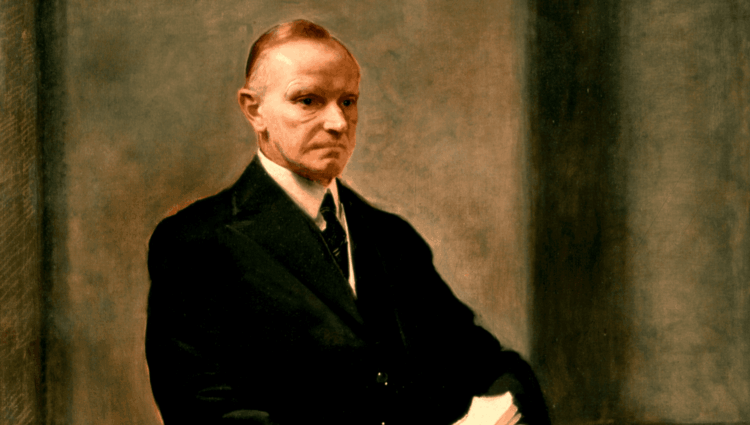
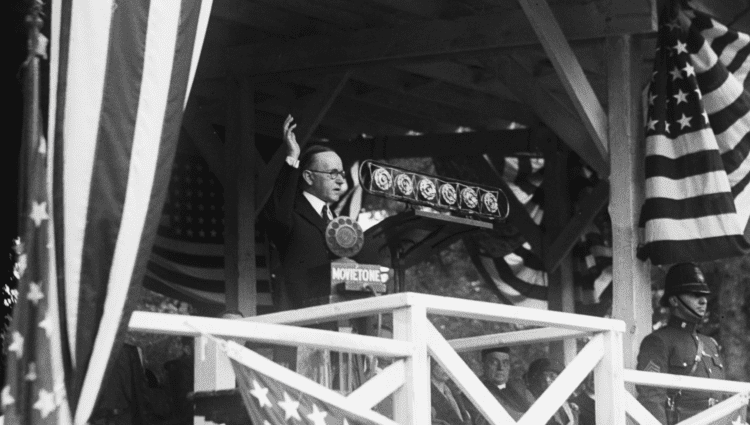
For Calvin Coolidge, the Declaration of Independence is “a great spiritual document," which possesses a “finality” that “is exceedingly restful": “If all men are created equal, that is final. If they are endowed with inalienable rights, that is final. If governments derive their powers from the consent of the governed, that is final.” This week, [...]

The Radical, Conservative Experiment That Is America

By |2026-07-01T09:02:18-05:00June 30th, 2026|Categories: American Republic, American Revolution, Books, Bradley J. Birzer, David Deavel, Declaration of Independence, Senior Contributors|

Historians past and present have offered many guides to the Founding era, but what make Bradley Birzer's account so delightful are his wholehearted patriotism and the fairness with which he tells the story. In this telling, we hear the dramatic, symphonic nature of one of the most exciting political times ever recorded in the course [...]

Calvin Coolidge, Christianity, & the American Founding

By |2026-05-22T12:47:04-05:00May 22nd, 2026|Categories: American Founding, American Republic, Christianity, Declaration of Independence|

This year, may we replenish the cistern that nurtures the principles of the Declaration: the vessel that is our recommitment to the Christian faith, the sharing of the Gospel, and the denunciation of the enemies of Truth... the vessel, that makes the United States the last, best hope for mankind. On July 5, 1926, Calvin [...]

Signing The Declaration

By |2026-06-30T22:18:03-05:00May 13th, 2026|Categories: American Republic, American Revolution, Books, Bradley J. Birzer, Declaration of Independence, Senior Contributors|

While we should rightly praise Thomas Jefferson for his authorship of the Declaration of Independence, we should never ignore the role of John Adams. If Jefferson was the pen, Adams was the voice. The Declaration of Independence: A Radical Experiment in Liberty (278 pages, Stone House Press, 2026) “Who shall write the history of the [...]

The Limits of a Propositional Nation

By |2026-05-10T21:37:10-05:00May 10th, 2026|Categories: American Founding, American Republic, American Revolution, Constitution, Culture, Declaration of Independence, Russell Kirk|

In the end, America’s greatness does not lie in its ability to exist as an ideal in the minds of men, but in its success as a lived experience and its character as a nation forged in a history steeped in order, justice, and freedom, for which it is rightfully esteemed. The “miracle at Philadelphia,” [...]

How Successful Were the Articles of Confederation?

By |2025-11-14T16:47:29-06:00November 14th, 2025|Categories: American Founding, American Republic, Declaration of Independence, Freedom, History, Timeless Essays|

The Articles of Confederation were doomed by their perceived structural weakness. Yet defenders of the Articles at the time correctly pointed out that this early constitution, drafted under intense pressure at a critical time in the country’s history and intended to deal foremost with the exigencies of war, had been remarkably successful. The Declaration of [...]

Did Edmund Burke Support the American Revolution?

By |2025-07-18T14:51:44-05:00July 18th, 2025|Categories: American Founding, American Republic, Bradley J. Birzer, Conservatism, Declaration of Independence, Edmund Burke, History, Independence Day, Robert Nisbet, Russell Kirk, Senior Contributors, Timeless Essays|

Many conservatives have assumed that Edmund Burke was opposed to the American Revolution. It is, to my mind, an erroneous assumption. “Burke broke his agentship and went publicly silent on the American cause once war broke out,” Robert Nisbet claimed in his most definitive analysis of Edmund Burke, written and published in 1985. His fellow [...]

July 4, 1776: Congress Adopts the Declaration of Independence

By |2025-07-03T23:18:58-05:00July 3rd, 2025|Categories: American Founding, American Republic, American Revolution, Declaration of Independence, History, Independence Day, Thomas Jefferson, Timeless Essays|

The adoption of the Declaration of Independence of “the thirteen united States of America” on July 4, 1776 formally ended a process that had been set in motion almost as soon as colonies were established in what became British North America. The early settlers, once separated physically from the British Isles by an immense ocean, [...]

Thoughts on the Declaration of Independence

By |2024-12-01T18:38:21-06:00December 1st, 2024|Categories: American Revolution, Bradley J. Birzer, Declaration of Independence, Senior Contributors|

The two principal writers (Jefferson the author and Adams the orator) of the Declaration died on its fiftieth anniversary. This has become a sort of cute, trivial point to us two hundred years later. But to the Americans of the day, it was astounding, surely confirmation that God smiled upon the Declaration and upon America. [...]

A Reading of the Gettysburg Address

By |2024-11-18T18:08:52-06:00November 18th, 2024|Categories: Abraham Lincoln, Alexis de Tocqueville, American Republic, Civil War, Declaration of Independence, E.B., Essential, Eva Brann, In Honor of Eva Brann at 90 Series, Senior Contributors, St. John's College, Timeless Essays|

Liberal education ought to be less a matter of becoming well-read than a matter of learning to read well, of acquiring arts of awareness, the interpretative or “trivial” arts. Some works, written by men who are productive masters of these arts, are exemplary for their interpretative application. Lincoln’s Gettysburg Address is such a text. Liberal [...]

Go to Top