Beware of Sophistical Education “Reformers”

By |2014-01-09T14:52:23-06:00September 20th, 2013|Categories: Education, Steven Jonathan Rummelsburg|Tags: |

The philosopher Josef Pieper wrote a short book called Abuse of Language, Abuse of Power and in it he examines the misuse of language and the corruption of the word for the purpose of manipulation and personal gain. He focuses on “Plato’s lifelong battle with the sophists, those highly paid and popularly applauded experts in [...]

The Politics of Fear and Hatred

By |2019-10-01T15:47:36-05:00September 19th, 2013|Categories: Books, Democracy, John Lukacs, Populism|Tags: , |

Democracy and Populism: Fear and Hatred, by John Lukacs. New Haven: Yale University Press, 2005. 248 pp. There are few scholars whose intellectual achievements are so respected that their intuitions are as highly regarded as their more formal scholarship. John Lukacs is one of these rare individuals. He brings to his work a lifetime of devotion [...]

“The Last Man”: Mary Shelley’s Despair

By |2021-08-29T22:22:36-05:00September 18th, 2013|Categories: Books, Bruce Frohnen|

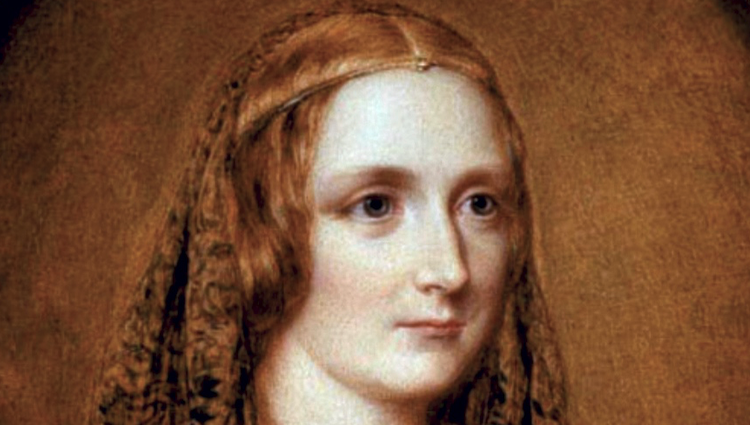
In “The Last Man,” Mary Shelley writes with a tone of sheer hopelessness, bordering on nihilism. Must romanticism despair when facing our limited existence? Mary Shelley, author of Frankenstein and paramour/wife to the poet Percy Shelley, wrote half a dozen novels during her lifetime, in addition to numerous essays and travelogues. The Last Man, the story [...]

Thinking Christianly About the Liberal Arts

By |2019-06-13T12:38:59-05:00September 18th, 2013|Categories: Christianity, Humanities, Liberal Arts, Liberal Learning, Robert M. Woods|

The incarnation calls us to the things of this world. So when we consider the following quotes about the liberal arts we must begin and end there: What has Athens to do with Jerusalem?– Tertullian “What has Ingeld to do with Christ”?– Alcuin (when catching some monks reading Beowulf) What has Horace to do with the Psalter? [...]

Natural Law at the Dinner Table

By |2019-06-06T12:17:24-05:00September 17th, 2013|Categories: Daniel McInerny, Natural Law|

Would that I had received the education of my children! Last night at dinner our family enjoyed an unusually rich conversation prompted by a question that had arisen during my wife’s homeschooling history lesson with our seventh-grade son. In recent days these two have been working through the major thinkers of the Enlightenment using an [...]

King for a Day

By |2015-01-07T14:21:57-06:00September 16th, 2013|Categories: Bradley J. Birzer, Fiction|Tags: |

At the beginning of this calendar year, I was near campus on my usual daily 4-mile constitutional, earbuds in ears, my mind a million miles away. “Hi Brad, what are you listening to?” a rather famous visiting scholar asked me, seemingly from out of nowhere. Hoping to move to another topic very quickly, I responded dismissively, “Just [...]

Research Papers and Gourmet Cooking

By |2015-01-07T14:09:07-06:00September 15th, 2013|Categories: Bradley J. Birzer, Liberal Learning|

Dear researchers and writers, As you embark on your research paper for me, I’d like to offer a few thoughts and suggestions. Research can be incredibly fascinating, and it’s something I’ve much enjoyed since beginning high school debate, way back in the fall of 1982. Yes, the glory days—the days of Reagan, Rush, and Blade Runner. [...]

Time and Timelessness: A Novel About John the Apostle

By |2016-04-30T12:56:20-05:00September 15th, 2013|Categories: Christianity, Fiction, Robert Cheeks, Time|

John: A Novel, by Niall Williams Irish writer Niall Williams has written a novel that bridges the literary gap between time and the timeless. His latest work, John: A Novel, is a stunning revelation that “God is both ‘enclosed’ within the mystical soul, and he is the ‘enclosure’ that the mystic enters spiritually.” “The question came [...]

Thinking in Slogans Means Thinking in Bullets

By |2019-03-20T16:43:12-05:00September 14th, 2013|Categories: American Republic, Culture, Russell Kirk|Tags: |

While some books deserve their obscurity, others are unjustly forgotten; Russell Kirk’s early text, The American Cause, should be remembered. Not as developed and mature as his later work, still this little book reminds us of human nature and its limitations, thereby warning us against ideology and its violent tendencies. For Kirk, prudent acceptance of limitation—what he [...]

An Imperfect Genius: Footnotes to George Orwell

By |2014-01-21T10:38:08-06:00September 13th, 2013|Categories: George Orwell, Socialism|Tags: |

George Orwell It is ironic that more than a half century after George Orwell’s death, the famous socialist pundit is perhaps most appreciated by political conservatives. This fact highlights his ambivalent intellectual legacy. But something should also be said about Orwell’s literary legacy, lest we overlook the shortcomings of an otherwise brilliant author. Liam Julian in [...]

Richard Strauss for Everyman

By |2018-10-15T17:38:49-05:00September 13th, 2013|Categories: Literature, Music, Wolfgang Amadeus Mozart|Tags: , |

Richard Strauss Richard Strauss: A Musical Life, by Raymond Holden. Yale University Press. The Cambridge Companion to Richard Strauss, by Charles Youmans, Cambridge University Press. I am not a first-rate composer, I am a first-rate second-rate composer. —Richard Strauss I was never a revolutionary. The real revolutionary was Richard Strauss. —Schoenberg Richard Strauss [...]

Russell Kirk & the Riddle of the Pharaohs

By |2018-12-18T15:10:29-06:00September 12th, 2013|Categories: Conservatism, Russell Kirk, Stephen Masty, Western Civilization|

“Different times,” he intoned, “demand different actions,” and Dr. Kirk lit another cigar from his seat on the passenger’s side of the college Buick. “Had I been born in Ancient Egypt,” he ruminated, “I may well have agitated for change, even radical change. But modern times require shoring up the Old Moral Order. They compel [...]

Good Fences: Paul Lake’s “Cry Wolf”

By |2022-08-16T16:31:54-05:00September 12th, 2013|Categories: Books, Literature, Mark Malvasi|Tags: , |

Paul Lake’s vision of the American future is conceivable, and may yet prove accurate, but it is also unlikely. Two more realistic possibilities, short of an American Götter-dämmerung, are the resurgence of a truculent bigotry or the decline of national cohesion. Neither prospect bodes well for the fate of the United States. Few books invite [...]

Go to Top