
 Our world is rife with idealism—and that’s a bad thing.
Consider our social policy where we dream of a world of perfect equality, rejecting obvious differences of sex, talent, and culture. The result is suppression of free speech (no room for a loyal opposition), mutilated children (a small price to pay for egalitarian paradise), and institutions increasingly under the grip of an idyllic ideology (wokeness is a common contemporary form).
Consider our foreign policy where we dream of liberative action predicated not on sinister conniving to dominate, but on an idyllic dream of a world without evil. When that world proves impossible to bring about, the dream collapses into pessimism, only to be renewed again in a different theater with a different evil—but the same disastrous result.
What does it mean to Return to the Real? This is not a call for pessimism, but a call for a return to a moral imagination, one not given to idyllic dreaming, but vibrant engagement with real places, real people, and ideas of the real.
We will address this and the questions below at the Academy of Philosophy and Letters’ Annual Conference, June 6-8, 2024, at the College Park Marriott, University of Maryland, College Park, Maryland:
- Philosophically, how do we distinguish between idyllic and moral visions of order and freedom?
- How does an idyllic vision of the world order warp our foreign policy?
- How has the idyllic imagination encouraged the astronomic growth of the administrative state? What role might the moral imagination play in taming it?
- How might an effective family and education policy protect our most vulnerable from the idealists who want to cleanse our institutions of hetero-normativity, patriarchy, and toxic masculinity?
- How might our religious institutions and religious leaders engage the moral imagination in the pastoring of their respective flocks?
- How would our architecture and art be different if based not upon the idyllic or its rejection, but upon real beauty contextualized to place and time? How does a moral vision shape the expression of beauty?
- What are the qualities of good literature and poetry imbued with the moral imagination, rather than idyllic?
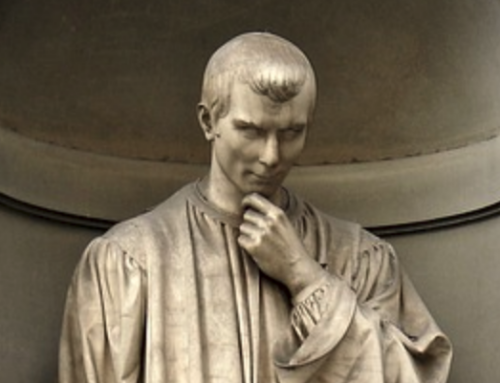
- How may a moral vision guide our politics while falling into neither cynical Machiavellianism nor idyllic dreaming?
Hope, not idyllic dreaming, is the virtue that should animate our participants’ papers. Please consider joining us by registering here. Scholarships are available for undergraduate/graduate students. Our speakers will be:
Col. Douglas Macgregor
Patrick J. Deneen
C. J. Howard
View their bios here.
View the official conference schedule here.
The Imaginative Conservative applies the principle of appreciation to the discussion of culture and politics—we approach dialogue with magnanimity rather than with mere civility. Will you help us remain a refreshing oasis in the increasingly contentious arena of modern discourse? Please consider donating now.
The featured image is “A Philosopher Giving that Lecture on the Orrery, in which a Lamp is put in place of the Sun or The Orrery,” (c. 1766) by Joseph Wright of Derby, and is in the public domain, courtesy of Wikimedia Commons.


Thanks to you for being an island of sanity in a sea of nonsense!!!!!