
Our American forefathers and mothers arrived in a land with nothing and made it into the wealthiest, most powerful nation on the planet. I know how they did it because I’ve been to Kennett, Missouri. My grandparents were two of those who put their hands to the plow, broke up the fallow ground, suffered, and laid the foundations for the nation we enjoy today.
 The United States celebrates its quarter-millennium this year. America is even older, with some of us, like Alva and Bertie Lee Berry, having ancestors here before the nation. There’ll be lots of meditations on who built America. But I know because I’ve been to the Berrys’ hometown in the flat farmland of southeast Missouri, the “Bootheel”: Kennett. And there Bertie Lee died, eight years after her husband, on April 21, 1995, largely unrecognized, thirty-one years ago.
I’ve been to Kennett. I’ve walked in its oven-hot summer and felt the crunch of its winter snow. Regardless of what Boston and Philadelphia may say, I can tell you that Kennett is the cradle of America because it is in Kennett where Alva and Bertie Lee Berry, my grandparents, lived out their lives. Lives that were, in one sense, almost boring but, in another, deeper, altogether more important sense, were heroic.
It was in Kennett, and hundreds of towns like it across a continent, that America’s foundations were laid because it was in Kennett where Alva and Bertie Lee Berry worked in fields, on roads, in shops, not asking for favors, not demanding an easier way. If you want to see America, go to Kennett and look at the house they bought with money they saved after years of sacrifice. They bought it in cash, no mortgage, no government subsidy, no hefty corporate bonus, no lottery windfall, no goose laying golden eggs. They built America.
I lived in Singapore for more than five years. In Singapore, I heard a lot about “Asian values” and “the East Asian work ethic.” Yes, it is impressive. Asians deserve American respect and the wealth that is pouring their way. But I’m not awestruck by it because I’ve been to Kennett. I know that no matter what statistics say about America’s low savings rate and high divorce rate, the same values that are prospering in East Asia were being lived out by Alva and Bertie Lee Berry in Kennett, Missouri. Do you want to see family values? Let me take you to the First Baptist Church of Kennett, where Alva and Bertie Lee Berry celebrated their 50th wedding anniversary. A Brit once told me that we Western softies couldn’t work as hard or sacrifice as much as the East Asians. I know better. I’ve been to Kennett.
Our American forefathers and mothers arrived in a land with nothing and made it into the wealthiest, most powerful nation on the planet. I know how they did it because I’ve been to Kennett. My grandparents were two of those who put their hands to the plow, broke up the fallow ground, suffered, and laid the foundations for the nation we enjoy today. I’m the result of their investment.
Alva and Bertie Lee Berry chose to send their three daughters to college, where my mother, the second girl, met my father. How many restaurant dinners did they forego to make that possible? Going to visit Kennett hardly ever meant eating out because my grandparents never developed the habit. I saw Bertie Lee Berry’s values in action when her husband suffered a stroke and spent the last seven years of his life as a mute paralytic. Taking care of him was not always fun, but I don’t remember her once complaining about it. Alva and Bertie Lee Berry were never victims. Their values are virtues, and that changed the trajectory of their nation.
It would be easy, and fundamentally stupid, for me to scorn my grandparents. Alva Berry never finished high school. I have a doctorate. My grandparents spent 99% of their lives in the flatlands of the Mississippi Valley. I’m cosmopolitan by any standard. I must admit that I did disagree with their isolationist view of America in the world. But I know where that view comes from. I know how far away the rest of the world seems when you stand on the outskirts of Kennett and look out into the ocean of agriculture that engulfs it. But I know how much the world needs the steadying hand of America. And I know where that steadying hand comes from. It was trained in the living rooms and churches of Kennett. When a Singaporean leader told me during the middle of the tensions between Taiwan and China, “Thank God for the Nimitz” (the US aircraft carrier then being sailed between China and Taiwan), I thought of my grandfather, the common-sensical man who once gave me a well-deserved spanking. And I know that if my grandparents had only seen what America looks like from the world’s precarious small countries, they would, with a determined bob of the head and a pursing of the lips, step forward and shoulder the burden that only America can lift. When Saddam invades Kuwait, or Osama destroys skyscrapers, or Iran seeks nukes, the whole world looks to Kennett. And despite wanting to live quiet lives, the Pax Americana is the result of Alva and Bertie Lee Berry’s steadying (and sometimes spanking) hand.
I don’t remember my grandparents saying a nice word to me. They didn’t have to. On one winter’s night in Kennett, I was half-asleep on the sofa bed in their living room, having slipped away from my blanket during the night. Through the fog of semi-consciousness, I could see my grandmother coming to me and recover the blanket and with a flick of the wrist unfurl it and allow it to gently land across my now grateful body. She never said a word about that; she never knew that I saw her kindness. Alva and Bertie Lee Berry did not work and save and give to make impressions; they never thought they had to prove a point. They simply met needs. Instead of complaining that they didn’t properly massage our self-esteem, we should thank them for the prosperity that gives us time to reflect on “self-esteem.”
It is one of the great tragedies of America today that the fashion is to consider Alva and Bertie Lee Berry passé. After all, they’re not as sexy as Taylor Swift. This is why some call us “a cut flower culture”: like a newly cut flower we retain our bloom for a while but eventually our severance from our roots will catch up with us. I hope that at the semi-quincentennial of the USA, we will understand that if we are to be nourished by our roots again, we must go back to Kennett.
_________
The Imaginative Conservative applies the principle of appreciation to the discussion of culture and politics—we approach dialogue with magnanimity rather than with mere civility. Will you help us remain a refreshing oasis in the increasingly contentious arena of modern discourse? Please consider donating now.
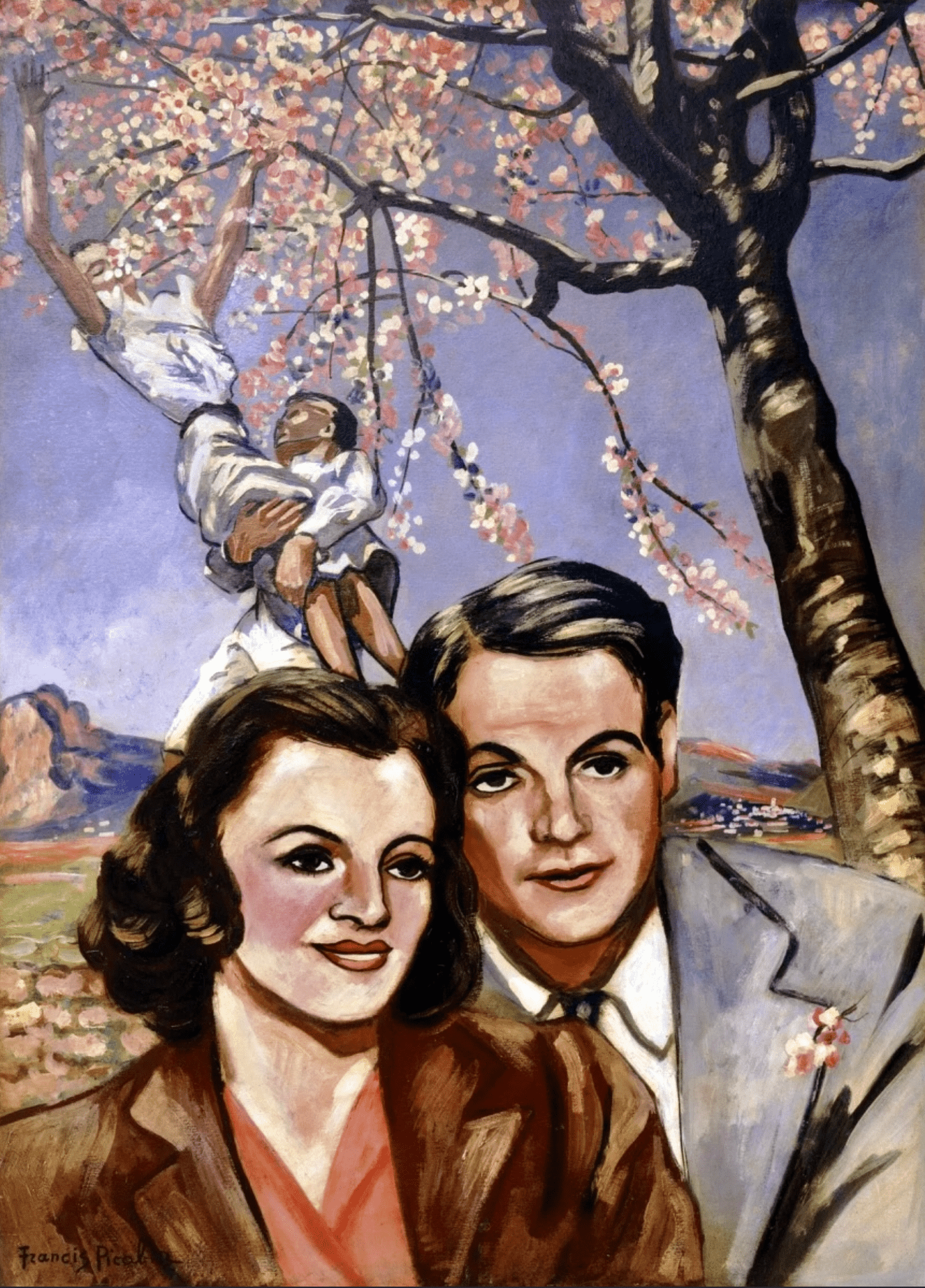
The featured image is “Portrait d’un couple” (1943), by Francis Picabia, and is in the public domain, courtesy of Wikimedia Commons.




Brilliant analysis and commentary by Rev. John Carpenter. Kenneth Missouri in beautiful Dunklin County is a testament to the best of America’s Anglo-Saxon-Celtic heritage and was the hometown of Representative Paul C. Jones, a conservative Democrat who opposed the unconstitutional Civil Rights amendments of 1957 and 1964.