About Stephen M. Klugewicz

Stephen Klugewicz is Editor of The Imaginative Conservative. He holds a Ph.D. in American History, with expertise in the eras of the Founding and Early Republic. A student of Forrest McDonald, Dr. Klugewicz is the co-editor of History, on Proper Principles: Essays in Honor of Forrest McDonald and Founders and the Constitution: In Their Own Words. He is the former executive director of the Collegiate Network at the Intercollegiate Studies Institute and has long experience in education and development, having served as Director of Education at the National Constitution Center, as Headmaster of Regina Luminis Academy, as executive director of the Robert and Marie Hansen Foundation, and and as Director of Development at Aristoi Classical Academy.

A Requiem for Manners

By |2023-08-20T14:08:28-05:00October 15th, 2013|Categories: Culture, Stephen M. Klugewicz|Tags: , |

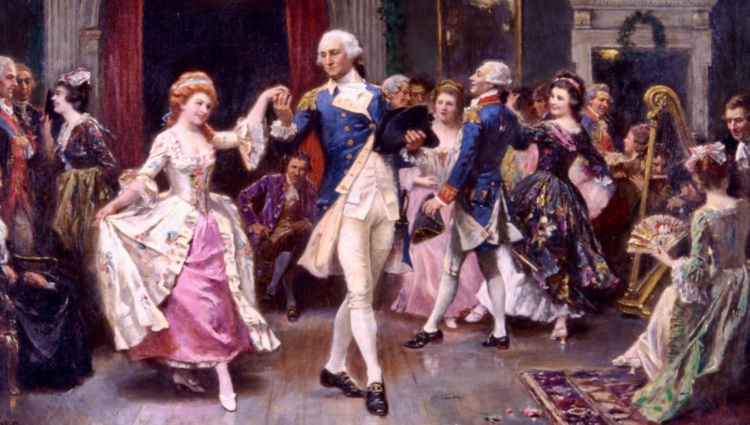
Today the idea that the cultivation of manners should be an essential part of one’s education has been nearly lost. Indeed, evidence of the demise of manners is all around us, and thus we should be well aware that one of the main pillars of civilization is crumbling. On April 9, 1865, General Robert E. [...]

Listening Alone to Classical Music

By |2023-01-10T12:36:55-06:00August 11th, 2013|Categories: Music, Stephen M. Klugewicz|

Since the 1960s, the lover of classical music has increasingly found himself a loner in most social circles, appreciated by an ever-shrinking number of people. “I am never merry when I hear sweet music.” —Jessica in The Merchant of Venice, Act V, Scene I Since the triumph of rock n’ roll in the 1960s, the [...]

The Top Ten Greatest Operas

By |2025-12-27T20:03:26-06:00June 23rd, 2013|Categories: Antonio Vivaldi, Audio/Video, Culture, Hector Berlioz, Music, Pyotr Ilyich Tchaikovsky, Stephen M. Klugewicz, Wolfgang Amadeus Mozart|

The human voice is God’s most beautiful instrument, and the blending of voices and musical instruments within the context of a dramatic visual presentation is the zenith of human artistic achievement. This is the glory of opera. Below is a list of the ten greatest operas ever composed, in order of greatness, from ten down [...]

Forgotten Conservatives in American History

By |2025-03-06T18:44:20-06:00June 13th, 2013|Categories: Books, Conservatism, History, Stephen M. Klugewicz, Thomas Jefferson|Tags: |

Historians tend to dismiss conservatism as irrelevant to the American experience. Conservatism—dispositional as opposed to programmatic in nature—is often hard to see, especially for historians who tend to use the lens of “progress” in looking at history. Forgotten Conservatives in American History, by Brion McClanahan and Clyde Wilson (200 pages, Pelican, 2012) Is there a [...]

William Gaston, Race, and Religion in North Carolina

By |2020-05-20T11:51:50-05:00May 25th, 2013|Categories: Religion, Social Order, South, Stephen M. Klugewicz|Tags: |

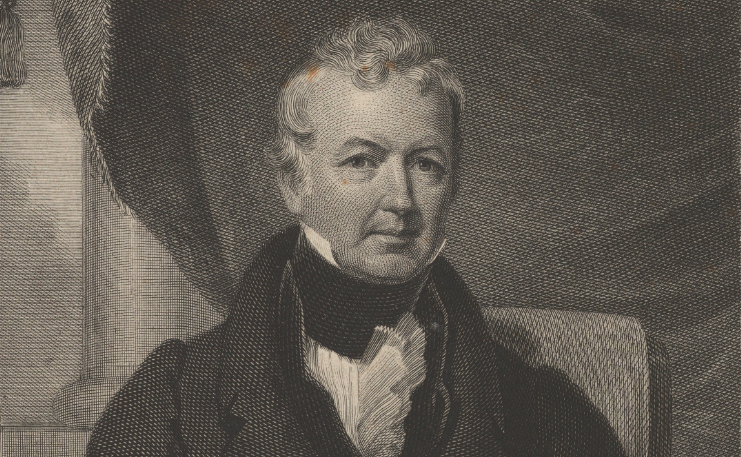
Gaston County and the county seat of Gastonia, located in the southwestern part of North Carolina, bear his name, a fitting tribute to the easterner who came to support the rights of his western brethren. In his day, his legal acumen was hailed by none other than the great Luther Martin of Maryland, perhaps the [...]

Hungry Souls & Brave Hearts: Heroism, History, & Myth

By |2022-08-22T19:16:38-05:00April 19th, 2013|Categories: Heroism, Myth, Stephen M. Klugewicz|

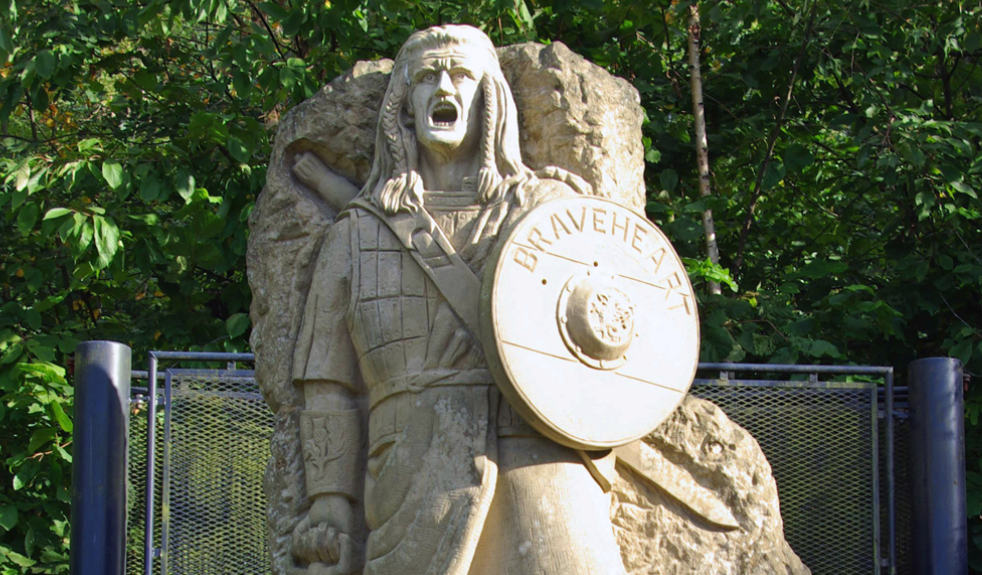
The cynicism of modern-day youth presents us with a great teachable moment. We must tell history as a great myth, for myths are often the best way of expressing truths. They are also the lifeblood of civilizations. “History is marble, and remains forever cold, even under the most artistic hand, unless life is breathed into [...]

The Glory of Mankind: Alcohol and the Early Republic

By |2020-05-31T15:42:10-05:00March 23rd, 2013|Categories: American Republic, Constitutional Convention, Stephen M. Klugewicz|

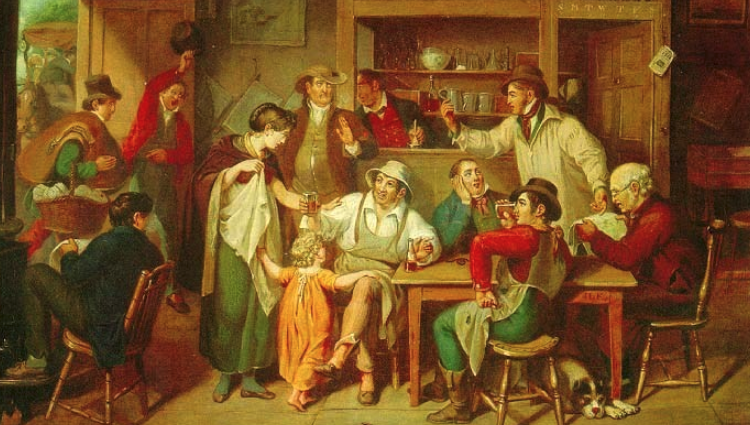
We like to think of the leaders of the American Revolution and the Framers of the Constitution as a sober lot. But 18th-century Americans liked to drink, and alcohol played an important role in the momentous political events of the age. What care I how time advances? I am drinking ale today. ― Edgar Allan [...]

“Unfit for the Age”: Charles Gayarré, the Conservative as Satirist

By |2022-07-29T09:35:29-05:00March 12th, 2013|Categories: Conservatism, History, Literature, Stephen M. Klugewicz|Tags: |

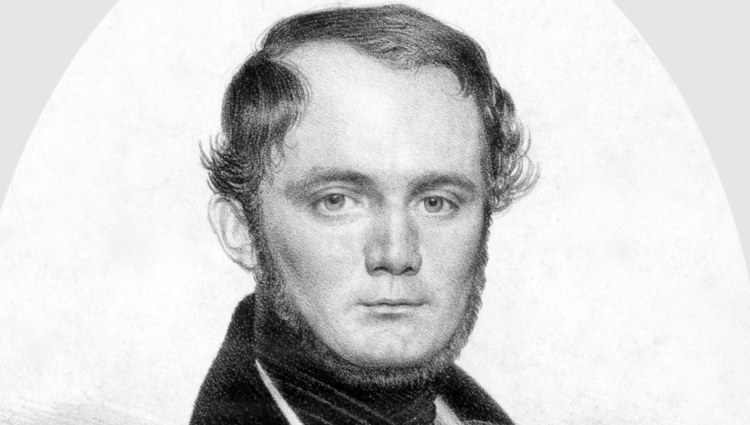
A conservative in every sense of the term, Charles Gayarré mourned the passing of the aristocratic society of the Old South and was never able to reconcile himself to the egalitarian mores of post-war America. The roles of romantic historian and biting satirist perfectly suited him, for he looked back nostalgically to the past and [...]

America Aflame

By |2015-11-13T21:52:32-06:00February 5th, 2013|Categories: Abraham Lincoln, Books, Civil War, Politics, Religion, Stephen M. Klugewicz|

America Aflame: How the Civil War Created a Nation, by David Goldfield (Bloomsbury Press) Whether or not the American Civil War might have been avoided has long been a subject of debate among historians. Some, like Allan Nevins and Charles and Mary Beard, saw the war as “an irrepressible conflict,” in the words of Abraham [...]

“Planes, Trains and Automobiles”… and Redemption

By |2025-11-26T20:15:14-06:00November 23rd, 2012|Categories: Audio/Video, Culture, Film, Stephen M. Klugewicz, Thanksgiving|

A lighthearted romp at first blush, “Planes, Trains and Automobiles” tells the story of how the example of simple goodness can be transformational… The category of “Thanksgiving movies” is a select one indeed, but it is not meant as faint praise to crown John Hughes’ 1987 film, Planes, Trains and Automobiles, the greatest Thanksgiving film [...]

A Church of Their Own: Early American Catholics and Rome

By |2021-04-07T12:10:17-05:00July 5th, 2011|Categories: American Founding, American Republic, Catholics in Early America Series, Charles Carroll, Religion, Stephen M. Klugewicz|

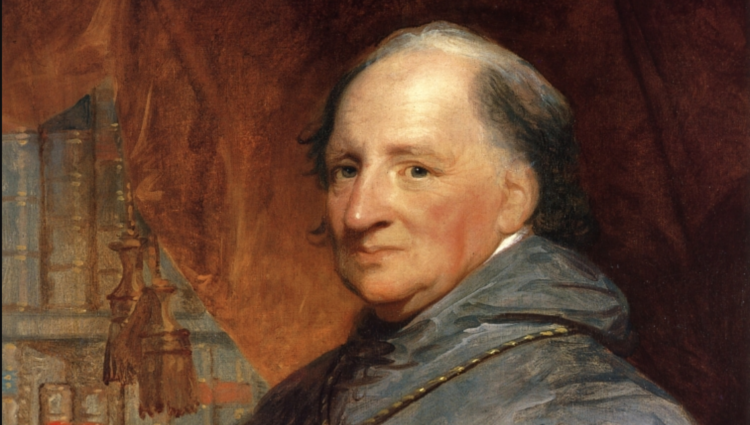
Bishop John Carroll’s life did much to show his Protestant neighbors that one could be a faithful Catholic as well as a patriotic republican, and by the dawn of the nineteenth century he had achieved the status of a leading citizen of the new republic. But Carroll’s optimism about America’s “extraordinary revolution” in religious toleration [...]

“There Be Dragons”

By |2023-07-16T22:50:33-05:00May 5th, 2011|Categories: Catholicism, Christianity, Culture, Film, St. Josemaria Escriva, Stephen M. Klugewicz|

“There Be Dragons” will delight the faithful and even those of no faith, in its exploration of the human themes of love, regret, forgiveness, and redemption, and in its shattering conclusion. Highly recommended to all. First, let me say what There Be Dragons is not. It is not a biopic of Saint Josemaria Escriva. It is not [...]

The American Revolution & the Quandary of Colonial Catholics

By |2020-04-19T08:45:55-05:00February 8th, 2011|Categories: American Founding, American Republic, American Revolution, Catholicism, Catholics in Early America Series, Stephen M. Klugewicz|

As the crisis between the mother country and colonies worsened, the colonists began to see a conspiracy against liberty being carried out by a secret cabal of evil ministers in the British government. In the perceived encroachments of the English government, the American revolutionaries again detected the awful twin specters of “popery” and arbitrary government. [...]

Uneasy Americans: English Catholics in the Colonies

By |2022-11-05T08:31:29-05:00February 4th, 2011|Categories: American Founding, American Republic, Catholicism, Freedom of Religion, Republicanism, Stephen M. Klugewicz|

Roman Catholics have always been uneasy Americans, a religious minority in a country dominated by Protestants often hostile to their beliefs. Much more is to be dreaded from the growth of POPERY in America than from Stamp-Acts or any other Acts destructive of men civil rights. —Samuel Adams, 1768[1] Roman Catholics have always been uneasy [...]

Go to Top