Willmoore Kendall: Public Truth & the Problem of Free Speech

By |2025-10-14T15:45:04-05:00October 14th, 2025|Categories: American Republic, Community, Constitution, Free Speech, Freedom, John Stuart Mill, Libertarianism, Truth, Wilhelm Roepke, Willmoore Kendall|

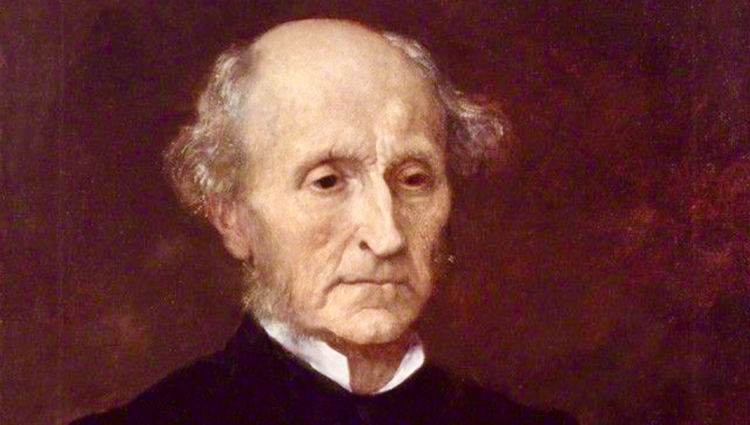
Willmoore Kendall’s support of (relative) free speech is an integral part of his view of the “deliberate sense of the community,” which in turn is informed by the “public truth,” which itself is the political expression of the particular American historical experience of transcendent revelation. “[B]ut a completely open society in which everyone does his [...]

John Stuart Mill Reconsidered

By |2025-05-19T14:20:24-05:00May 19th, 2025|Categories: Books, Conservatism, John Stuart Mill, Liberalism, Timeless Essays|Tags: |

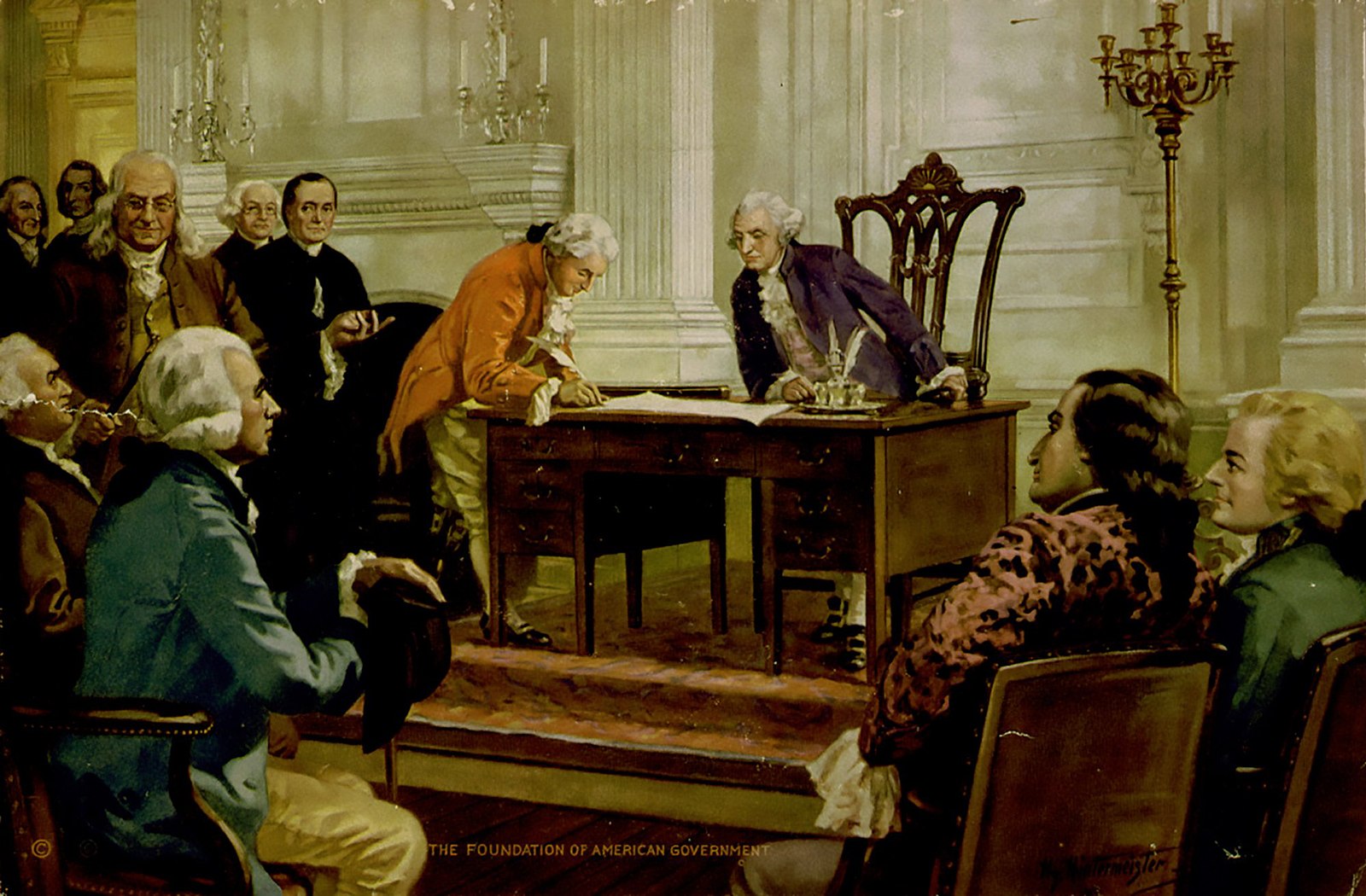
John Stuart Mill may well serve as an invaluable ally in searching out the roots of our ancient Anglo-American order that guarantee liberty as it coexists with order, neither at the other’s expense. He has a great deal of compassion and insight we could benefit from immensely, and it would be to our own disadvantage [...]

Unfit for Liberty

By |2017-06-08T14:44:57-05:00June 7th, 2017|Categories: John Stuart Mill, Liberty, Quotation|

“A people may prefer a free government but if, from indolence, or carelessness, or cowardice, or want of public spirit, they are unequal to the exertions necessary for preserving it; if they will not fight for it when it is directly attacked; if they can be deluded by the artifices used to cheat them out [...]

The Lie of the Open Society

By |2022-02-23T11:00:53-06:00June 6th, 2016|Categories: Apology, Conservatism, Crito, Featured, Free Speech, John Locke, John Stuart Mill, Liberty, Plato, Willmoore Kendall|

II The related problems of “the public orthodoxy” and “the open society” were major concerns of  Willmoore Kendall throughout his professional career. In his reappraisal of John Locke in 1941, Kendall’s Locke emerged as an exponent of the public orthodoxy as expressed through the majority. As Kendall sees it, in Lockean thought, “In consenting to be a member [...]

The Reality of the Politically Correct Ideology

By |2015-04-04T17:10:13-05:00April 4th, 2015|Categories: Culture, Intelligence, John Stuart Mill|

Jonathan Chait burned up the Internet with his critique of so-called political correctness.[1] Among many responses, Amanda Taub’s stands out for its denial of Mr. Chait’s basic premise.[2] According to Ms. Taub: …there’s no such thing as “political correctness.” The term’s in wide use, certainly, but has no actual fixed or specific meaning. What defines [...]

Academic Freedom or Academic Justice?

By |2022-06-14T18:55:53-05:00March 21st, 2015|Categories: Catholicism, Education, Freedom, John Stuart Mill|Tags: , |

Academic freedom permits the airing and defense of any and all views, but some views have come to be largely unacceptable in academia today. Since such views are not only socially unacceptable, but often discouraged or even prohibited as a matter of university policy, why should they not also be banned when they are articulated [...]

John Stuart Mill: False Prophet of Liberty

By |2022-05-20T09:56:53-05:00August 21st, 2014|Categories: Bruce Frohnen, Government, John Stuart Mill, Liberty, Socialism|

As long as there have been “libertarians,” there has been hero worship of John Stuart Mill. This Nineteenth Century utilitarian author, most famously of On Liberty, has been looked to as a kind of fount of holy writ for individualism. And Mill was an individualist. Unfortunately, he was not a supporter of liberty in any [...]

Conservatives and Libertarians: Uneasy Cousins

By |2020-09-23T15:40:41-05:00July 15th, 2012|Categories: Conservatism, Edmund Burke, John Stuart Mill, Libertarians, Robert Nisbet|Tags: |

Modern political conservatism takes its origin in Edmund Burke’s insistence upon the rights of society and its historically formed groups such as family, neighborhood, guild and church against the “arbitrary power” of a political government. By common assent modern conservatism, as political philosophy, springs from Edmund Burke: chiefly from his Reflections on the Revolution in [...]

Go to Top