About John P. East

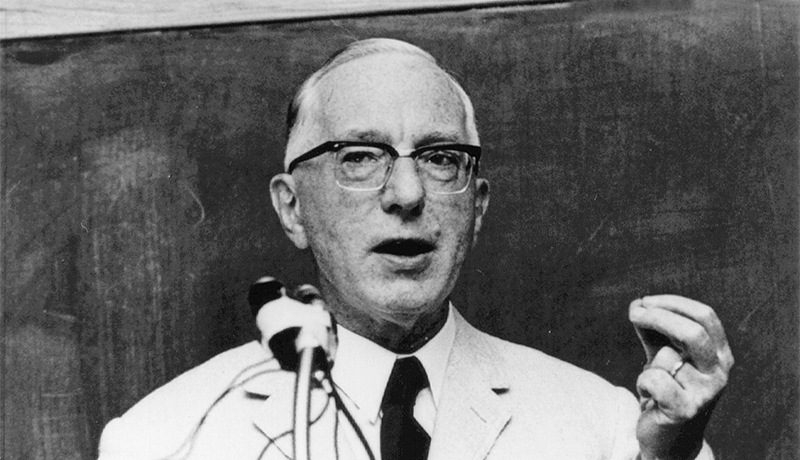
John Porter East (1931–1986) was a professor of political science at East Carolina University (Greenville, North Carolina) and then a United States Senator from North Carolina from 1981 until his death. Dr. East was the author of The American Conservative Movement: The Philosophical Founders.

What John Locke Really Said

By |2025-02-24T14:30:52-06:00February 24th, 2025|Categories: Conservatism, Featured, John Locke, Natural Law, Timeless Essays, Willmoore Kendall|

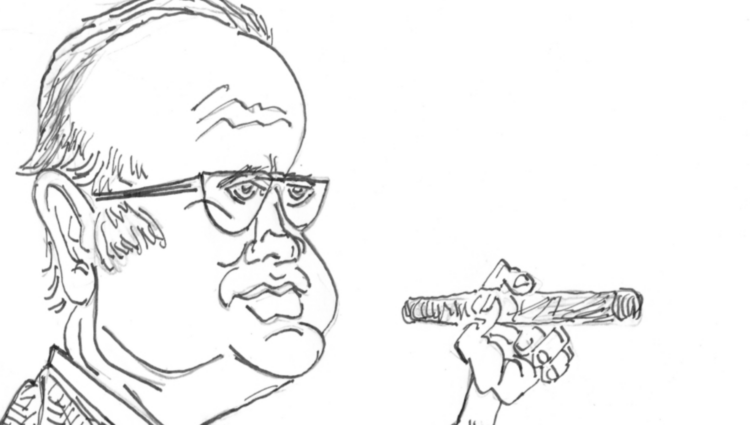
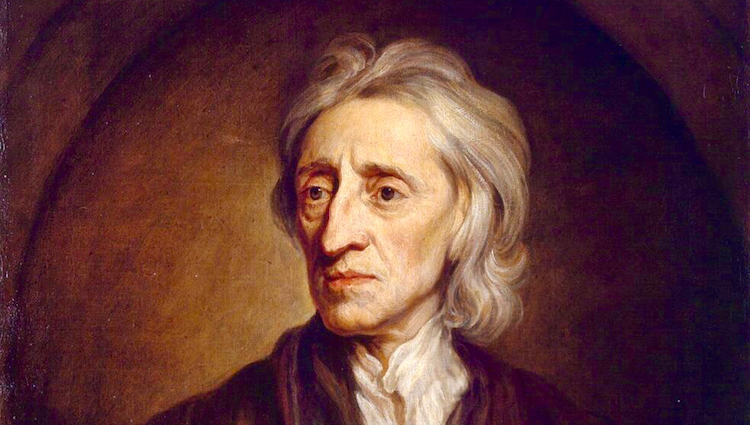
Willmoore Kendall contended that the conventional interpretation of John Locke, depicting him as an exponent of individualism and natural rights which transcended majority sentiments, was in error. By any reasonable standard of measurement, Willmoore Kendall would have to be included in a list of the most important political scientists of the post-World War II era. [...]


Richard Weaver’s Conservatism of Affirmation & Hope

By |2025-02-18T09:03:38-06:00February 17th, 2025|Categories: Conservatism, Featured, Ludwig van Beethoven, Plato, Relativism, Richard Weaver, South, Timeless Essays, Western Civilization|

Against a modern age that denied notions of meaning, purpose, and truth, Richard Weaver articulated a conservatism of hope and affirmation based on the Platonic-Christian heritage and its manifestation in the Amer­ican South. Richard Weaver reasoned it was the emergence of nominalism, the departure from Plato­nism and Christianity, which produced the intellectual heresies leading to [...]

Richard Weaver: The Conservatism of Piety

By |2025-02-09T15:34:00-06:00February 9th, 2025|Categories: Conservatism, Faith, Featured, Plato, Richard Weaver, St. Augustine, Timeless Essays, Western Tradition|

Confronted with choices between evil and good, man frequently chooses evil with its accompanying anguish. Would not wisdom and prudence dictate that man ought to be modest, restrained, and humble—in a word, pious? Born in Weaverville, North Carolina in 1910, Richard Malcolm Weaver was raised in Lexington, Kentucky. Elected to Phi Beta Kappa, Weaver graduated [...]

What “The Federalist” Really Says

By |2023-10-27T06:03:11-05:00October 26th, 2023|Categories: Abraham Lincoln, American Founding, American Republic, Equality, Featured, Federalist, Federalist Papers, James Madison, John Locke, Timeless Essays, Willmoore Kendall|

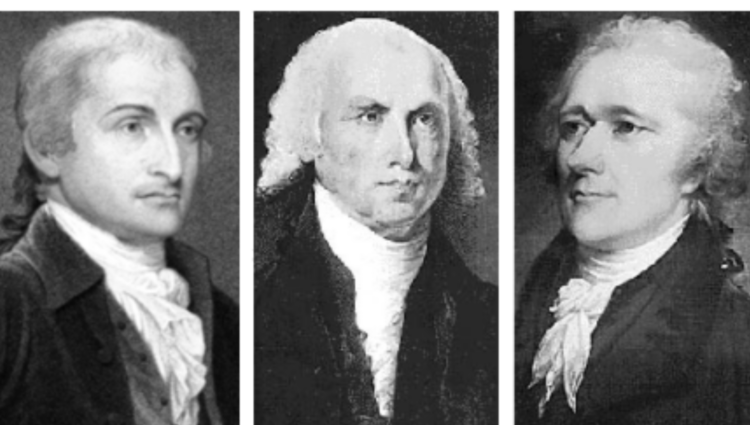
It is from careful textual analysis of “The Federalist” that the basic symbols of the American political tradition, and indeed the conservative tradition, may be found. III In his analysis of the Socrates of the Apology, Willmoore Kendall was hinting strongly at the probability that the contemporary John Stuart Mill-Karl Popper school in the United [...]

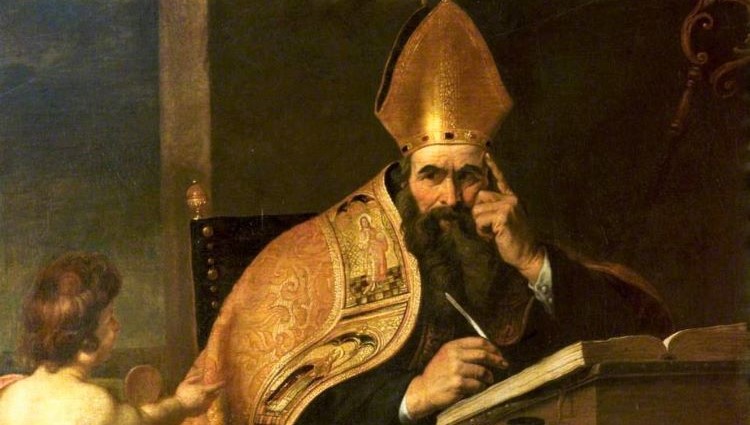
The Political Relevance of St. Augustine

By |2022-02-25T11:54:04-06:00February 25th, 2022|Categories: Aristotle, Christendom, Christianity, Essential, Politics, St. Augustine, St. Thomas Aquinas, Timeless Essays|

St. Augustine observed, “To begin with, there never has been, nor, is there today, any absence of hostile foreign powers to provoke war.” Evil men lusting after power—aggressors—are endemic to human history, and noted Augustine, “When they go to war what they want is to make, if they can, their enemies their own, and then [...]

The Conservatism of Willmoore Kendall

By |2022-03-07T15:48:54-06:00June 20th, 2016|Categories: Conservatism, Featured, Federalist Papers, Richard Weaver, Willmoore Kendall|

(This essay is the fourth in a four-part series; the first may be found here, the second here, and the third here.)   It is clear that Publius’s deliberative process, with its emphasis upon accommodation, harmony, and consensus, is antithetical to the conflict-oriented majoritarianism of the egalitarians. As a corollary proposition, it is essential to note that [...]

The Lie of the Open Society

By |2022-02-23T11:00:53-06:00June 6th, 2016|Categories: Apology, Conservatism, Crito, Featured, Free Speech, John Locke, John Stuart Mill, Liberty, Plato, Willmoore Kendall|

II The related problems of “the public orthodoxy” and “the open society” were major concerns of  Willmoore Kendall throughout his professional career. In his reappraisal of John Locke in 1941, Kendall’s Locke emerged as an exponent of the public orthodoxy as expressed through the majority. As Kendall sees it, in Lockean thought, “In consenting to be a member [...]

What Shaped Eric Voegelin’s Thought?

By |2022-02-23T11:09:07-06:00April 27th, 2016|Categories: Christianity, Conservatism, Eric Voegelin, Featured, History, Western Civilization|

IV Eric Voegelin’s affection for the Hellenic, Judaic, and Christian heritages can be easily documented. They are the crucial strands in the forming of his thought. Yet the matter goes deeper than that. Subtly, but irrefutably, in the corpus of his writing, Christianity emerges as the preeminent achievement of the Western experience. For example, Voegelin [...]

The Conservative Thought of Eric Voegelin

By |2022-02-23T11:13:42-06:00April 21st, 2016|Categories: Aristotle, Christianity, Conservatism, Eric Voegelin, Featured, Plato, St. Augustine|

Eric Voegelin was born in Cologne, Germany in 1901. Receiving his doctorate from the University of Vienna in 1922, he served on the law faculty of that institution. To escape the Nazi regime, he came to the United States in 1938. Subsequently, he taught at Harvard University, Bennington College, the University of Alabama, and Louisiana State [...]

Leo Strauss: Escaping the Stifling Clutches of Historicism

By |2022-02-23T11:18:05-06:00April 7th, 2016|Categories: Conservatism, Featured, Friedrich Nietzsche, Great Books, Jean-Jacques Rousseau, John Locke, Leo Strauss, Plato, William F. Buckley Jr.|

Leo Strauss (1899-1973) was a native of Germany. "I was," he reported near the end of his life, "brought up in a conservative, even orthodox Jewish home some­where in a rural district of Germany."[1] Strauss received his doctorate from Hamburg University in 1921. In 1938, he emigrated to the United States and commenced teaching political [...]

The Political Relevance of St. Augustine

By |2021-03-31T13:13:36-05:00September 21st, 2013|Categories: Christendom, Christianity, Political Philosophy, St. Augustine, St. Thomas Aquinas|Tags: |

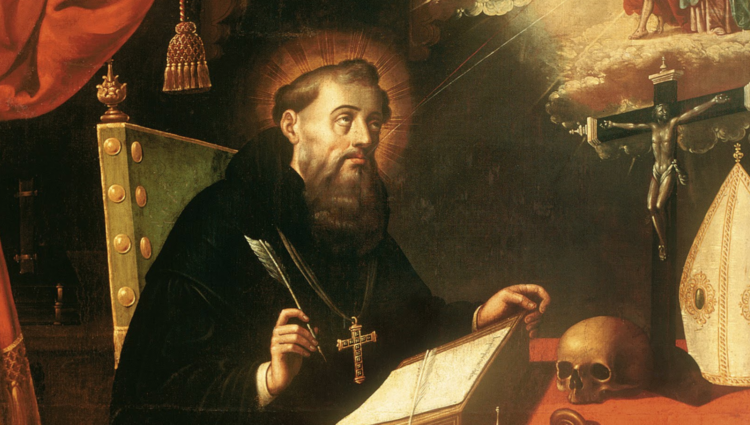
It is surprising that contemporary political thinking has paid relatively scant attention to St. Augustine, the Bishop of Hippo. It may be true, as some say, that we live in the post-Christian era. It certainly cannot be gainsaid that we live in an age of pervasive secularism in which a name such as Augustine seems [...]

Russell Kirk as a Political Theorist

By |2022-07-12T07:59:24-05:00November 1st, 2012|Categories: Christianity, Conservatism, Jean-Jacques Rousseau, Moral Imagination, Politics, Russell Kirk|Tags: |

Ultimately in Russell Kirk’s thinking one is confronted with the fundamental differences between the pridefulness of secularism and the transcendent, enduring, and sacrificial love of the biblical view. This accounts for his powerful dissent on any proposition that conservatism and libertarianism are theoretically compatible. Born on October 19, 1918, in Plymouth, Michigan, the son of [...]

Go to Top