“Notes from Underground” in Lockdown and Isolation

By |2020-06-10T22:57:21-05:00June 10th, 2020|Categories: Books, Civil Society, Coronavirus, Fiction, Fyodor Dostoevsky, Imagination, Literature|

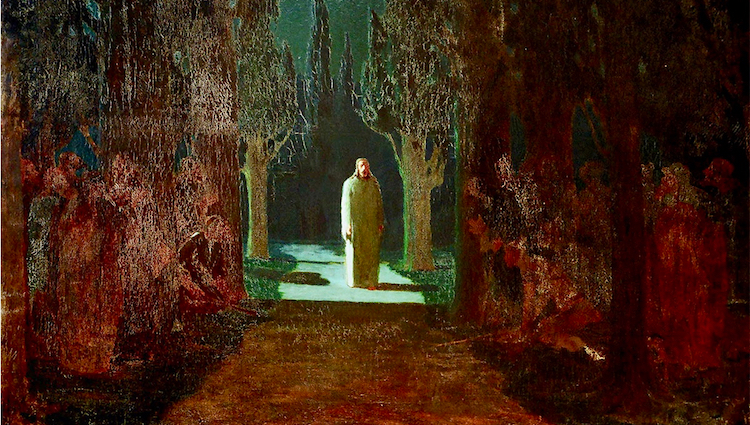
The fear of the coronavirus allows our governing bodies to keep us in isolation and the consequences of our permitting this act are more pernicious than we can imagine. Fyodor Dostoevsky’s “Notes from Underground” has never appeared less fictional. And why are you so firmly, so triumphantly, convinced that only the normal and the positive—in [...]


The Economics of Marriage in Greta Gerwig’s “Little Women”

By |2020-06-09T09:57:01-05:00June 9th, 2020|Categories: Culture, Fiction, Film, Literature, Marriage|

Director Greta Gerwig’s film “Little Women” ends as Louisa May Alcott’s novel does, with a family-centered fall festival at Plumfield. Perhaps unintentionally, Ms. Gerwig captures the spirit of Alcott’s beautiful ending to her novel. Not only has she married off the heroine, but she has shown marriage to be far more than an economic arrangement. [...]

On Fishbowls, Tragedies, and Coronavirus

By |2020-06-08T00:42:32-05:00June 7th, 2020|Categories: Coronavirus, Fiction, Great Books, Literature, Modernity, Tragedy|

Far from calling for microscopic views of reality and fishbowls, tragedies call for us to shatter the fishbowls and throw out the microscopes, to stop obsessing about our vulnerabilities and on how to overcome them, to stop thinking of ourselves as helpless victims of wicked forces. It is a grey day today. The sun was [...]

Questioning Chesterton’s Own Judgment of “The Man Who Was Thursday”

By |2020-05-28T15:29:37-05:00May 28th, 2020|Categories: Christian Humanism, Christianity, Fiction, G.K. Chesterton, Joseph Pearce, Literature, Senior Contributors|

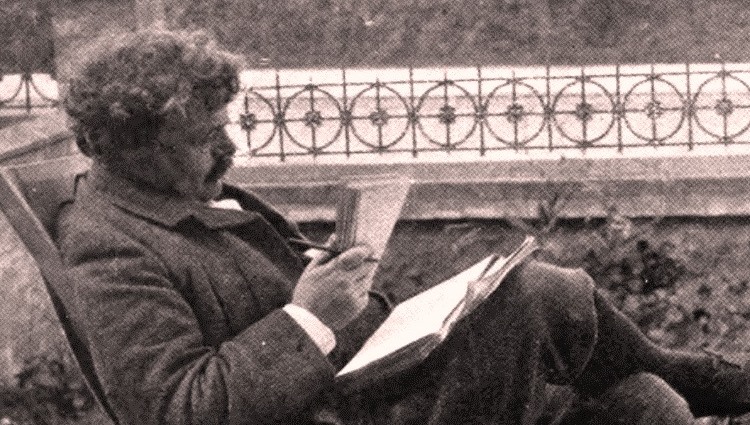
The paradoxical heart of G.K. Chesterton’s “The Man Who Was Thursday” is the tension that exists between the childlikeness demanded by Christ and the childishness that St. Paul tells us to avoid. The first is the wisdom of innocence, or the sanity of sanctity, whereby we see the miracle of life with eyes full of [...]

Messing About in Boats: Frederick Buechner’s “Brendan”

By |2020-05-20T15:58:05-05:00May 20th, 2020|Categories: Christianity, David Deavel, Fiction, Literature, Senior Contributors|

The Saint Brendan of Frederick Buechner’s novel is like all the saints who learn that the greatest journey is one that leads from the glorious but seed-like natural energy and strength of youth, to the final flowering of spiritual life and power that are only attained through prayer, surrender, and many crosses. For Roman Catholics, [...]

Modern Plagues and the Prescience of Ray Bradbury

By |2020-05-14T19:42:56-05:00May 14th, 2020|Categories: Christine Norvell, Fiction, Imagination, Literature, Modernity, Ray Bradbury, Senior Contributors, Technology, Television|

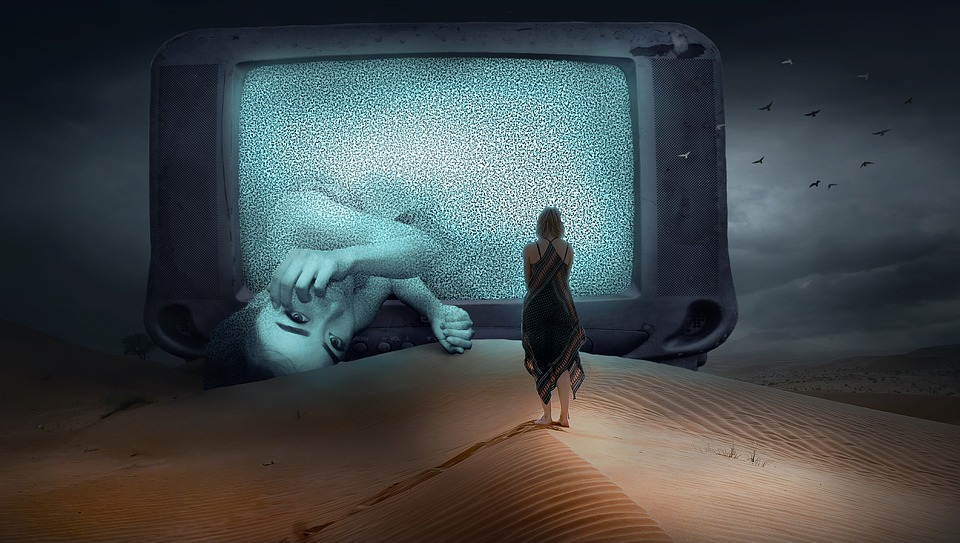
Little did Ray Bradbury know of his prescience in 1951, as he criticized society’s obsession with screens and the far-ranging effects of technology. Could television supersede community? Could it control us to the point of isolation and loneliness? Bradbury’s writing gives us much to think about. I am haunted by a lonely man. At sundown [...]

“Bleak House” and Original Sin

By |2020-05-09T10:30:28-05:00May 9th, 2020|Categories: Books, Charles Dickens, Christianity, Evil, Fiction, Imagination, Literature|

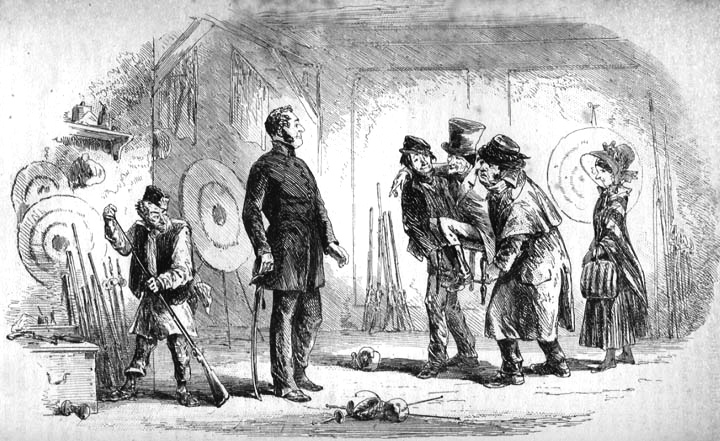
Charles Dickens’ Bleak House is considered by most contemporary critics to be his best novel and, although the postmodernist intellectual community should be navigated with caution, I am inclined to agree. It’s richly complex with an eclectic array of subplots, characters, and themes, and concludes with a bitter-sweet ending that is, unlike many contemporary stories, [...]

Science Fiction and the University of Chicago

By |2020-05-08T19:05:51-05:00May 8th, 2020|Categories: Books, Bradley J. Birzer, Fiction, Imagination, Literature, Science, Senior Contributors|

During the spring semester of 1957, the University of Chicago invited a number of distinguished speakers to campus to lecture on the meaning and significance of science fiction as a genre. Robert Heinlein, C.M. Kornbluth, Robert Bloch, and Alfred Bester each gave insightful speeches, all of which were collected by Basil Davenport and published in [...]

“Dark Black” by Sam Weller

By |2020-04-29T17:03:09-05:00April 29th, 2020|Categories: Books, Bradley J. Birzer, Fiction, Imagination, Senior Contributors|

With twenty stories, accompanied by lush but tenebrous full-page images, Sam Weller’s “Dark Black” is a thing of haunting beauty and voluptuous terrors. Dark Black, by Sam Weller (254 pages, Hat & Beard Press, 2020) Most readers of The Imaginative Conservative know Sam Weller as the extraordinary biographer of Ray Bradbury and as the author [...]

Strange and Admirable

By |2020-04-24T12:15:34-05:00April 24th, 2020|Categories: Culture, Fiction, Literature, Modernity, Poetry, Writing|

One of the most encouraging trends among conservatives in recent years has been the increased amount of recognition and discussion they have given to the importance of culture and the arts. There is, on the right, a growing sensitivity to the ways that many of the political and social ills we commonly bemoan have their [...]

Who Is Queen Mab?

By |2020-04-22T18:25:36-05:00April 22nd, 2020|Categories: Books, Fiction, Imagination, Literature, William Shakespeare|

In his collection of essays, Soliloquies in England, George Santayana dedicated some pages to a piece titled “Queen Mab” presumably after the enigmatic faery who is mentioned by Mercutio in Romeo and Juliet.[1] The essay turns into an analysis of British literature, which I take to mean that Santayana saw some form of greater representation [...]

Tolkien: Entering Faerie

By |2020-04-24T15:23:57-05:00April 20th, 2020|Categories: Bradley J. Birzer, Fiction, Imagination, J.R.R. Tolkien, Literature, Myth, Senior Contributors|

What, exactly, is Faerie? While not quite the realm of the supernatural, it is the realm of grace (and its enemies), and it can be, even in its greatest beauty, dangerous in the extreme. It is also, by its very nature, sacramental, tangible, and incarnational. On March 8, 1939, just five months shy of the [...]

Tolkien’s “The Lost Road”: Brilliant But Unfinished

By |2020-04-18T18:37:55-05:00April 18th, 2020|Categories: Books, Bradley J. Birzer, Fiction, Imagination, J.R.R. Tolkien, Literature, Senior Contributors|

An endearing story about fathers and sons—and almost certainly an autobiographical understanding of J.R.R. Tolkien himself and his own, mostly imagined father, as well as Tolkien and his son Christopher—”The Lost Road” begins with a son, Alboin, asking his father, Oswin, about the origin of his name. Though Tolkien had already written and published The [...]

Russell Kirk’s Literary Gentlemen

By |2020-04-08T16:41:39-05:00April 8th, 2020|Categories: Christianity, Fiction, Imagination, Literature, Moral Imagination, Russell Kirk|

It is no exaggeration to suggest that the idea of the gentleman stands as the lynchpin of Russell Kirk’s entire social theory. Well-educated, well-read, and virtuous, the gentleman stands as the living link between the present and the past; in many ways, he is the moral imagination embodied. After decades of neglect, the Gothic fiction [...]

Go to Top