Melville & Hawthorne on Good, Evil, & Human Nature

By |2023-05-19T14:17:48-05:00May 31st, 2018|Categories: Christianity, Christine Norvell, Literature, Virtue|

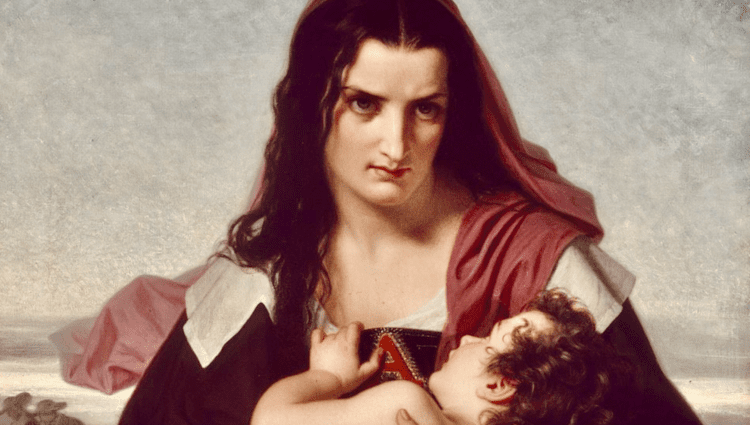
Fiction often clarifies our thinking about moral quandaries, distilling muddy waters into clear ones and dissecting our common human experience. The stories of Herman Melville and Nathaniel Hawthorne do just this. In the scope of American literature, Melville and Hawthorne reflect both the reasoning of the Enlightenment and the emotional and spiritual influence of the [...]

Willa Cather: The Land Is Alive

By |2019-04-30T16:46:30-05:00March 29th, 2018|Categories: Books, Character, Christine Norvell, Nature|

Majesty, beauty, ferocity, personality—all these traits typify the settings Willa Cather employs in her writings. More lush and alive than I could have imagined, these fullest of descriptions drew me to her work. When I first read O Pioneers!, I wanted to be there in Hanover, Nebraska. I wanted to work the hard land, to [...]

Hedonism in Ernest Hemingway’s “A Farewell to Arms”

By |2020-07-20T17:53:07-05:00March 5th, 2018|Categories: Christine Norvell, Literature, Love, Marriage, Nature|

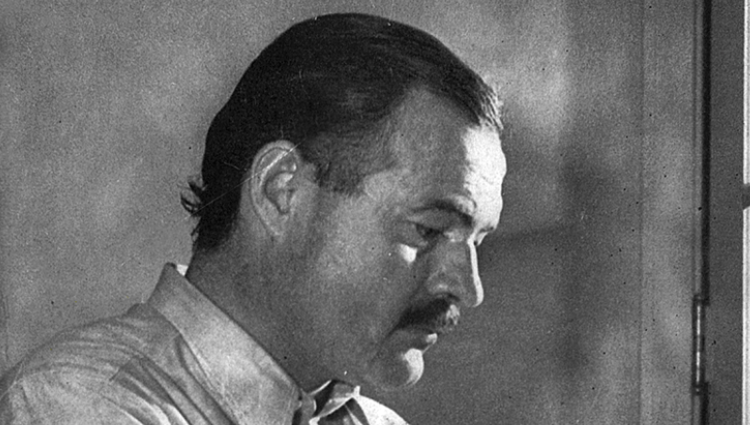
What was Ernest Hemingway illustrating about the emptiness of the generation in which he lived when he wrote A Farewell to Arms in 1929? If we unthinkingly pursue pleasure and live for nothing except ourselves, what are we left with? In A Farewell to Arms, Ernest Hemingway portrays the character of Frederic Henry as a [...]

“The Great Gatsby” and the Demoralized Man

By |2021-04-09T08:30:25-05:00January 31st, 2018|Categories: Books, Christine Norvell, Literature|

F. Scott Fitzgerald likened Jay Gatsby’s disillusionment and lack of purpose to that of the American people during the Roaring Twenties, those said to be in pursuit of the American Dream and materialistic success, ever reaching towards that green light, thinking the Dream would and will save them. Using the framework of a subjective narrator, [...]

Did It Have To Be Dido?

By |2020-03-09T17:23:17-05:00January 23rd, 2018|Categories: Aeneid, Christine Norvell, Freedom, Great Books, History, Virgil|

In Virgil’s Aeneid, the strongest and most admirable characters like Aeneas and Turnus are seen as ideals of patriotism and courage. At times though, their stories are momentarily superseded by interactions with a minor character. These subplots often serve to deepen our understanding of the main characters, but in turn bring a new character into the spotlight. [...]

Petrarch’s Love Sonnets

By |2020-05-03T05:13:20-05:00November 10th, 2017|Categories: Christine Norvell, History, Love, Poetry|

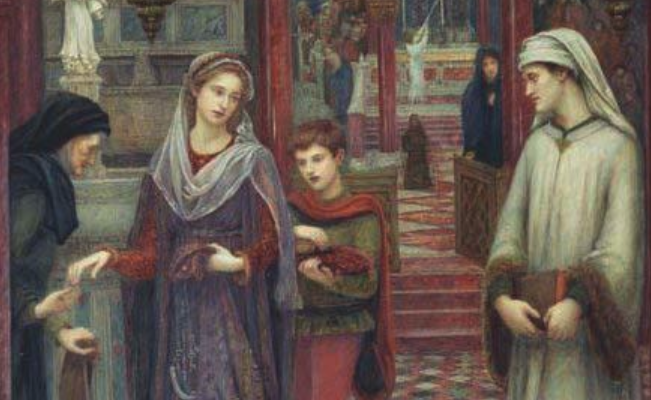
Francesco Petrarch and Laura de Sade likely never met or spoke, but Petrarch wrote hundreds of sonnets about her and to her. When we think of love sonnets, most of us think of the sappy ooze of lyricists or the sometimes flavorless mush in cheap greeting cards. When they were first written in the fourteenth [...]

John of Salisbury and the Ideal Scholar

By |2019-08-27T17:13:32-05:00October 27th, 2017|Categories: Christianity, Christine Norvell, Education, History, Liberal Learning, Reason|

John of Salisbury exemplifies a practice that we must champion to change our learning systems—to address the failings directly and to see that one educator can transform the world in which he teaches… John of Salisbury not only depicts the thorough and balanced measure of the education of the ideal scholar, but he also points [...]

Hope in Creation: The Worldview of Richard Wilbur

By |2019-07-18T15:24:46-05:00September 9th, 2017|Categories: Christianity, Christine Norvell, Hope, Poetry|

Hope permeates God’s creation, our natural world and the world of nature, as concrete images and as an enduring cycle, a complete and unrelenting season in itself… Hope is not a finite thing as Emily Dickinson well knew. A thing of feathers it is, and few definitions could do it justice. Yet we can catch [...]

Go to Top