Edmund Burke and the Constitution

By |2018-12-10T17:34:01-06:00May 22nd, 2012|Categories: American Republic, Constitution, Edmund Burke, Jean-Jacques Rousseau, RAK, Russell Kirk|Tags: |

Constitutions are something more than lines written upon parchment. When a written constitution endures—and most written constitutions have not been long for this world—that document has been derived successfully from long-established customs, beliefs, statutes, and interests; it has reflected a political order already accepted, tacitly at least, by the dominant element among a people. True [...]

The Third Way: Wilhelm Roepke’s Vision of Social Order

By |2021-10-09T15:25:29-05:00May 15th, 2012|Categories: Economics, Political Economy, Ralph Ancil, Wilhelm Roepke|Tags: |

Wilhelm Roepke endeavored to weave together a new view that would preserve the best of the past and the present; a vision of order which eschewed the extremes of both laissez-faire capitalism and collectivist socialism. He sought an entirely different view, a third way, which combined economic freedom with humane factors sculpted to fit the [...]

A Teaching for Republicans: Roman History and the Nation’s First Identity

By |2019-09-19T13:10:16-05:00May 7th, 2012|Categories: American Founding, American Republic, M. E. Bradford, Republicanism, Rome|Tags: |

The Federal District of Columbia, both in its formal character as a capital and also in its self-conscious attempt at a certain visual splendor, is, for every visitor from the somewhat sovereign states, a reminder that the analogy of ancient Rome had a formative effect upon those who conceived and designed it as their one [...]

Patriotic Vision: At Home in a World Made Strange

By |2020-01-09T11:35:41-06:00April 16th, 2012|Categories: Patriotism|Tags: , |

  Patriotism exhibits an unarticulated agreement with Aristotle’s great and challenging assertion that “all men are by nature political animals.” According to Aristotle, humanity in full flourishing requires the goods that a political community affords—the material goods of sustenance, shelter, protection by an organized defense, and the less quantifiable goods of education, the bonds of [...]

Russell Kirk and Ideology

By |2018-10-11T17:08:42-05:00April 10th, 2012|Categories: Christianity, Gerhart Niemeyer, Ideology, Philosophy, Russell Kirk|Tags: |

“Philosophy”—love of wisdom—is a word first used by Heraclitus. “Sophia” as listed in the dictionary means “perfect scientific knowledge, wisdom,” but a “sophist” is “a quibbler, a cheat.” And Plato made a sharp distinction between sophistes, philosophos, and the sophos, the sophistes being a person who, claiming that he possesses wisdom, takes money for teaching it. The philosophos, by contrast, knowing [...]

Rehabilitating Robert Frost: The Unity of His Literary, Cultural, & Political Thought

By |2021-07-12T13:56:39-05:00April 2nd, 2012|Categories: Books, Featured, Peter Stanlis, Robert Frost|Tags: |

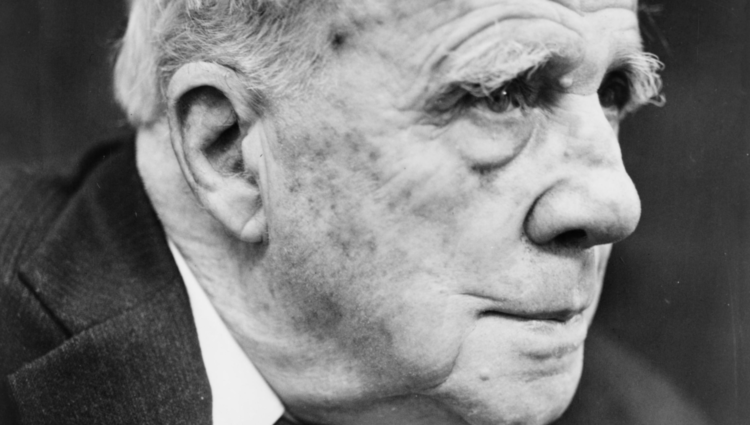
Poetry was to Robert Frost a special form of human revelation. It was distinct from the divine or prophetic revelations of religion, the rational understanding of philosophy and science, and the prudential wisdom of history. It was the only way mankind had of saying one thing in terms of another, aimed at insight and wisdom. [...]

Means and Ends: Education and Poetry in a Secular Age

By |2015-05-27T13:22:41-05:00March 26th, 2012|Categories: Cleanth Brooks, Education, Featured, Liberal Learning|Tags: |

The serious writer of today lives in a very much secularized world, a world of measurable objects, a world of space and time considerations, a world that must be studied not only rationally, but scientifically. Now, this situation did not suddenly come about in the middle of the seventeenth century. It has been developing since [...]

The Socratic Philosopher and the American Individual

By |2017-08-03T13:49:32-05:00March 6th, 2012|Categories: Books, Classics, Jean-Jacques Rousseau, Liberal Learning, Peter A. Lawler, Socrates|Tags: , |

Today, Allan Bloom’s unlikely 1987 bestseller The Closing of the American Mind is in some ways truer and more moving than ever. I have just taught the book in a class (one that began by reading Tocqueville) filled mostly with very smart yet still overachieving Evangelical students. They eagerly embraced the book as evidence of [...]

The Marriage of Rights and Duties

By |2019-10-03T11:25:59-05:00February 17th, 2012|Categories: American Republic, Constitution, George Mason, Politics, RAK, Russell Kirk|Tags: |

In 1755, the year when there began the French and Indian Wars, George Mason, gentleman freeholder, commenced the building of Gunston Hall. Ever since I was a boy I have come upon pictures of this lovely house, at once homely and eye-catching; I have longed to visit it; and at last here I am, aged [...]

Röpke’s Conundrums Over the Natural Family

By |2014-02-03T10:50:26-06:00January 21st, 2012|Categories: Economics, Political Economy, Wilhelm Roepke|Tags: , |

Wilhelm Röpke was an unusual free-market economist working in a difficult time. I believe that we should see him, first of all, as a product of 1914, the year which launched what he called “the devastation on so gigantic a scale to which mankind, then having gone mad, dedicated itself.” Mustered to war as a [...]

Recovering Austrian Economics

By |2016-01-16T12:48:50-06:00January 19th, 2012|Categories: Economics, Featured, Political Economy|Tags: |

An economist is someone who sees something happen in practice and wonders if it would work in theory. —Ronald Reagan Does economics have any real value? That blunt question has been voiced with greater frequency in recent years. After all, mainstream economics, with its cherished theories and complex mathematical models, failed to predict or to prescribe [...]

The Dollar Problem and Its Solution: the Gold Standard

By |2016-05-25T12:56:29-05:00December 1st, 2011|Categories: Economics, Political Economy|Tags: |

  There is little new in this latest cycle of economic boom, panic, and bust. All of these cycles are linked to the life and death of the unstable post–World War II Bretton Woods monetary system. First came the crisis-ridden gold-dollar system from 1944 to 1971. Then came the rise of floating exchange rates and [...]

Education and the Individual

By |2014-02-03T11:09:57-06:00November 30th, 2011|Categories: Liberal Learning, Richard Weaver|Tags: |

The greatest school that ever existed, it has been said, consisted of Socrates standing on a street corner with one or two interlocutors. If this remark strikes the aver­age American as merely a bit of fancy, that is because education here today suffers from an unprecedented amount of aimlessness and confusion. This is not to [...]

Russell Kirk and the Conservative Heart

By |2019-10-03T15:59:32-05:00November 16th, 2011|Categories: Books, Conservatism, Jean-Jacques Rousseau, Russell Kirk, The Conservative Mind|Tags: |

It is a commonplace that the defining characteristic of that characteristically modern literary form, the novel, is a concern for the revelation of the inner life of the ordinary man. Hence, the frequent use at first of the device of diaries or letters (e.g. in Richardson’s Clarissa and Defoe’s Robinson Crusoe) culminating in the stream [...]

Go to Top