
My heart warms when I think of the difference the rosary has made in my life and the difference it steadily makes in the world, even—perhaps especially—for those who shout obscenities at our students saying their beads on the sidewalks near abortion mills to save the unborn.
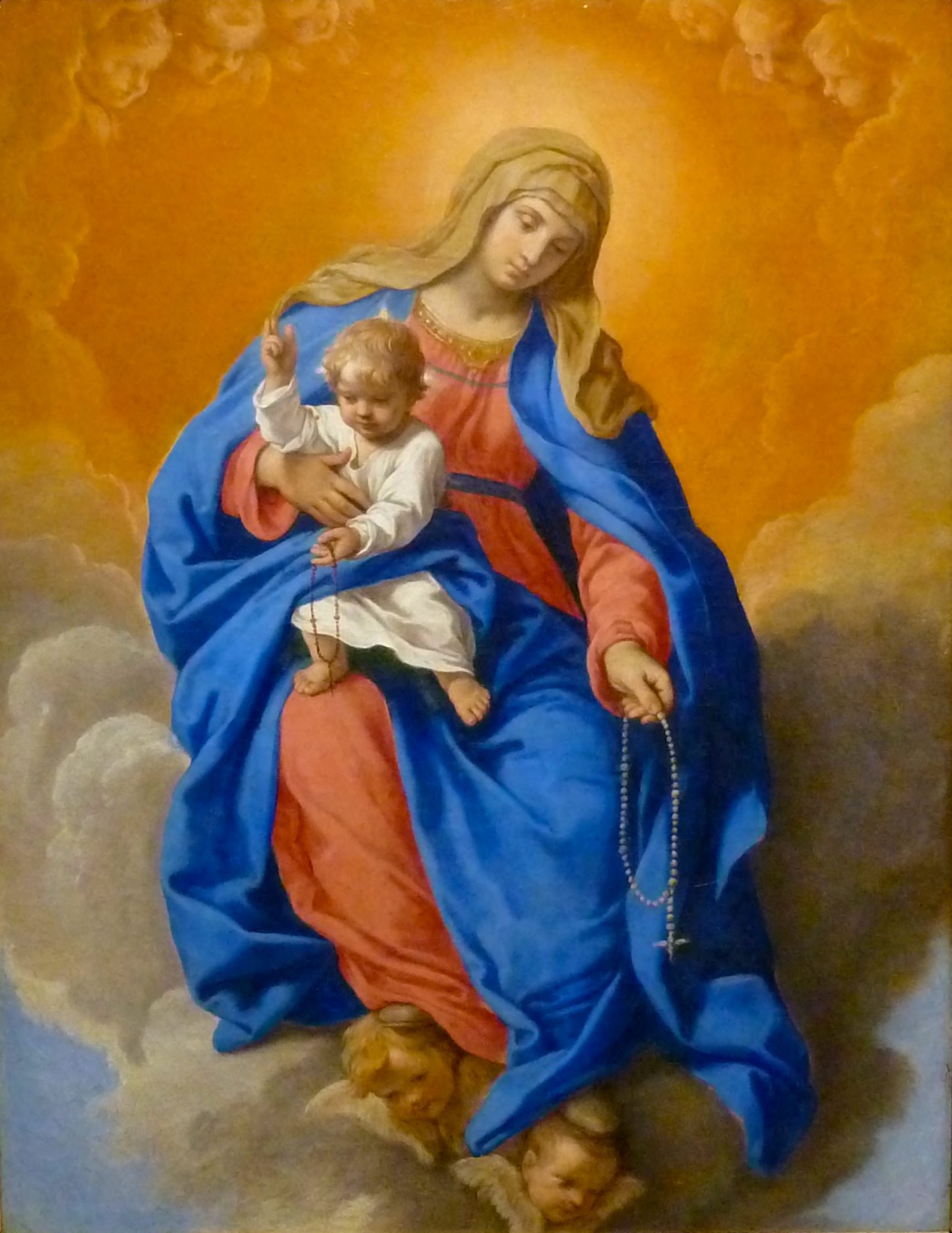 Last night at the monthly Legatus meeting in Denver, the literary historian and biographer Joseph Pearce recounted his own journey into the Catholic faith, and one of his salient memories from childhood was his father’s dismissal of Catholics as “bead-rattlers.” Returning from the pub one night, his father took his grandmother’s rosary, a keepsake for his irreligious mother, and threw it out the window. Both Pearce and his father later converted, and one of the most moving moments of the talk was Pearce’s account of taking up the rosary when he was in prison for the second time for activities with an extremist political group. He knew none of the prayers—none of them, he emphasized—but as he put it, he “mumbled and fumbled” his way through the beads in the first attempt he had made at prayer. On his deathbed, Pearce’s father joined him in praying the rosary one last time.
Political extremism and the rosary do not seem to mix, and in Pearce’s case, those first prayers marked a powerful turn from his past. But these beads, this mild recitation and meditation, alarms the powers and principalities. A now-infamous article in the Atlantic online caused quite a stir back in August: the author warned the woke that (even leaving gun culture aside) “many take genuine sustenance from Catholic theology’s concept of the Church Militant and the tradition of regarding the rosary as a weapon against Satan.” Indeed, they do, and today is a particularly good time to remember it. On this date in 1571, the Holy League defeated the Ottoman fleet in the Gulf of Patras, and the victory has been ascribed to the rosary ever since. Our PEAK high school students in one of the sessions last summer memorized G.K. Chesterton’s long “Lepanto” (well, most of them memorized most of it), and at the dinner on the last night, they gave a spirited recitation that dwindled down, more and more comically, to a few strong voices at the end.
Like Pearce, I am a convert, and my introduction to the rosary circa 1977 was a major part of my conversion. With my wife-to-be, a cradle Catholic, I would go to the chapel at the University of Dallas to say the rosary in the months before I entered the Church; she would get impatient, because it would take me forever to finish a silent rosary. Simply saying all the prayers, it struck me, could hardly be the point, though it might have power as an incantation. What fascinated me was the steady inward murmur of the vocal prayers, that half-attentive repetition as the musical background to and commentary on the mysteries, which were themselves matter for fathomless meditation.
Was it deliberate, I wondered, that the acceptance and anticipation of the Annunciation introduced the Joyful Mysteries, while the acceptance and anticipation of the Agony in the Garden introduced the Sorrowful ones? Should we interpret the Resurrection in the same light, somehow—as a new acceptance of the Incarnation and anticipation in a wholly different key? Did all the Joyful mysteries similarly align in some way with the Sorrowful and Glorious ones?
You see why it took me a long time to finish. To be honest, group recitation, which often includes pausing at the beginning of each decade to voice intentions, strikes me as a different experience from the meditative rosary, though each is rewarding in its own way. In any case, even those who see only “bead-rattling” witness a power impossible to deny. My heart warms when I think of the difference the rosary has made in my life and the difference it steadily makes in the world, even—perhaps especially—for those who shout obscenities at our students saying their beads on the sidewalks of Lander to save the unborn.
In one of his first homilies, our new chaplain, Fr. Godfrey Okwunka, urged everyone to say the rosary daily. He told us to keep the rosary under the pillow at night, to put it in our pocket during the day—in other words, never to be parted from it. That’s excellent advice.
Republished with gracious permission from Wyoming Catholic College‘s weekly newsletter.
The Imaginative Conservative applies the principle of appreciation to the discussion of culture and politics—we approach dialogue with magnanimity rather than with mere civility. Will you help us remain a refreshing oasis in the increasingly contentious arena of modern discourse? Please consider donating now.
The featured image, uploaded by Mattes, is “Madonna of the Rosary” by Simone Cantarini (1612–1648). This file is licensed under the Creative Commons Attribution-Share Alike 4.0 International license, courtesy of Wikimedia Commons.




Thank you, Glenn