America Is Hard to See: Orestes Brownson’s “The American Republic”

By |2023-04-17T10:09:16-05:00August 1st, 2012|Categories: Books, Jean-Jacques Rousseau, Peter Stanlis|Tags: |

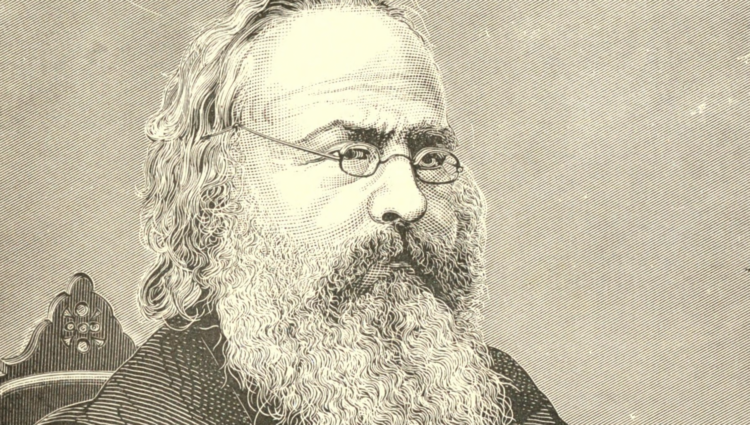
What made the American Republic so uniquely superior to all other previous and existing forms of government? The Founding Fathers created “the model republic,” Orestes Brownson wrote, because “they suffered themselves in all their positive substantial work to be governed by reality, not by theories and speculations.” The American Republic: Its Constitution, Tendencies, and Destiny, by [...]

Politics and the Imagination

By |2023-05-21T11:32:11-05:00July 25th, 2012|Categories: Classics, E.B., Eva Brann, Imagination, Jean-Jacques Rousseau, Plato, Politics, Senior Contributors, St. John's College|

The topic “Politics and the Imagination” is at once larger and more restricted than “Politics and the Arts,” the theme of this Tocqueville Forum. It is more restricted because I mean to exclude the practical problem of the relation between the arts and public life. Indeed, by politics I mean here not the working processes [...]

Jacobinism: The Armed Doctrine in Fiction

By |2018-10-16T20:25:02-05:00July 17th, 2012|Categories: Books, Ideology, Jean-Jacques Rousseau, Literature, RAK, Russell Kirk|

Russell Kirk The bicentenary of the French Revolution occurs in this year of 1989 [Ed., originally published in 1989]; and still the world is tormented by ghastly political upheavals and acts of terror that are inspired by what was said and done in Paris two centuries ago. English-speaking countries, nevertheless, have been relatively free of [...]

Liberalism and Liberal Education

By |2023-05-21T11:32:12-05:00July 13th, 2012|Categories: Books, E.B., Education, Eva Brann, Featured, Jean-Jacques Rousseau, Liberal Learning, Senior Contributors, St. John's College|

Not For Profit: Why Democracy Needs the Humanities, by Martha C. Nussbaum Martha Nussbaum’s new book concerns “a crisis of massive proportions and grave global significance.” The silent, cancer-like crisis she means to bring to public awareness by her “call to action,” her “manifesto,” is a new specter haunting the world—an extremely utilitarian, for-profit view [...]

The American Founding and Limited Government

By |2022-09-29T00:00:13-05:00July 5th, 2012|Categories: American Republic, Featured, George W. Carey, Jean-Jacques Rousseau, Politics|Tags: |

There is no dearth of studies on the political thought of the American founding era. Yet there is no consensus on what theories, values, or goals were uppermost in the minds of the founding generation. On the contrary, on a number of critical theoretical issues and concerns, there appears to be an inverse relationship between [...]

Americana Res Publica: No Revolution

By |2016-07-26T15:53:13-05:00July 4th, 2012|Categories: American Republic, Bradley J. Birzer, Jean-Jacques Rousseau, Republicanism|

As we celebrate the 236th anniversary of the passage of the Declaration of Independence (the signing would have to wait until August 2, 1776), it’s very much worth remembering what form of government the Founders hoped to establish in America. We were founded unquestionably as a Republic with the writing and passages of the Articles [...]

Michael Oakeshott and Conservatism

By |2018-11-09T13:02:27-06:00June 30th, 2012|Categories: Conservatism, Jean-Jacques Rousseau, Michael Oakeshott, Politics|Tags: |

Rationalism in Politics and Other Essays, by Michael Oakeshott. New York: Basic Books, 1962. 333 pp. [rev ed. Liberty Fund, 1991] It is a pleasure to have Professor Oakeshott on my side, even though there are moments when I have trouble in understanding just where his verbal missile is directed. Curiously, his address in Madrid [...]

The Moral Imagination & Imaginative Conservatism

By |2023-05-21T11:32:16-05:00May 31st, 2012|Categories: Books, Conservatism, E.B., Edmund Burke, Eva Brann, Jean-Jacques Rousseau, Moral Imagination, Senior Contributors, St. John's College|

The Moral Imagination: From Edmund Burke to Lionel Trilling, by Gertrude Himmelfarb. The Moral Imagination is a very engaging collection of a dozen essays on a dozen authors by a historian in the appreciative mode. Some pieces go back to the ’60s, some are recent, all are substantially revised even to the point of recantation. [...]

A Liberal Wolf in Communal Clothing: Community & Communitarianism

By |2014-03-31T17:04:53-05:00May 23rd, 2012|Categories: Books, Bruce Frohnen, George W. Carey, Jean-Jacques Rousseau|Tags: |

The New Communitarians and the Crisis of Modern Liberalism, by Bruce Frohnen, Lawrence, Kansas: University Press of Kansas, 1996. Community and Tradition: Conservative Perspectives on the American Experience, edited by George W. Carey and Bruce Frohnen, Lanham, Maryland: Rowman and Littlefield, 1998. Communitarianism at one level is a contemporary school of thought that takes to [...]

Edmund Burke and the Constitution

By |2018-12-10T17:34:01-06:00May 22nd, 2012|Categories: American Republic, Constitution, Edmund Burke, Jean-Jacques Rousseau, RAK, Russell Kirk|Tags: |

Constitutions are something more than lines written upon parchment. When a written constitution endures—and most written constitutions have not been long for this world—that document has been derived successfully from long-established customs, beliefs, statutes, and interests; it has reflected a political order already accepted, tacitly at least, by the dominant element among a people. True [...]

Popular Government and Intemperate Minds: Democracy As Ideology

By |2018-10-16T20:25:05-05:00May 14th, 2012|Categories: Democracy, Ideology, Jean-Jacques Rousseau, Politics, RAK, Russell Kirk|

Ronald Reagan & Russell Kirk At the beginning of the twentieth century, few states in the world could be called democratic. Yet much personal and local freedom existed under the reign of law. Near the close of the twentieth century, nearly every political regime throughout the world professes to be democratic. Yet in [...]

Edmund Burke and Natural Rights

By |2019-05-14T13:42:42-05:00April 21st, 2012|Categories: Edmund Burke, Jean-Jacques Rousseau, Natural Rights Tradition, RAK, Russell Kirk|

Edmund Burke was at once a chief exponent of the Ciceronian doctrine of natural law and a chief opponent of the “rights of man.” In our time, which is experiencing simultaneously a revival of interest in natural-law theory and an enthusiasm for defining “human rights” that is exemplified by the United Nations’ lengthy declaration, Burke’s [...]

The Tragedy of Democracy Without Authority: A Reflection on Maritain and Thucydides

By |2018-08-19T21:25:25-05:00April 11th, 2012|Categories: Classics, Democracy, Jean-Jacques Rousseau, Politics, Thucydides|Tags: , |

Scrupulous fear of the gods is the very thing which keeps the Roman Commonwealth together. To such an extraordinary height is this carried among them, both in private and public business, that nothing could exceed it. –Histories, Polybius Infirmity doth still neglect all office Whereto our health is bound; we are not ourselves When nature, [...]

Go to Top