
 One of the puzzles of human nature—call it evidence of original sin—is that when things are going well, the impulse to gratitude vanishes. To say that we owed this happy state of things to others would dim our glory and injure our pride. We might thank our admirers (of whom there are surely many), as rock stars thank their fans for applause, but feeling genuinely grateful to someone else for our success would require the annoying acknowledgment that things might be otherwise, which would be an insult to our superior capacities. No, we did it ourselves. We are flush with achievement, aglow with health. Nothing can touch us: the future will do what it’s told. Why should we feel gratitude?
I suspect that most people recognize this perilous state of mind, however fleeting the experience might have been. Gratitude grows best in adversity. If someone is gravely ill and the potentially fatal course of the disease is suddenly averted, the immediate impulse is gratitude. When we are in dire financial need or in great pain, those who relieve us earn our thanks. We are full of thanks for the avoided disaster, but less so for prosperity, which we tend to accept as our due. To look for gratitude, in other words, we would do better to go among the suffering and the poor, those who know that the little they have is threatened by circumstances not entirely in their control.
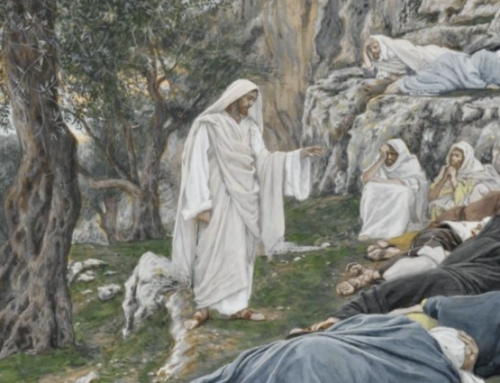
Even here, though, gratitude can be hard. Jesus cured ten lepers according to the story in Luke 17, but only one returned to thank him. Why might that be? In the old movies, particularly in the Depression era, some bitter father of a starving family might spurn the help of neighbors, saying, “We don’t want your charity”—as though to receive the alms of others were the worst blow to a man’s self-worth. He feels a threat, not something to be grateful for. In William Faulkner’s As I Lay Dying, Anse Bundren (as shiftless a father as one could find) repeatedly answers the offer of help, “I wouldn’t be beholden.” Whether he takes the gift or not, Anse wants to remain free of the obligation that a favor brings with it. He prizes his independence.
Up to a point, we admire his attitude, which might be the nicest thing ever said about Anse. To be sure, the desire for independence from government interference underlies our refusal of the “gift” of federal funds at Wyoming Catholic College. But if one pushes independence too far, it becomes the rejection of “givenness” itself, the condition of all things created. We owe our very existence to God; we owe our salvation from sin and our possibility of participation in the divine life to Jesus Christ. To answer to the offer of grace, “I wouldn’t be beholden,” reminds me of Satan’s lines in Paradise Lost, where he acknowledges that he knows that God gave him all that he is, and he cannot stand it. He resents “the debt immense of endless gratitude,/So burdensome still paying, still to owe.”
At Wyoming Catholic College, it has been a strange year in terms of gratitude. Early in 2021, we thought we were in the best shape ever, and we might even have believed for a moment or two in the late spring that we would soon have everything we needed. In the summer, however, we suffered the harsh consequences of having built some of our hopes upon a false foundation. But, thanks be to God, it did not ruin us. Both this summer and this fall, we have seen the extraordinary generosity of our donors, who believe in the noble mission of Wyoming Catholic College and who have stepped forward to help us. Pure gift—and yet it comes with an expectation: to continue to offer students this unique education, which will contribute to the gradual transformation of hearts and minds, the renewal of the nation, and the restoration of the Church.
Republished with gracious permission from Wyoming Catholic College.
The Imaginative Conservative applies the principle of appreciation to the discussion of culture and politics—we approach dialogue with magnanimity rather than with mere civility. Will you help us remain a refreshing oasis in the increasingly contentious arena of modern discourse? Please consider donating now.
The featured image is courtesy of Pixabay.




Leave A Comment