G.K. Chesterton’s “Orthodoxy” and Conservatism

By |2025-06-13T10:15:57-05:00June 13th, 2025|Categories: Books, Christianity, G.K. Chesterton, Michael De Sapio, Orthodoxy, Senior Contributors, Timeless Essays|

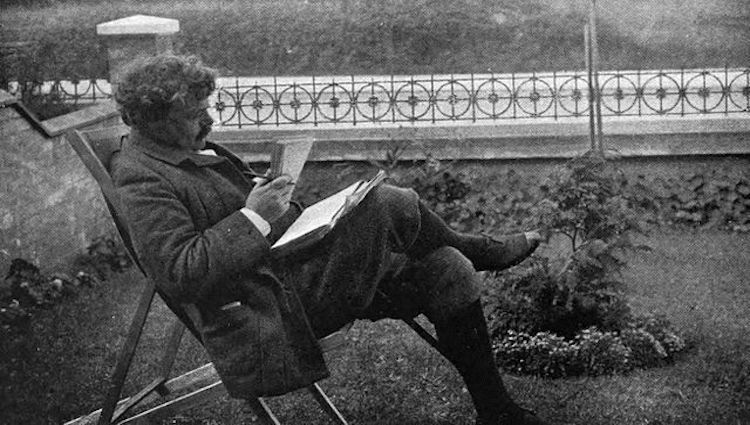
Turning the popular negative connotation of “orthodoxy” on its head, G.K. Chesterton argues that orthodoxy is anything but dull and musty, but on the contrary exciting and adventuresome. In 1952, C.S. Lewis did a great service to the world in producing Mere Christianity, his account of the fundamentals of Christian belief for a popular audience. It [...]
The Skaldic Bard

By |2025-02-21T10:07:57-06:00February 21st, 2025|Categories: Catholicism, Christianity, Joseph Pearce, Music, Orthodoxy, Poetry, Senior Contributors|

A primary aim of my work is to counter the widespread misconception that Christianity somehow “weakened” or “polluted” the cultures of Europe. It is often claimed by Neo-Pagans that the faith was simply a foreign imposition forced upon an unwilling population. However, a closer examination of contemporary sources reveals a far more nuanced reality. Joseph [...]

The Ecclesial Christian in Days of Scandal

By |2025-02-13T08:15:17-06:00February 12th, 2025|Categories: Catholicism, Christianity, David Deavel, Orthodoxy, Senior Contributors|

Yes, we Catholics are all aware of the problems plaguing Holy Mother Church right now. So, why then do we persist? Perhaps one way of addressing this question is to focus on the precise nature of what ecclesial Christians believe about the Church. Many Christians are scandalized or crying “I told you so” in the [...]

“Creation Proclaims Its Maker”

By |2025-01-20T20:17:22-06:00January 20th, 2025|Categories: Catholicism, Christianity, Existence of God, Heaven, Natural Law, Orthodoxy, Quotation, Sainthood|

Creation is the accuser of the ungodly. For through its inherent spiritual principles, creation proclaims its Maker; and through the natural laws intrinsic to each individual species it instructs us in virtue. The spiritual principles may be recognized in the unremitting continuance of each individual species, the laws in the consistency of its natural activity. [...]

What Do You See?

By |2024-11-16T16:05:18-06:00November 16th, 2024|Categories: Beauty, Catholicism, Christianity, Orthodoxy|

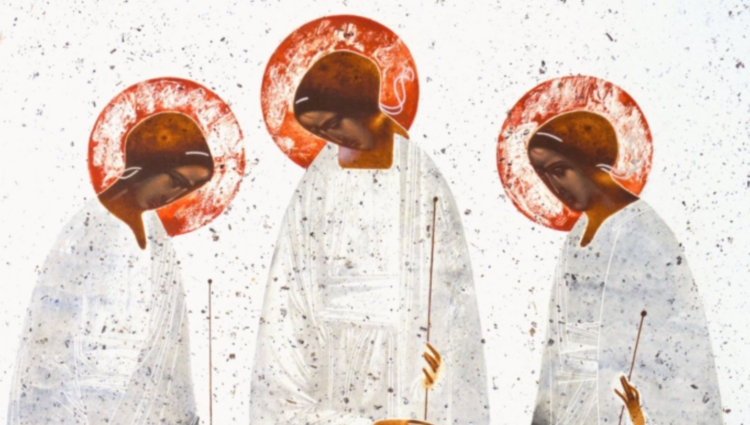
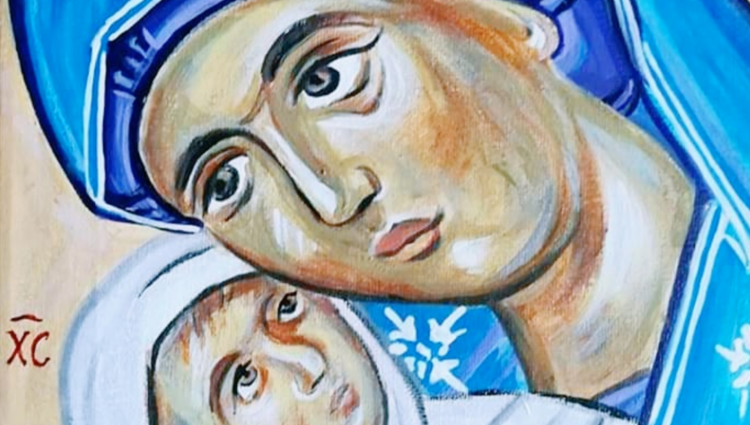
Take a good look at the icon below. What do you see? Icons can be strange to our modern tastes. They are beautiful yet arrestingly otherworldly, with disorienting proportions and perspectives. Icons do not conform themselves to our own standards of judgment. To enter into the divine mysteries, we must relinquish our claim to be [...]

Peco Gaskovski, Author of “Exogenesis”: A Conversation

By |2024-01-15T17:51:54-06:00January 15th, 2024|Categories: Books, Christianity, Dwight Longenecker, Literature, Orthodoxy, Senior Contributors|

Peco Gaskovski’s "Exogenesis" has been described as “Blade Runner meets the Benedict Option." In the novel, a thousand-mile metropolis named Lantua has emerged from the collapse of the USA. Artificial birthing and strict reproductive control is enforced with hi-tech social conditioning, 24-7 monitoring by the state, and the total loss of freedom, disguised by smooth [...]

The Transcendent Beauty of Icons

By |2023-07-08T12:37:22-05:00December 7th, 2019|Categories: Art, Beauty, Christianity, Culture, Michael De Sapio, Orthodoxy, Western Civilization|

While much Western art immerses us in the richness of this world with its spacial and emotional realism, the Eastern Orthodox tradition uses only painted images, with icons of Christ, Mary, and the saints functioning as “windows into heaven,” by way of stylized forms that convey a Platonic ideal of beauty and truth. Virgin [...]

Remembering an Eastern Orthodox Prophet: Nicholas Berdyaev

By |2020-07-16T10:54:02-05:00January 16th, 2013|Categories: Aleksandr Solzhenitsyn, Bradley J. Birzer, Christendom, Christian Humanism, Christianity, Christopher Dawson, Orthodoxy, Senior Contributors|Tags: |

Nicholas Berdyaev stressed the primacy of culture and theological issues over politics and economics as truer forms of reality. He argued that only when society has realigned itself, individual by individual and community by community, “towards divine objects” could humanity save itself. One kind of weird but enticing academic puzzle for me is discovering and [...]

Go to Top