
Edmund Burke for Our Time

By |2016-04-23T21:49:11-05:00June 24th, 2012|Categories: Books, Edmund Burke, Moral Imagination, William F. Byrne|

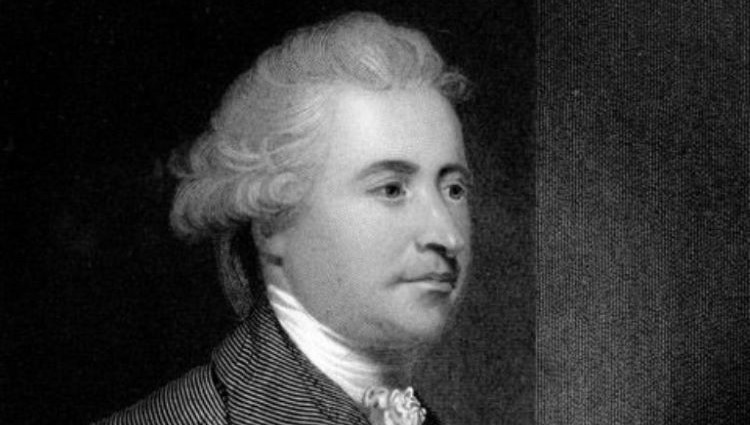
[Excerpt from: William F. Byrne, Edmund Burke for Our Time: Moral Imagination, Meaning, and Politics (De Kalb, Ill.: Northern Illinois University Press, 2011).] To the extent that there is such a thing as “Burkean conservatism,” we can get a glimpse of its true nature from a passage in the unfinished English History, a writing project [...]

Western Civilization–Old School via Professor Dawson

By |2016-02-18T18:24:37-06:00June 16th, 2012|Categories: Christian Humanism, Christianity, Christopher Dawson, Featured, Liberal Learning, Robert M. Woods|

Before all the noise, bizarre theories, revisionists approaches, and misinterpretations of Western Civilization there was a brilliant and dedicated scholar who carefully studied primary documents and a range of cultural and social artifacts. His research and passion yielded much fruit, and in his day, Christopher Dawson was recognized as a world class cultural historian. Then [...]

T.S Eliot’s Christianity and Culture: the Problem of Establishment

By |2016-08-03T10:37:29-05:00June 11th, 2012|Categories: Books, Bruce Frohnen, Christendom, Political Science Reviewer, T.S. Eliot|

T.S. Eliot T. S. Eliot indisputably was, and remains, in the first rank of poets of any era and any culture.[1] Eliot is almost as well known among literate persons as a critic and literary theorist. His journal, The Criterion, despite its short lifespan, remains the standard of high modernism. Continuing interest in [...]

Christopher Dawson on Liberalism

By |2016-08-03T10:37:30-05:00June 7th, 2012|Categories: Bradley J. Birzer, Christendom, Christian Humanism, Christianity, Christopher Dawson, Featured, Liberalism|

Christopher Dawson Part III: Contending Against Liberalism (click on links to go to Part I or Part II) As Dawson attempted to discover the sources of the ideological disruptions of the twentieth-century as well as solutions to the death and terror they caused, he often produced some of his most impassioned work. The forerunner to such [...]

T. S. Eliot, Poetry and Propaganda

By |2016-11-26T09:52:14-06:00June 6th, 2012|Categories: Poetry, Quotation, T.S. Eliot|Tags: |

“First of all no art, and particularly and especially no literary art, can exist in a vacuum. We are , in in practice, creatures of divers interests, and in many of our ordinary interests there is not obvious coherence.” (598) “I do not suppose that there ever has been, or will be, a critic of [...]

Christopher Dawson on Liberalism

By |2016-08-03T10:37:32-05:00June 4th, 2012|Categories: Bradley J. Birzer, Christendom, Christian Humanism, Christianity, Christopher Dawson, Liberalism|

Christopher Dawson Part II: The Fulfillment of Liberalism (find Part I) In the end, Dawson believed, liberalism destroyed far more than it created. By the end of the eighteenth century, he feared, little of traditional western culture—beyond the Protestant Americans and the Lutheran and Catholic peasants of Europe—remained religious. The dominant political philosophy of that [...]

Christopher Dawson on Liberalism

By |2016-02-18T18:31:46-06:00June 1st, 2012|Categories: Bradley J. Birzer, Christian Humanism, Christianity, Christopher Dawson, Liberalism|

Christopher Dawson Part I: Christopher Dawson on Liberalism In the earliest drafts of the biography I wrote of Christopher Dawson, Sanctifying the World (2007), dedicated to our very own William Winston Elliott III, I included three largish-sections regarding Dawson’s critique of liberalism: The Rise of Liberalism; The Fulfillment of Liberalism; and Contending Against [...]

The Moral Imagination & Imaginative Conservatism

By |2023-05-21T11:32:16-05:00May 31st, 2012|Categories: Books, Conservatism, E.B., Edmund Burke, Eva Brann, Jean-Jacques Rousseau, Moral Imagination, Senior Contributors, St. John's College|

The Moral Imagination: From Edmund Burke to Lionel Trilling, by Gertrude Himmelfarb. The Moral Imagination is a very engaging collection of a dozen essays on a dozen authors by a historian in the appreciative mode. Some pieces go back to the ’60s, some are recent, all are substantially revised even to the point of recantation. [...]

The Household Gods of Freedom

By |2016-05-11T12:02:32-05:00May 31st, 2012|Categories: American Republic, Books, John Randolph of Roanoke, M. E. Bradford, Russell Kirk|Tags: |

John Randolph of Roanoke: A Study in American Politics, by Russell Kirk. For Southerners of my antique persuasion, Russell Kirk’s John Randolph of Roanoke is a locus classicus. And for most American conservatives, it is a work of decisive importance, a path leading into a neglected portion of our common patrimony, a portion now not well [...]

Thoughts after Lambeth

By |2016-02-12T21:44:14-06:00May 27th, 2012|Categories: Bradley J. Birzer, Culture, T.S. Eliot|Tags: |

  I had the privilege of transcribing Eliot’s famous essay, “Thoughts on Lambeth.” Below is a significant part of the essay (roughly  2/3 of it). I have edited it only down in size; I’ve not made any other changes. This is some of Eliot’s most revealing writing, especially regarding The Waste Land as a personal journey not [...]

Last Words by T.S. Eliot

By |2014-01-22T17:46:00-06:00May 24th, 2012|Categories: Culture, T.S. Eliot|

With this number I terminate my editorship of The Criterion. I have been considering this decision for about two years: but I did not wish to come to a conclusion precipitately, because I knew that my retirement would bring The Criterion to an end. During the autumn, however, the prospect of war had involved me [...]

Edmund Burke and the Constitution

By |2018-12-10T17:34:01-06:00May 22nd, 2012|Categories: American Republic, Constitution, Edmund Burke, Jean-Jacques Rousseau, RAK, Russell Kirk|Tags: |

Constitutions are something more than lines written upon parchment. When a written constitution endures—and most written constitutions have not been long for this world—that document has been derived successfully from long-established customs, beliefs, statutes, and interests; it has reflected a political order already accepted, tacitly at least, by the dominant element among a people. True [...]

The Inspired Wisdom of Burke

By |2021-04-13T16:24:37-05:00May 11th, 2012|Categories: Books, Edmund Burke, Featured, George A. Panichas, Russell Kirk, Wisdom|Tags: |

  Edmund Burke: A Genius Reconsidered, by Russell Kirk, with a Foreword by Roger Scruton, Wilmington, Delaware: Intercollegiate Studies Institute, 1997. Russell Kirk’s book on Edmund Burke, first published in 1967, now revised and handsomely re-issued, testifies not only to the “enduring Burke,” but also to the enduring Kirk. As a British statesman and political [...]

A Teaching for Republicans: Roman History and the Nation’s First Identity

By |2019-09-19T13:10:16-05:00May 7th, 2012|Categories: American Founding, American Republic, M. E. Bradford, Republicanism, Rome|Tags: |

The Federal District of Columbia, both in its formal character as a capital and also in its self-conscious attempt at a certain visual splendor, is, for every visitor from the somewhat sovereign states, a reminder that the analogy of ancient Rome had a formative effect upon those who conceived and designed it as their one [...]

Go to Top