“The Gettysburg Address”

By |2021-11-18T17:09:57-06:00November 19th, 2015|Categories: Abraham Lincoln, American Founding, Civil War|

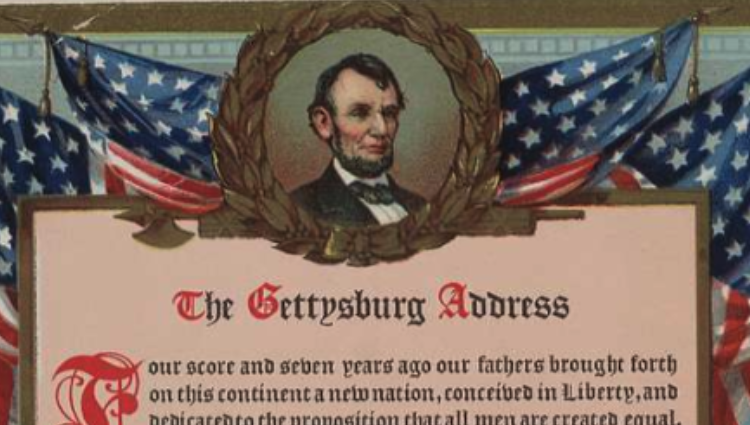
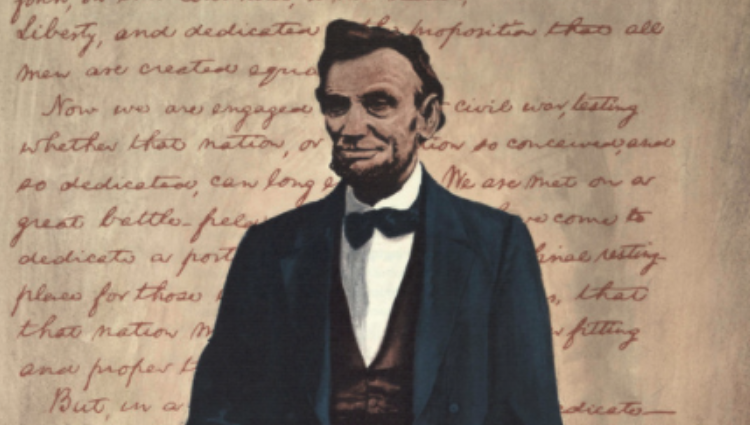
There exist at least five versions of the Gettysburg Address, all of which have slightly different wording. The first is known as the "Nicolay copy," as it was once owned by Lincoln's secretary, John Nicolay; this version is the only one which we know was written down by Lincoln prior to his delivering the speech. [...]

A Letter to My Very Dear Wife

By |2015-11-11T12:15:12-06:00November 11th, 2015|Categories: Civil War, History, Military, War|

Editor’s Note: The following letter by Major Sullivan Ballou of the 2nd Rhode Island regiment was written on July 14, 1861, a week before he was mortally wounded in the First Battle of Bull Run. My Very Dear Wife: Indications are very strong that we shall move in a few days, perhaps tomorrow. Lest I should not be able to write [...]

The Party of Lincoln AND Calhoun? The Right and the Civil War

By |2019-05-29T14:10:55-05:00November 3rd, 2015|Categories: Abraham Lincoln, Civil War, Conservatism, Featured, History|

“When the intellectual authors of the modern right created its doctrines in the 1950s,” wrote Sam Tanenhaus in The New Republic, “they drew on nineteenth-century political thought, borrowing explicitly from the great apologists for slavery, above all, the intellectually fierce South Carolinian John C. Calhoun…. The party of Lincoln… has become the party of Calhoun.” [...]

A Disease in the Public Mind: A New Understanding of Why We Fought the Civil War

By |2020-08-20T16:57:56-05:00August 20th, 2015|Categories: American Republic, Civil War, History, Slavery, Stephen M. Klugewicz|

Thomas Fleming argues that the Civil War was both a triumph and tragedy. Though it brought an end to slavery, it did so at the expense of some of 850,000 American lives—an unnecessary and regrettable sacrifice for which a small group of people was ultimately responsible. A Disease in the Public Mind: A New Understanding [...]

Was the Civil War a Fiscal Conflict?

By |2016-02-29T22:43:18-06:00July 16th, 2015|Categories: Abraham Lincoln, Civil War, History, South, Stephen M. Klugewicz|

When in the Course of Human Events: Arguing the Case for Southern Secession, by Charles Adams. Lanham, Maryland: Rowman and Littlefield, 2000. This work is a spirited polemic whose central aim is to condemn the North’s subjugation of the South between 1861 and 1865. Asserting that the Civil War was at its heart a “fiscal [...]

Is the Civil War Long Gone and Far Away?

By |2022-07-08T17:51:33-05:00July 6th, 2015|Categories: Civil War, Slavery, War|

I want to suggest two big lessons that we today might learn from the Civil War: The first concerns how to recognize when moral evil threatens to become increasingly intractable, even to the point of overwhelming the good. Sitting at my desk in Louisiana the other week, where it was already as hot as it [...]

The Gospel of Lincoln

By |2020-11-19T10:01:19-06:00July 1st, 2015|Categories: Abraham Lincoln, Constitution, Declaration of Independence, Featured|Tags: |

Lincoln’s Gettysburg Address has achieved a status as American Scripture equaled only by the Declaration of Independence, the Constitution, and Washington’s Farewell Address. In merely 271 words, the wartime president fused his epoch’s most powerful and disruptive tendencies—nationalism, democratism, and German idealism—into a civil religion indebted to the language of Christianity, but devoid of its [...]

In Defense of the American Military

By |2025-06-14T18:08:31-05:00May 25th, 2015|Categories: American Republic, Featured, History, Memorial Day, Military, Robert E. Lee, South, Stephen M. Klugewicz, Veterans Day, War|

The American military has traditionally promoted love of country, self-sacrifice, and courage. These latter two virtues, especially, are honed in wartime, and though war is always to be avoided due to its many attendant evils, there is no denying that it is a singular stage upon which great acts of sacrifice and stunning displays of [...]

Inventing a New Nation at Gettysburg

By |2021-11-18T20:39:59-06:00May 18th, 2015|Categories: Abraham Lincoln, American Republic, Civil War, Clyde Wilson, Featured, War|

In the Gettysburg Address, Abraham Lincoln consolidated his base, and justified and sanctified the Northern cause and victory both as preservation of the hallowed old and a birth of the new. He created an image of the United States that has had and continues to have incalculable effects on American public life and, indeed, on [...]

Executive Power, the Constitution, and a Useful “Insurrection”

By |2015-04-22T07:49:24-05:00April 16th, 2015|Categories: Abraham Lincoln, Barack Obama, Featured, Government, Politics, Presidency|

Poor Mr. Obama. To hear Colbert King tell the story, the President is being put in the impossible position of one of his great predecessors, Abraham Lincoln. In a piece in the Washington Post provocatively titled “A Rising Insurrection Against Obama,” Mr. King paints a picture of looming disaster for America akin to the Civil [...]

Genius and Ambition: The Lyceum Address

By |2015-04-15T21:08:19-05:00April 14th, 2015|Categories: Abraham Lincoln, Featured, Government|

Abraham Lincoln, then a newly-minted young lawyer, delivered the following speech to the Young Men’s Lyceum of Springfield, Illinois. January 27, 1838 As a subject for the remarks of the evening, the perpetuation of our political institutions, is selected. In the great journal of things happening under the sun, we, the American People, find our [...]

American Brutus: What Motivated John Wilkes Booth?

By |2023-04-14T08:18:47-05:00April 14th, 2015|Categories: Abraham Lincoln, Stephen M. Klugewicz|Tags: |

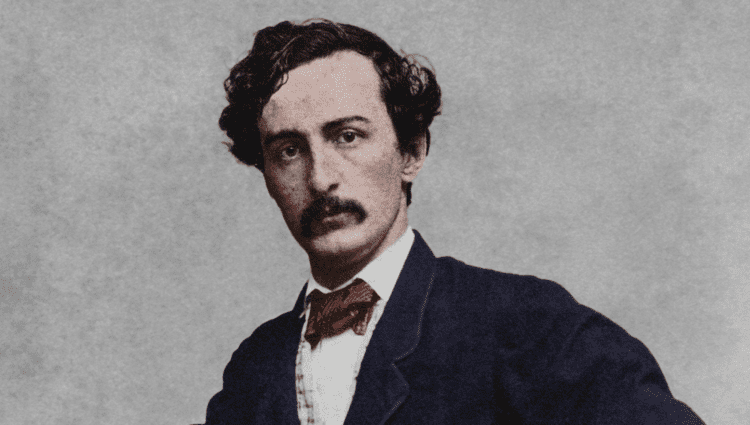
“For John Wilkes Booth, sweeping, grand gestures were a way of life. It was how he navigated his way through this world. The bigger and bolder, the better.” —Jesse Johnson, who portrayed Booth in “Killing Lincoln” Americans tend to think of assassins as mentally-unbalanced individuals, who kill—or try to kill—for reasons that make little or [...]

A Reading of the Gettysburg Address

By |2023-05-21T11:31:46-05:00March 17th, 2015|Categories: Abraham Lincoln, Alexis de Tocqueville, Civil War, Declaration of Independence, Democracy in America, E.B., Eva Brann, Senior Contributors, St. John's College|

Liberal education ought to be less a matter of becoming well read than a matter of learning to read well, of acquiring arts of awareness, the interpretative or “trivial” arts. Some works, written by men who are productive masters of these arts, are exemplary for their interpretative application. Lincoln’s Gettysburg Address is such a text, [...]

Go to Top