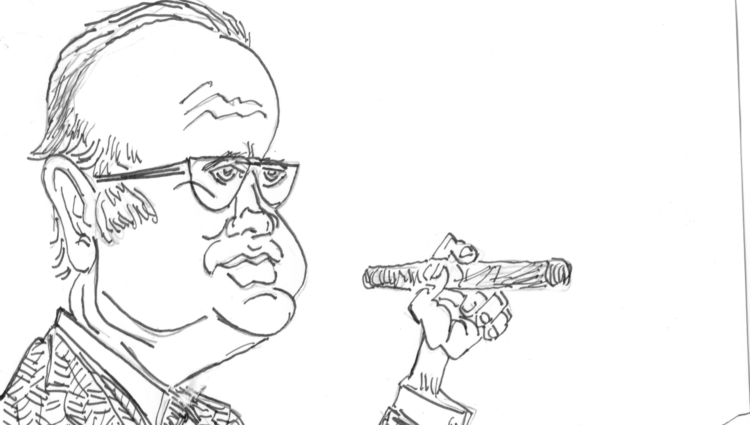
Christopher Dawson on the Spiritual Disease of the Secular West

By |2019-09-07T13:01:18-05:00October 21st, 2014|Categories: Christendom, Christian Humanism, Christianity, Christopher Dawson, Culture, Featured, Religion, Secularism|Tags: |

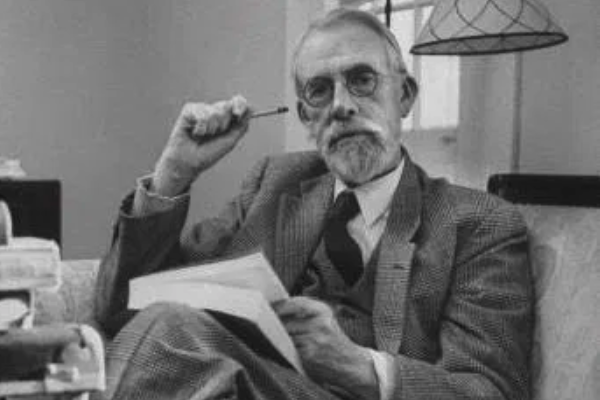
Christopher Henry Dawson has been called “the greatest English-speaking Catholic historian of the twentieth century.“[1] He was also a profound conservative critic of contemporary Western culture and his indictments were based on a synthetic interpretation of the history of mankind which is one of the most impressive ever produced. His analysis of the decline of [...]

Thomas Jefferson: A Strange Case of Mistaken Identity

By |2016-08-02T09:26:35-05:00August 24th, 2014|Categories: Thomas Jefferson|Tags: , |

Thomas Jefferson: A Strange Case of Mistaken Identity by Alf J. Mapp, Jr. Reviewing selected letters of Edmund Burke in the American Spectator in 1985, Professor Charles R. Kesler claimed that American conservatives attempting to propagate Burke’s principles “have always faced an embarassing obstacle: namely the almost complete lack of a Burkean tradition in America.” [...]

Aspects of Tragedy: Ancient and Modern

By |2019-06-27T12:48:27-05:00July 12th, 2014|Categories: Classics, Featured, George A. Panichas, Great Books, Greek Epic Poetry, Tragedy|Tags: |

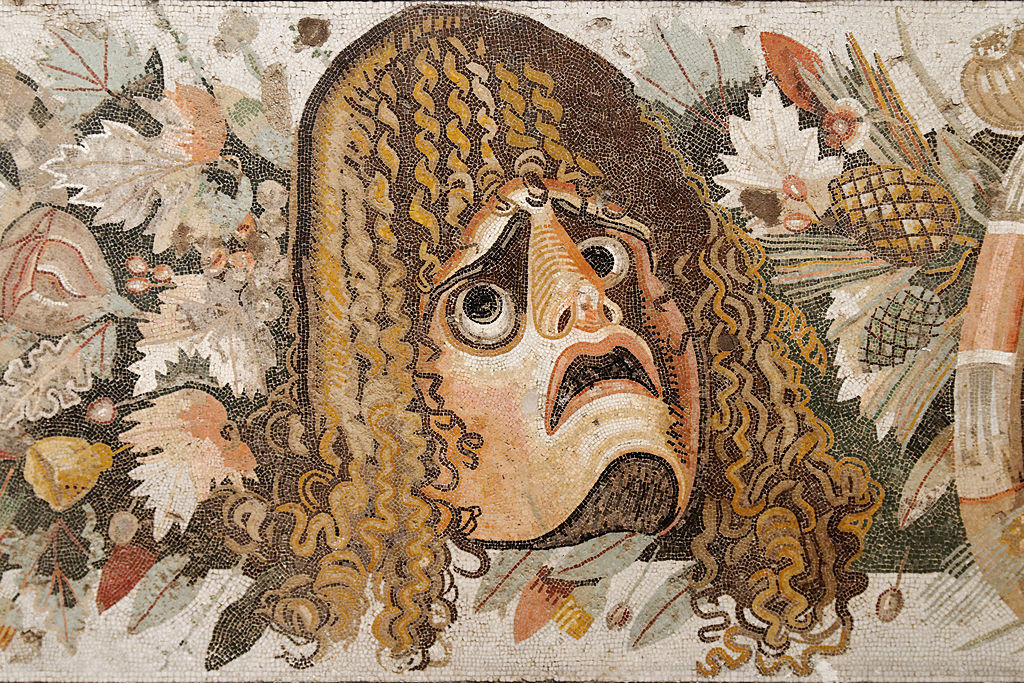
In the ancient world the perimeters of tragic vision and experience were clearly established and recognized. One could be quite clear as to the meaning of tragedy and the manifestations of tragic experience and tragic heroism. One could readily comprehend the noble stature and the transcendent realm of tragedy. One could, in short, measure oneself [...]

Culture and Colossus

By |2014-06-17T08:36:30-05:00June 16th, 2014|Categories: Books, Modernity, Neil Postman, Technology|Tags: |

Disappearing Through the Skylight: Culture and Technology in the Twentieth Century by O. B. Hardison Technopoly: The Surrender of Culture to Technology by Neil Postman The polarities of boundlessness and limits have helped to define the human experience. Although men and women have always lived with infinite longings, at one time they could not avoid [...]

The Wise Men Know What Wicked Things Are Written on the Sky

By |2019-08-15T14:32:07-05:00June 3rd, 2014|Categories: Conservatism, Featured, Literature, Moral Imagination, RAK, Russell Kirk|Tags: |

The end of the twentieth century of the Christian era is not far distant, and all about us things fall apart. There comes to my mind the last drawing from the pencil of William Hogarth, who died in 1764: it is a sufficient representation of the state of civilization today. Hogarth’s final drawing is known [...]

Bernard Iddings Bell, Rebel Rouser

By |2016-08-03T10:36:54-05:00May 27th, 2014|Categories: Bernard Iddings Bell, Christendom, Christianity, Education|Tags: , |

Bernard Iddings Bell Bernard Iddings Bell (1886-1958) wrote several controversial books examining the American way of life. These fine little books attracted considerable attention, many of them beginning as articles in the New York Times Magazine, Commonweal, and the Atlantic Monthly. By 1950 Bell, an ordained priest in the Episcopal Church, was known [...]

Russell Kirk and the Making of “The Conservative Mind”

By |2022-05-10T16:17:47-05:00May 19th, 2014|Categories: Books, Conservatism, Russell Kirk, The Conservative Mind|Tags: |

It would be too much to say that the postwar conservative movement began with the publication of Russell Kirk’s “The Conservative Mind,” but it was this book that gave it its name, and more importantly, coherence. The critic of his time must accept the risk of being accused of negativism, but he can console himself [...]

John Adams and the Spirit of America

By |2021-10-29T12:29:55-05:00May 4th, 2014|Categories: American Founding, American Republic, John Adams|Tags: |

John Adams was the most traditionalist of the American Founders and arguably the finest scholar among them. Perhaps because of this traditionalism, his immense contribution to the Founding goes largely unrecognized today. John Adams and the Spirit of Liberty, by C. Bradley Thompson, Lawrence, Kansas: University Press of Kansas, 1998. John Adams (1735-1826) was the [...]

Did The Federalist Papers Really Matter?

By |2021-05-27T22:20:59-05:00April 30th, 2014|Categories: American Founding, American Republic, Federalist Papers, Kevin Gutzman|Tags: |

In the days when the Constitution lay under active consideration by the state conventions, The Federalist gained only a limited circulation. The speeches, newspaper articles, and pamphlets of several other Federalists played larger roles in securing the constitution’s final ratification. Friends of the Constitution: Writings of the “Other” Federalists, 1787-1788, eds. Colleen A. Sheehan and [...]

Reassessing Russell Kirk: Three Critical Views

By |2021-04-28T15:36:17-05:00April 27th, 2014|Categories: Books, Conservatism, Featured, Gerald Russello, Russell Kirk, The Conservative Mind|Tags: , , |

Russell Kirk understood that politics was determined by deep cultural and intellectual influences that included the arts, literature, philosophy, religion, and community life. In short, he believed that it was not by politics alone that American and Western civilization would be restored. A Critical Biography of a Conservative Mind by James E. Person, Jr. Russell [...]

Burke’s Enduring Significance

By |2014-04-21T18:42:39-05:00April 21st, 2014|Categories: Books, Edmund Burke, Ian Crowe|Tags: |

Edmund Burke, Volume 1, 1730-1784, by F.P. Lock The Portable Edmund Burke, ed. Isaac Kramnick On Empire, Liberty and Reform: Speeches and Letters, Edmund Burke, ed. David Bromwich F.P. Lock’s Edmund Burke is the best biography of Burke to have come out in recent times, and it is all the more impressive for not trying to be what it [...]

Of Ideas and Politics

By |2014-04-17T10:34:30-05:00April 15th, 2014|Categories: Books, Conservatism, Ted McAllister|Tags: |

Perhaps contemporary conservatives misunderstand their own movement because conservative philosophy distorts conservative history. Ideas, not material conditions, drive history, conservatives aver. Richard Weaver’s Ideas Have Consequences (an editor’s title much disliked by Weaver) established a powerful model for tracing moral and civilizational change— often decline—to rather small alterations in beliefs, such as medieval nominalism. Importantly, most of [...]

The Reactionary Loyalties of John Lukacs

By |2014-04-10T09:31:39-05:00April 8th, 2014|Categories: Communism, Conservatism, John Lukacs, Winston Churchill, World War II|Tags: |

In The Duel, a riveting account of Churchill’s confrontation with Hitler in the spring and summer of 1940, John Lukacs wrote that Churchill was the opponent of Hitler, the incarnation of the reaction to Hitler, the incarnation of the resistance of an old world, of old freedoms, of old standards against a man incarnating a force that was [...]

The Moral Sense in Joseph Conrad’s Lord Jim

By |2019-04-07T10:51:25-05:00March 25th, 2014|Categories: Books, Featured, George A. Panichas, Literature, Morality|Tags: |

Lord Jim (1900), Joseph Conrad’s fourth novel, is the story of a ship which collides with “a floating derelict” and will doubtlessly “go down at any moment” during a “silent black squall.” The ship, old and rust-eaten, known as the Patna, is voyaging across the Indian Ocean to the Red Sea. Aboard are eight hundred [...]

Go to Top