Jefferson as a Man of Moderation

By |2017-02-27T21:37:55-06:00March 17th, 2014|Categories: American Founding, American Republic, Books, Edmund Burke, England, Thomas Jefferson|Tags: |

The Long Affair: Thomas Jefferson and the French Revolution, 1785-1800, by Conor Cruise O’Brien The Long Affair both succeeds and fails. By attacking the American iconic hero of liberty, Conor Cruise O’Brien succeeds in producing a stir, particularly among Jefferson scholars. The Irish scholar-politician selected passages for inclusion in The Atlantic Monthly (October 1996), entitled [...]

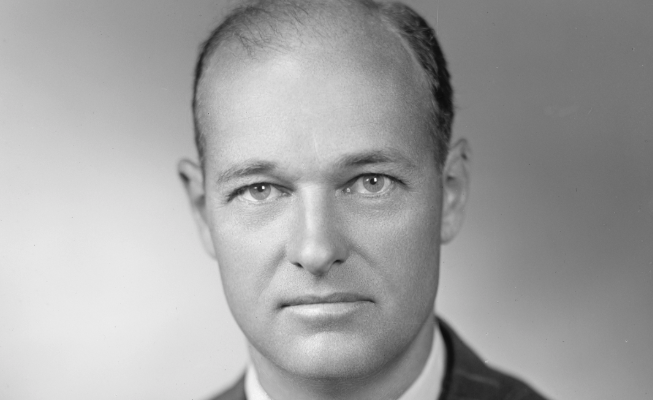
George Kennan: A Study of Character

By |2021-03-11T17:09:42-06:00February 18th, 2014|Categories: Books, Cold War, History, John Lukacs|Tags: |

John Lukacs has given us a short, penetrating study of George Kennan, who is forever associated with the Cold War strategy of containment. For all of Kennan’s famed realism, Lukacs shows that there was also a streak of naïveté in some of his views. George Kennan: A Study of Character, by John Lukacs (Yale University Press [...]

Conservatives and the Problems of Language: Rhetoric and Respectability

By |2016-04-15T10:03:55-05:00November 22nd, 2013|Categories: Conservatism, Language, M. E. Bradford, Rhetoric|Tags: |

Conservatives have struggled with the problem of adjusting their public posture so as to reflect changes in their situation. Following electoral triumph and the dramatic shift in the temper of their countrymen which produced so many encouraging results at the polls, they have been obliged to represent themselves, through the spoken or the written word, [...]

Russell Kirk: A Worthy Tribute

By |2014-02-20T16:00:36-06:00November 20th, 2013|Categories: Russell Kirk|Tags: , |

The Unbought Grace of Life: Essays in Honor of Russell Kirk, edited by James E. Person Jr. This Festschrift was in galleys when Russell Kirk‘s health began failing. On learning of Kirk‘s decline, Sherwood Sugden photocopied the galleys and mailed them to Mecosta. The editor, James Person, a close friend of the Kirks, made the long trek [...]

Good Sense, Conservatism and Faith

By |2019-04-25T11:23:06-05:00November 14th, 2013|Categories: Faith|Tags: , |

Is religious faith necessary for conservatism? A more basic question is whether it is necessary for good sense, since it is for the sake of good sense that we are conservative. If it were otherwise, conservatism would be a hobby or an ideology, and it is neither; it is simply the appearance good sense takes [...]

A Definitive Edmund Burke

By |2014-04-24T10:34:09-05:00November 5th, 2013|Categories: Books, Edmund Burke, Ian Crowe|Tags: |

Edmund Burke. Volume II: 1784-1797 by F.P. Lock The two volumes of F.P. Lock’s biography of Edmund Burke span more than one thousand pages and, by the author’s own calculation, over twenty years of research. In structure, method, and argument, they constitute a work of extraordinary consistency and erudition, and one that, in its use of [...]

Out of the Antiworld of Liberal Modernity

By |2014-01-29T14:14:11-06:00October 13th, 2013|Categories: Liberalism, Modernity, Politics|Tags: , |

Recent liberal successes, such as the ongoing redefinition of marriage to include same-sex relationships, dramatize the failure of social conservatism in public discussion. What is most striking to conservatives about the situation is the conviction among intelligent and influential people that conservative social views are altogether baseless, so that adherence to them is an intellectual [...]

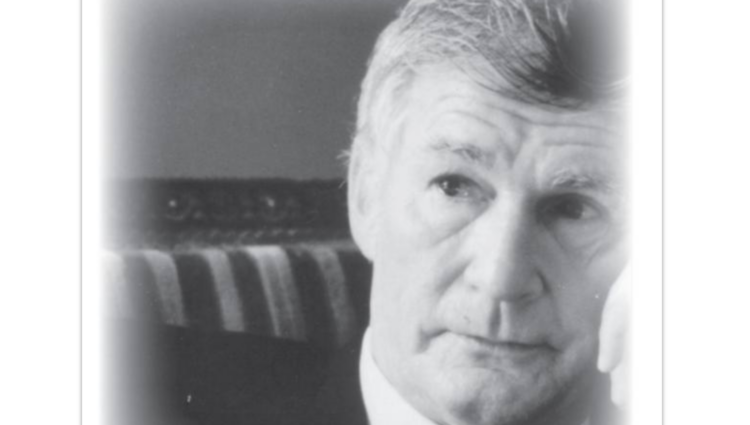
A Conservative Historian’s Memoir

By |2022-01-06T22:32:35-06:00October 5th, 2013|Categories: Books, Forrest McDonald, George Nash, History|Tags: |

Above all, Forrest McDonald survived and thrived because he was not by temperament a party-line ideologue and was unfazed by the imprecations of those who were. Unlike too many of his fellow historians who let their present-day policy agendas control their interpretation of the past, McDonald refused to distort his subjects in this way. Recovering [...]

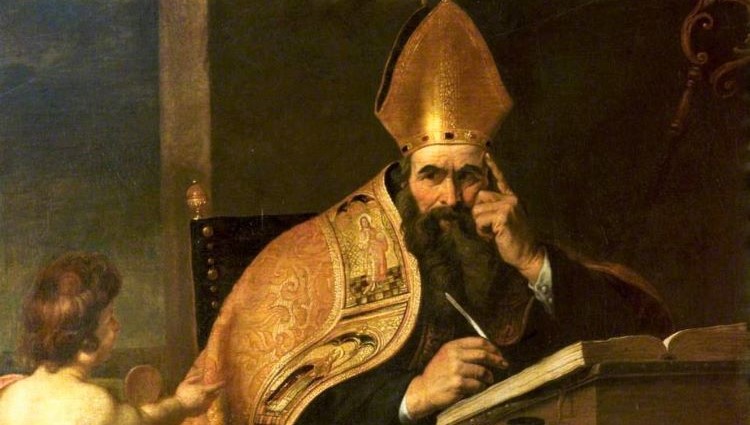
The Political Relevance of St. Augustine

By |2021-03-31T13:13:36-05:00September 21st, 2013|Categories: Christendom, Christianity, Political Philosophy, St. Augustine, St. Thomas Aquinas|Tags: |

It is surprising that contemporary political thinking has paid relatively scant attention to St. Augustine, the Bishop of Hippo. It may be true, as some say, that we live in the post-Christian era. It certainly cannot be gainsaid that we live in an age of pervasive secularism in which a name such as Augustine seems [...]

The Politics of Fear and Hatred

By |2019-10-01T15:47:36-05:00September 19th, 2013|Categories: Books, Democracy, John Lukacs, Populism|Tags: , |

Democracy and Populism: Fear and Hatred, by John Lukacs. New Haven: Yale University Press, 2005. 248 pp. There are few scholars whose intellectual achievements are so respected that their intuitions are as highly regarded as their more formal scholarship. John Lukacs is one of these rare individuals. He brings to his work a lifetime of devotion [...]

Good Fences: Paul Lake’s “Cry Wolf”

By |2022-08-16T16:31:54-05:00September 12th, 2013|Categories: Books, Literature, Mark Malvasi|Tags: , |

Paul Lake’s vision of the American future is conceivable, and may yet prove accurate, but it is also unlikely. Two more realistic possibilities, short of an American Götter-dämmerung, are the resurgence of a truculent bigotry or the decline of national cohesion. Neither prospect bodes well for the fate of the United States. Few books invite [...]

Brave New World and the Flight from God

By |2019-08-29T15:24:50-05:00August 20th, 2013|Categories: Aldous Huxley, Books, Faith, Featured|Tags: |

Aldous Huxley’s Brave New World (1932) is commonly seen as an indictment of both tyranny and technology. Huxley himself described its theme as “the advancement of science as it affects human individuals.”[1] Brave New World Revisited (1958) deplored its vision of the over orderly dystopia “where perfect efficiency left no room for freedom or personal [...]

Go to Top