About Cicero Bruce

Dr. Cicero Bruce is Professor of English at Dalton State College. He is the author of W.H. Auden’s Moral Imagination and author of the introduction to the new edition of Crowd Culture by Bernard Iddings Bell.

What Today’s Academics Have Forgotten About Education

By |2026-01-14T13:45:34-06:00January 14th, 2026|Categories: Christianity, Classical Learning, Education, Evil, Nature of Man, Truth, Virtue|

Many academics have forgotten the true and the good and have largely cut themselves loose from all philosophical moorings. Students under the tutelage of such professors are certain to confuse right with wrong, virtue with vice, good with evil, and authority with force, and to have no fixed axioms by which to orient themselves in [...]
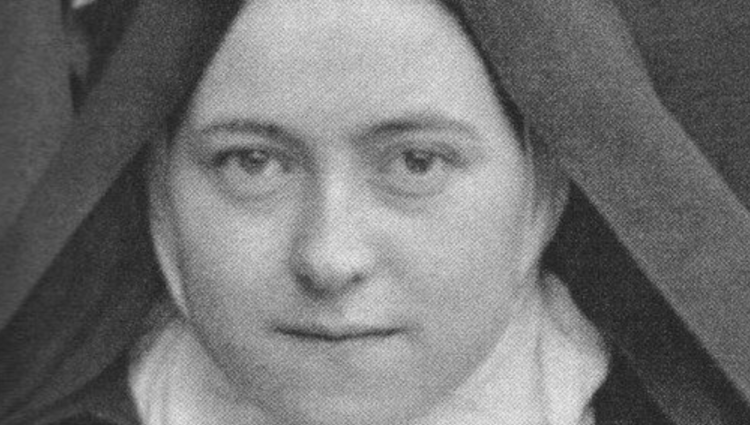
St. Thérèse of Lisieux: Two Very Different Biographies

By |2025-09-30T19:32:08-05:00September 30th, 2025|Categories: Books, Catholicism, Christianity, Timeless Essays|

Biographies by Fr. Bernard Bro and and Kathryn Harrison give us two vivid depictions of St. Thérèse. Yet, attitudinally speaking, their accounts of this Christ-imitating, self-immolating woman of Lisieux have little in common. Thérèse of Lisieux made the first record of her life, and that record, written in obedience to her Carmelite superior, is the [...]

Apostles to the Skeptic: C.S. Lewis and the Catholic Church

By |2024-05-28T14:16:28-05:00May 28th, 2024|Categories: Books, C.S. Lewis, Catholicism, Christian Humanism, Christianity, Joseph Pearce, Timeless Essays|

Joseph Pearce’s “C.S. Lewis and the Catholic Church” presents a compelling case in suggesting that its subject evolved “into a very Catholic sort of Protestant.” Though C.S. Lewis never became a Roman Catholic, his later works betray a growing affinity for Catholic teaching. C. S. Lewis and the Catholic Church, by Joseph Pearce (220 pages, [...]

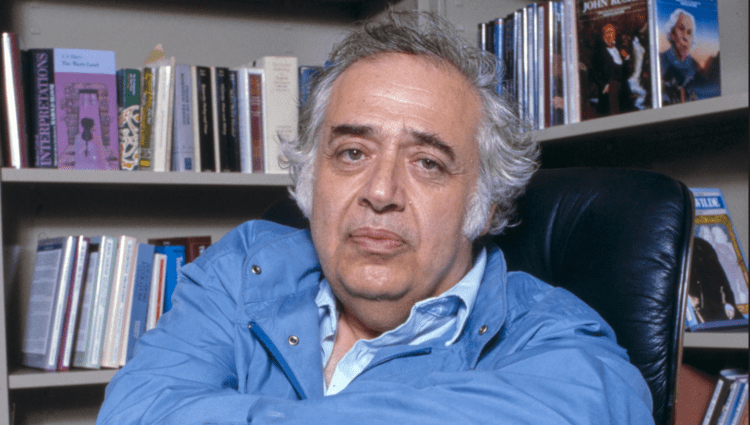
An Elegy for Harold Bloom

By |2024-05-21T13:41:41-05:00May 20th, 2024|Categories: Literature, Poetry, Western Civilization, Western Tradition|

For Harold Bloom, our intellectual strength, the strength of Western civilization, consists in the canon: “Without the Canon we cease to think.” Reading canonical literature serves the individual exclusively: “It enables one to know and endure oneself as a human being.” In the introduction to his controversial masterpiece The Western Canon: The Books and  School [...]

The Stand of Allen Tate

By |2023-10-06T06:40:58-05:00October 5th, 2023|Categories: Agrarianism, Allen Tate, South, Southern Agrarians|

“No society is worth ‘saving’ as such,” wrote Allen Tate (1899–1979). “What we must save is the truth of God and man, and the right society follows.”1 Such words are anathema to the secularists whose “progressive” theories have intoxicated the modern mind. Words of this kind are neither popular nor politically expedient in an age [...]

Charles Williams in Letters & Remembrances

By |2023-06-02T18:10:49-05:00June 2nd, 2023|Categories: Christianity, Literature|

If there is one essential theme in Charles Williams’ writing, it is summed up in his favorite quotation from Julian of Norwich: “I saw full assuredly that our substance is in God, and also I saw that in our sensualities God is.” His wife recalled that their life together, from beginning to end, aspired to [...]

Defending the Permanent Things

By |2022-09-22T17:17:45-05:00September 22nd, 2022|Categories: Books, Classical Education, Culture, Education, Language, Liberal Learning, Timeless Essays|

Apologists for Greek and Latin have lately dwindled. Yet in the past several years there have been some notable attempts to save classical education from utter extinction—one of which is Tracy Lee Simmons’ “Climbing Parnassus.” Climbing Parnassus: A New Apologia for Greek and Latin, by Tracy Lee Simmons (290 pages, Intercollegiate Studies Institute, 2007) As [...]

The Ideal Teacher of Literature

By |2022-08-28T19:25:27-05:00August 28th, 2022|Categories: Literature, Timeless Essays|Tags: |

With his students, the ideal teacher of literature seeks the center of knowledge, which he understands in metaphysical or theological terms. His vehicle is poetry, by which he means the imaginative creation of action and character in either prose or verse. When they seek the center in communion with the greatest of poets, teacher and student [...]

Flannery O’Connor’s Religious Imagination

By |2022-08-15T15:43:34-05:00August 15th, 2022|Categories: Books, Catholicism, Flannery O'Connor, Imagination|

Christian humility is clearly what Flannery O'Connor's protagonists most lack. What characterizes them in its absence is pride, which O’Connor attributed to inherent sinfulness. Her protagonists undergo powerful spiritual transformations that result from discomfiting experiences effected by the grace of God. Flannery O’Connor’s Religious Imagination: A World with Everything Off Balance, by George A. Kilcourse, [...]

Four Roads to Rome

By |2021-01-21T15:11:41-06:00January 21st, 2021|Categories: Books, Catholicism, Flannery O'Connor, Literature|

In “The Life You Save May Be Your Own,” Paul Elie weaves together the historically parallel stories of Dorothy Day, Thomas Merton, Walker Percy, and Flannery O’Connor. Truly these were four of the last century’s most remarkable Catholic writers. The Life You Save May Be Your Own: An American Pilgrimage, by Paul Elie (554 pages, [...]

From Highest Heaven Handed Down

By |2020-09-28T16:33:34-05:00September 28th, 2020|Categories: Books, Christianity, Natural Law, Philosophy, St. Thomas Aquinas|

Russell Hittinger’s “The First Grace” deals mightily with the crisis of our time—namely, the failure of those who make, enjoy, and judge the constitutionality of laws to appreciate the dire consequences of denying the place of natural-law considerations in the ordering of public life. The First Grace: Rediscovering the Natural Law in a Post-Christian World, [...]

Between the Seen and Unseen

By |2020-08-20T11:24:21-05:00August 22nd, 2020|Categories: Books, Christianity, Heaven, Philosophy, Science|

Heaven is an unreality for contemporary physicalists of all schools of thought who preach that matter is the only reality and that everything in the world can be explained solely in materialist terms. Yet for those who are open to the sacramental dimension of our diurnal existence, heaven is here, there, and everywhere. Paradise Mislaid: [...]

W.H. Auden’s Discovery of Original Sin

By |2020-08-03T17:01:58-05:00August 4th, 2020|Categories: Literature, Poetry, T.S. Eliot|Tags: , |

For several months after his 1939 immigration to the United States, W.H. Auden (1907-1973) remained enchanted with all the old dogmas—psychology, Marxism, and liberal humanism—that had shaped so much of his early work. As a poet, he continued to assert his faith in man’s ability to save civilization from ruin. Composed like all mankind “Of [...]

Joseph Conrad’s Imagination

By |2021-04-27T20:11:10-05:00July 15th, 2020|Categories: Books, George A. Panichas, Great Books, Imagination, Literature, Moral Imagination|

For Joseph Conrad, the struggle between good and evil in the human soul was a permanent reality, a reality one might prefer to avoid, or try to sublimate, but one that nobody who has lived long can absolutely deny. Joseph Conrad: His Moral Vision, by George A. Panichas (165 pages, Mercer University Press, 2005) In [...]

Go to Top