About Bradley J. Birzer

Bradley J. Birzer is the co-founder of, and Senior Contributor at, The Imaginative Conservative. He is the Russell Amos Kirk Chair in History at Hillsdale College and Fellow of the Ronald Reagan Presidential Library. Dr. Birzer is author of In Defense of Andrew Jackson, Russell Kirk: American Conservative, American Cicero: The Life of Charles Carroll, Sanctifying the World: The Augustinian Life and Mind of Christopher Dawson, J.R.R. Tolkien’s Sanctifying Myth: Understanding Middle-Earth, co-editor of The American Democrat and Other Political Writings by James Fenimore Cooper, and co-author of The American West.

The Truth of Myth

By |2020-10-20T15:13:35-05:00May 1st, 2015|Categories: Bradley J. Birzer, Christianity, Featured, G.K. Chesterton, J.R.R. Tolkien, Myth|

Myth equals a truth that cannot be explained by mere fact. A fact is utilitarian: It demands verification and replication. A myth can emphasize the beauty of God’s creation as well as the sacramental nature of life. Myth holds an estranged place in the modern world. But this is the modern world’s fault, not myth’s. [...]
The First Dystopian: Robert Hugh Benson

By |2022-06-01T10:48:14-05:00April 24th, 2015|Categories: Books, Dystopia, Dystopian Literature series by Bradley Birzer, Social Order|

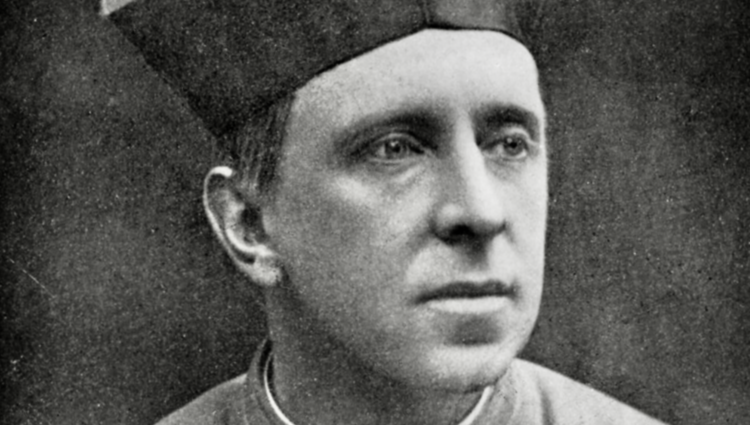
Arguably the first twentieth-century dystopian, Robert Hugh Benson authored “Lord of the World,” a prophetic vision of a ravaged world run by an unholy alliance of Free Masons and Communists. The first great dystopian writers of the twentieth century came from upstanding British families. Arguably the first twentieth-century dystopian, Robert Hugh Benson was the third [...]

The Rise of Dystopian Literature

By |2017-01-10T15:40:23-06:00April 18th, 2015|Categories: Books, Bradley J. Birzer, Dystopia, Dystopian Literature series by Bradley Birzer, Featured|

A culture cannot survive without a religion, at least not for long. A culture derives from the cultus, the group of people, usually based on kinship ties, who banded together to worship the same deity or deities. Once a common worship and understanding of theology develop, a culture developed from it. From the culture, then [...]

A Guide to Dystopian Literature

By |2018-09-25T16:24:25-05:00April 1st, 2015|Categories: Books, Dystopia, Dystopian Literature series by Bradley Birzer, Featured, Social Order|

Preface For almost as long as I have had the privilege of reading, I have read dystopian literature. I started with Fahrenheit 451 and The Martian Chronicles, but I soon rather quickly devoured Brave New World, Animal Farm, and Nineteen Eighty-Four as well as many of the works of Robert Heinlein, Ursula Le Guin, Arthur [...]

John Dickinson: First Patron of American Independence

By |2021-07-03T17:24:27-05:00March 18th, 2015|Categories: American Republic, Bradley J. Birzer, John Dickinson|

When Thomas Jefferson expressed the common sense of the subject of independence in 1776 in the Declaration, he and Congress relied on the intellectual and philosophical convictions first expressed by John Dickinson nearly a decade earlier in “Letters from a Pennsylvania Farmer.” Viscounted Foolishness When the Rockingham ministry fell in 1766, one of the most [...]

Tolkien’s Hope for the Modern World

By |2019-12-26T16:34:14-06:00March 11th, 2015|Categories: Books, Bradley J. Birzer, Christianity, Featured, J.R.R. Tolkien, Modernity|

Clyde Kilby, an English professor from Wheaton College, worked with Tolkien in the summer of 1966. “Tolkien was an Old Western Man who was staggered at the present direction of civilization,” Kilby recorded after a summer of conversations with Tolkien. “Even our much vaunted talk of equality he felt debased by our attempts to ‘mechanize [...]

Mass Murder and Modern Ideological Regimes

By |2019-09-12T11:29:32-05:00February 24th, 2015|Categories: Aleksandr Solzhenitsyn, Bradley J. Birzer, Christian Humanism, Christianity, Christopher Dawson, Ideology, Religion, Revolution, T.S. Eliot|

The twentieth century witnessed the shattering of the traditional social and moral order among nations as the infection of the ideologues and their murderous ideological regimes spread throughout the civilized world. It began in earnest with the assassination of a central European archduke and the consequent destruction of the Old World in 1914. But in truth, the [...]

How Livy Predicted the Fall of America

By |2021-02-10T23:57:08-06:00February 16th, 2015|Categories: American Republic, Bradley J. Birzer, Civilization, Featured, Livy, Rome|

Can you imagine a Roman republican, reborn, walking the streets of Philadelphia in 1776? Or how about Lexington in 1775? Or perhaps Boston in 1765? What would he think of the American fondness for Rome and her republicanism? What would the Americans think of him? I am guessing that an American republican would be much [...]

C.S. Lewis and the Hope of the Natural Law: A Brief Remembrance

By |2016-08-03T10:36:34-05:00February 13th, 2015|Categories: Bradley J. Birzer, C.S. Lewis, Christendom, Christianity, Natural Law|

During England’s darkest days of World War II, hope emerged from an unlikely source. An Oxford don–a professor of English literature, who would later be best known for a seven-part children’s fantasy series–gave frequent public addresses to the English people. Their purpose was to bolster English spirits. In late February, 1943, he devoted three of [...]

The Optimism of Ronald Reagan

By |2015-02-06T10:15:47-06:00February 6th, 2015|Categories: Bradley J. Birzer, Featured, Government, Progressivism, Ronald Reagan|

While many across the political spectrum would like to discover the secret of Ronald Reagan’s success, some conservatives, believing the fortieth president a high priest of the American civil religion, have dismissed him as a barely closeted progressive who blithely saw the good in all. After all, it is always morning in America… While one might [...]

Go to Top