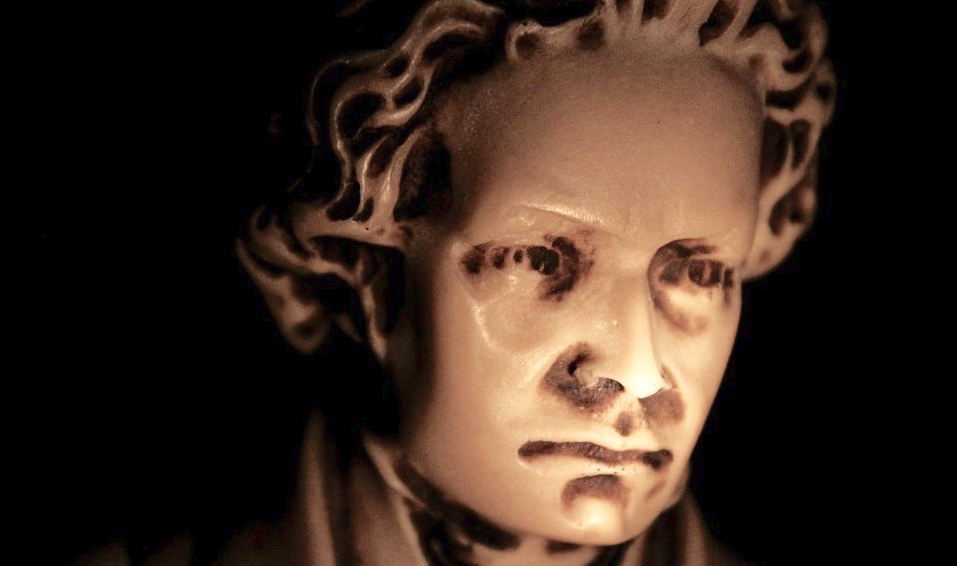
The Element of the Unexpected in Beethoven

By |2020-04-02T02:32:10-05:00July 18th, 2018|Categories: Books, Ludwig van Beethoven, Music, Quotation|

The element of the unexpected is so often associated with Beethoven. But surprise is not enough; what makes it so great is that no matter how shocking and unexpected the surprise is, it always somehow gives the impression—as soon as it has happened—that it is the only thing that could have happened at that moment. [...]
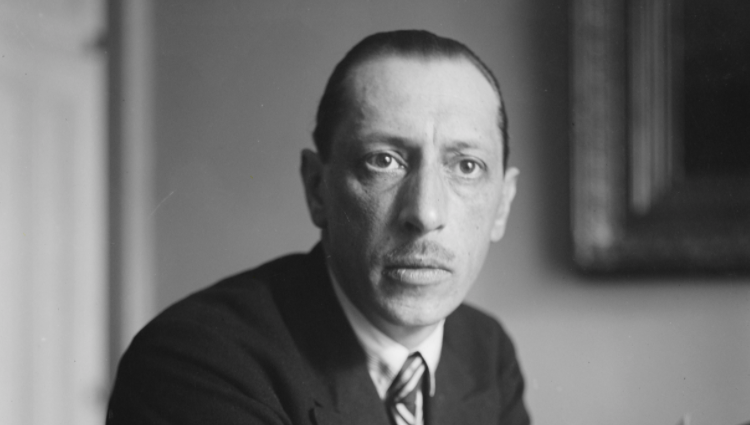
The Moral Conservatism of Igor Stravinsky

By |2021-06-16T17:57:45-05:00June 29th, 2018|Categories: Audio/Video, Christianity, Culture, Igor Stravinsky, Music|

Igor Stravinsky is endlessly touted as an arch-modernist, but “The Soldier’s Tale” and “The Rake’s Progress” show him to be something more important: a great twentieth-century moralist. Igor Stravinsky (1882-1971) was certainly the greatest composer of the twentieth century, yet most listeners never go beyond his “Russian” period as represented by the meteoric early ballets [...]

Site & Sound, Size & Scale: How to Build Humane Concert Halls

By |2023-05-04T23:01:51-05:00June 21st, 2018|Categories: Architecture, Books, Culture, Music|

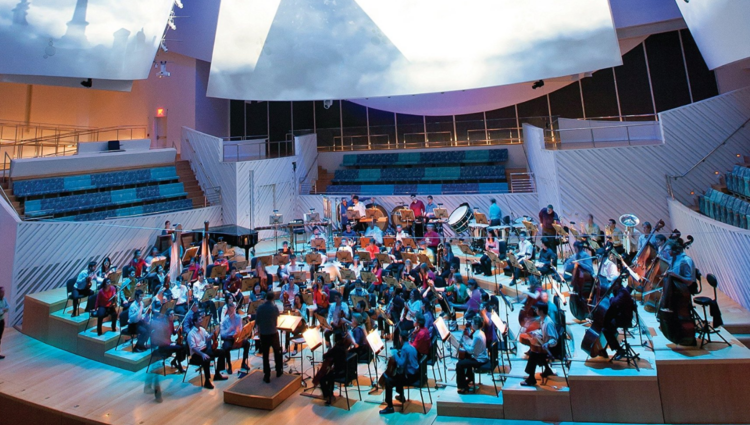
We spend so much time in these giant buildings—shopping malls, monstrous office complexes, big box stores. Classical music should bring people together in a more social, intimate way. We’re hoping to design the whole concert experience from the beginning to be smaller. It’s about shrinking the scale, bringing classical music into the human scale. There [...]

“Ave Maria”

By |2019-11-19T13:47:23-06:00May 13th, 2018|Categories: Audio/Video, Camille Saint-Saëns, Catholicism|

Editor's Note: Camille Saint-Saëns wrote the Ave Maria in A major in 1860. Known in his lifetime mainly as a composer of operas, and remembered by posterity largely for his orchestral works, yet Saint-Saëns also composed many sacred works. Once asked why he, an atheist, composed sacred music, Saint-Saëns replied: "I know how to respect what [...]

The Art and Delight of Progressive Rock

By |2019-09-02T11:22:42-05:00May 10th, 2018|Categories: Books, Bradley J. Birzer, Culture, Music, Progressive Rock|

Jerry Ewing’s greatest achievements in Wonderous Stories are to show conclusively that progressive rock never died and continues to thrive; and that it’s a vital and vibrant cultural expression, worthy of all due scholarly and cultural attention… Wonderous Stories: A Journey Through the Landscape of Progressive Rock by Jerry Ewing (167 pages, Flood Gallery Publishing, 2018) [...]

Requiem for His Daughter: Franz Schmidt’s Lament

By |2026-02-14T22:06:39-06:00May 9th, 2018|Categories: Audio/Video, Culture, Death, History, Music|

Franz Schmidt’s lament makes grief beautiful. It elevates it to something irreproachable, like snow on a mountain peak that, when you’re stumbling around in it, stings and chills and makes you lose your footing, but from the distance, oh, the inexpressible beauty. As the story has it, when Hungarian-born twentieth century composer Franz Schmidt received the [...]

Chopin for Everyone

By |2019-11-19T13:49:57-06:00May 2nd, 2018|Categories: Audio/Video, Culture, History, Music|

There’s something about Frédéric François Chopin that puts him and his music in a category of its own. Born in Poland, a child prodigy on the piano, Chopin trained in Warsaw, and left Poland at age twenty. By twenty-one, he was settled in Paris and quickly became Someone Worth Listening To… I’ve always liked Chopin [...]

Elgar, Enigma, and Easter

By |2023-04-11T20:11:12-05:00April 2nd, 2018|Categories: Catholicism, Christianity, Culture, Easter, Music|

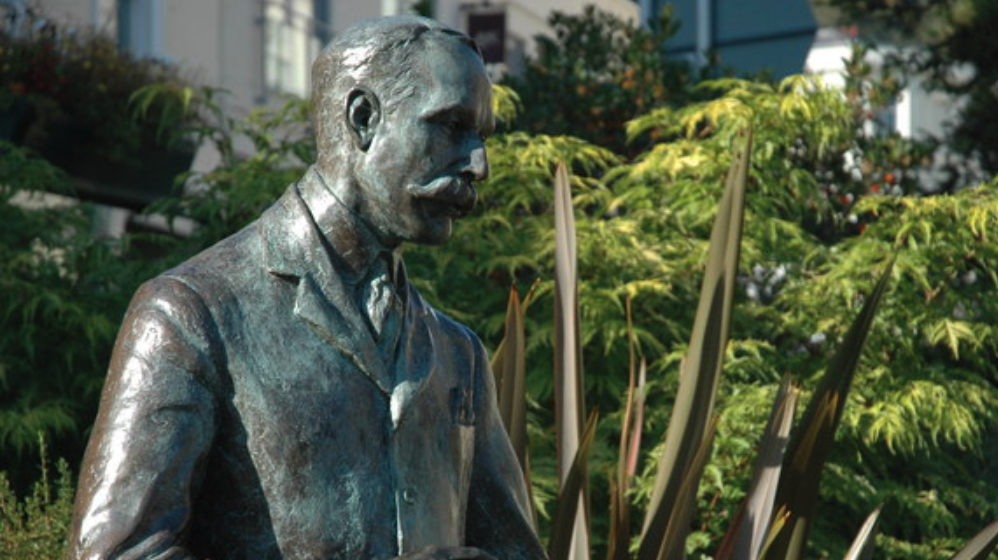
Easter likely hadn’t been on Edward Elgar’s mind when he wrote his “Enigma Variations,” yet this wondrous, utterly memorable piece conjures up a rush of powerful spirituality, a sense of Easter Sunday grandeur. It is most decidedly “death has been conquered; arise and go forth” music. While my first choice for classical music on Easter [...]

The Exoticism & Euphoria of Debussy’s “Afternoon of a Faun”

By |2018-03-24T22:13:59-05:00March 24th, 2018|Categories: Art, Culture, Music|

Claude Debussy’s “Afternoon of a Faun” delivers volumes of sensation. Languor, sensuality, euphoria, curiosity, an awareness of the exotic. You are flung back to your own childhood, your adolescence, all awash in new experiences, colors, sensations. For ten fleeting minutes, you let the music cradle you, transport you… When I listen to Debussy’s “Prelude to [...]

“Irish” Symphony

By |2021-03-15T21:04:58-05:00March 17th, 2018|Categories: Audio/Video, Music|

Arthur Sullivan began writing what would be his only symphony when he was twenty-one years old, on a trip to Ireland, the native land of his father.  "The other night as I was jolting home," he wrote to his mother from Belfast, "through the wind and rain on an open jaunting car, the whole first [...]

Haunted by Camille Saint-Saëns’ “Organ Symphony”

By |2023-10-09T09:53:02-05:00March 1st, 2018|Categories: Audio/Video, Beauty, Camille Saint-Saëns, Culture, History, Music|

Camille Saint-Saëns’ Symphony No. 3 has so many distinct and wonderful flavors, it just amazes me. And the first movement is so vibrant, unexpected, cinematic. The second movement utterly transports me. Being haunted by music sounds like something I should be writing about in late October, but I think it will still work. And there’s no [...]

Copying Mozart: Did Beethoven Steal Melodies for His Own Music?

By |2022-06-11T17:49:37-05:00February 21st, 2018|Categories: Audio/Video, Ludwig van Beethoven, Music, Stephen M. Klugewicz, Wolfgang Amadeus Mozart|

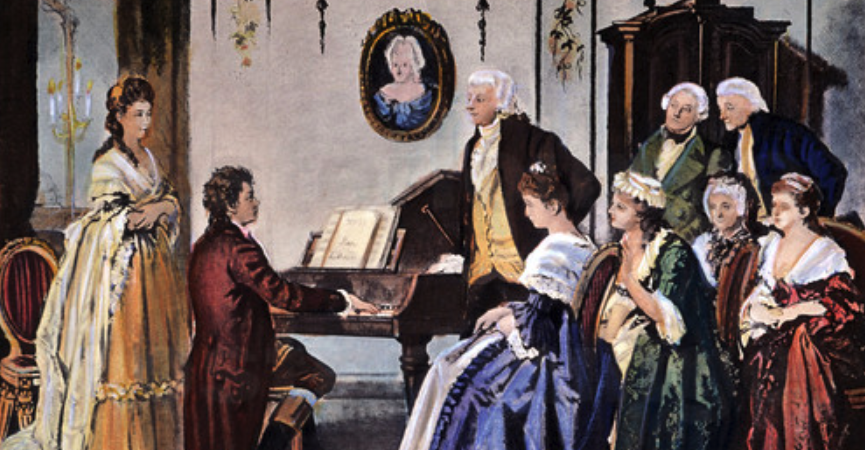
Did Beethoven steal tunes from his older contemporary for the "Eroica" Symphony, the Ninth Symphony, and for his most popular and beautiful song? "This entire passage has been stolen from the Mozart symphony in C." —written by Beethoven on one of his own musical sketches It is one of the most popular tunes in all [...]

“Roman Carnival”

By |2022-02-28T19:45:22-06:00February 13th, 2018|Categories: Audio/Video, Catholicism, Hector Berlioz, Music|

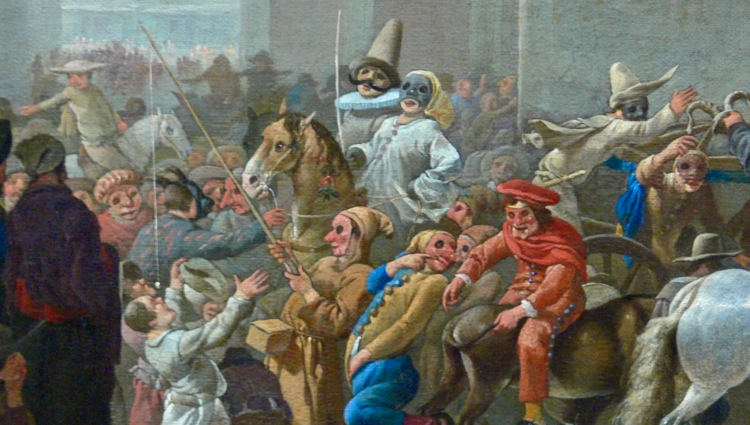
Hector Berlioz composed Le carnaval romain, ouverture pour orchestre (Roman Carnival Overture), Op. 9, in in 1844. Intended to be performed as an independent piece, it employs themes from Berlioz' opera Benvenuto Cellini: The beautiful melody on cor anglais in the slow introduction comes from the Act I duet between Teresa and Cellini, and the rousing central section [...]

Go to Top