The Three Conservative Burkes: Hayek, Strauss, and Kirk

By |2020-03-05T10:18:27-06:00March 5th, 2020|Categories: Bradley J. Birzer, Conservatism, Edmund Burke, Leo Strauss, Politics, Russell Kirk, Senior Contributors, Western Civilization, Western Tradition|

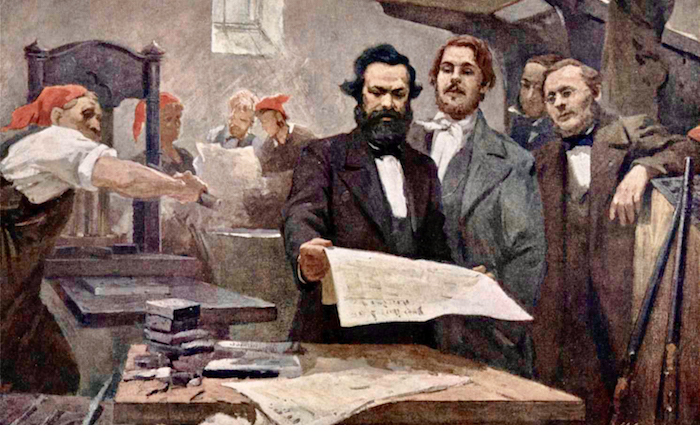
Edmund Burke was the nexus among the classical, medieval, and modern worlds, and the best answer to contemporary ideology. It is worth considering the Burke of Friedrich Hayek, Leo Strauss, and Russell Kirk in order to fully understand his importance to the rise of conservatism in academia after World War II. The somewhat radical (relatively [...]

Bradley Birzer’s “Beyond Tenebrae”

By |2020-03-02T10:33:54-06:00March 2nd, 2020|Categories: Books, Bradley J. Birzer, Christian Humanism, Christianity, Culture|

Despite the secularist’s attempts to lay claim to the word “humanism,” there’s nothing intrinsically secular about it. Using “humanism” as if it were in opposition to “theism” is to create a false dichotomy. Bradley Birzer’s “Beyond Tenebrae” serves to clearly illustrate that good theists can be good humanists—and are sometimes the best. Beyond Tenebrae: Christian [...]

A Founding of Words

By |2020-02-28T10:21:43-06:00February 24th, 2020|Categories: American Founding, American Republic, Bradley J. Birzer, History, John Adams, Literature, Senior Contributors|

In so many ways, the American founding era (1761-1793) is a time period without equal in all modern history, as a dedicated group of citizens attempted to create and sustain the first republic on any large scale since the collapse of the Roman Republic with the assassination of Senator Marcus T. Cicero (43B.C.). They did [...]

The Hounds in Full Cry: Roger Scruton’s Conservatism

By |2020-02-17T16:49:05-06:00February 17th, 2020|Categories: Bradley J. Birzer, Conservatism, Government, Politics, Roger Scruton, Senior Contributors, Western Tradition|

In almost every way, Sir Roger Scruton was a thorn in the side of modernity and post-modernity. With Burke, he fought a “forlorn but dignified resistance to the tides of history.” He sought a future in which the national loyalty would endure, holding things together, providing all of us with sources of hope. No one [...]

A Homeric Life: Neil Peart

By |2020-02-11T11:33:54-06:00February 14th, 2020|Categories: Bradley J. Birzer, Culture, Music, Progressive Rock, Senior Contributors|

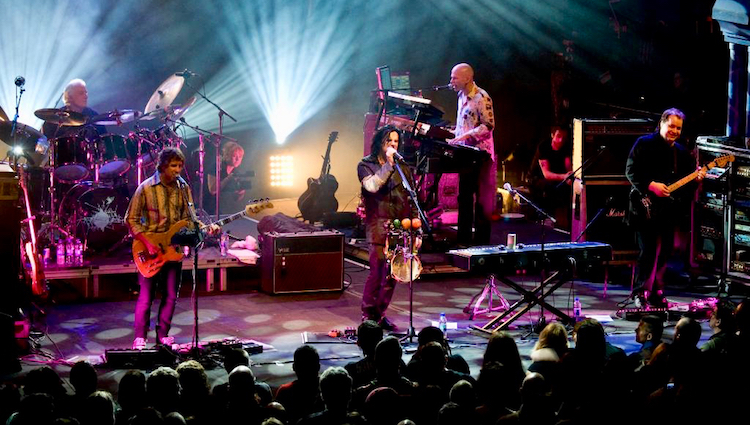
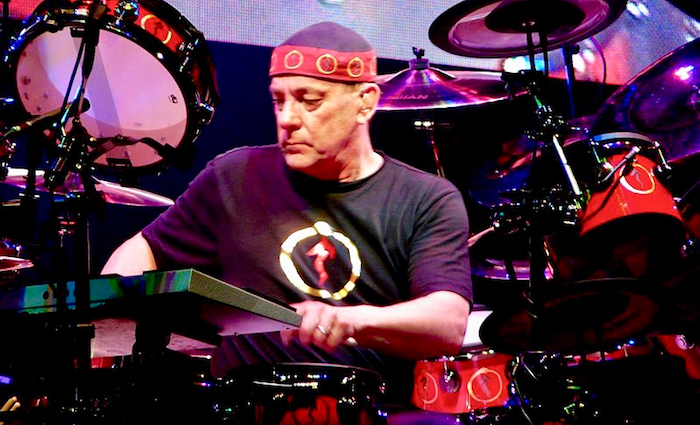
On Tuesday, January 7, 2020, Neil Ellwood Peart valiantly lost his three and half-year battle against brain cancer. On that same day, he entered Valhalla, escorted by at least one Valkyrie, but quite possibly by two or three. Peart has shaped many of us very quietly and sometimes not so quietly. I can state with [...]

Now Residing in the Blessed Realm: Christopher Tolkien

By |2020-02-11T16:45:42-06:00February 11th, 2020|Categories: Bradley J. Birzer, Fiction, Imagination, J.R.R. Tolkien, Literature, Senior Contributors, Western Civilization|

After his father’s death, Christopher Tolkien became the literary heir of all things Middle-earth. He quit his prestigious academic professorship at Oxford and dedicated himself fully to his father’s legacy. We are a better people and a better civilization as a result. On Wednesday, January 15, 2020, the holy host of the Valar (all 14 [...]

T.E. Hulme on the Religious Attitude

By |2020-09-15T15:34:41-05:00February 8th, 2020|Categories: Bradley J. Birzer, Christian Humanism, Conservatism, Modernity, Senior Contributors, T.E. Hulme|

“Man is in no sense perfect, but a wretched creature who can yet apprehend perfection.”—T.E. Hulme The mediocrity and driftless purposelessness of liberalism had permeated and shattered true humanist culture at the turn of the nineteenth-to-the-twentieth century, the great historian and man of letters Christopher Dawson feared. Too many unthinking liberals had tried to do [...]

Making Sense of a Chaotic World: “Red Metal”

By |2020-02-05T23:52:25-06:00February 4th, 2020|Categories: American Republic, Books, Bradley J. Birzer, Cold War, Communism, Politics, Senior Contributors, War|

“Red Metal” fully understands that we live in a post-Communist world, a world of fundamentalisms as well as of nation-states and tenuous alliances. I highly recommend the novel, not only for its entertainment value, but also for its ability to ask all the right questions we Americans need to be asking. Red Metal, by Mark [...]

Paul Elmer More’s Nietzsche

By |2020-01-22T11:15:07-06:00January 24th, 2020|Categories: Bradley J. Birzer, Conservatism, Friedrich Nietzsche, Paul Elmer More, Philosophy, Senior Contributors|

Paul Elmer More offered one of the single best critiques of Friedrich Nietzsche, delving deeply into the essence of his thought, in both attraction and repulsion, finding that it is in the attempt to reconcile the love and apprehension about Nietzsche that best allows one to understand him. “Who has ever been concerned for me [...]

Oh, Death, Where is Thy….

By |2024-12-30T09:07:38-06:00January 22nd, 2020|Categories: Bradley J. Birzer, Death, Imagination, Roger Scruton, Senior Contributors|

Death is a truly strange thing. It has touched each of us, to be sure, by visiting loved ones. Yet, sometimes, it seems just unbelievably relentless. Death has already taken so many greats in the first half of January 2020—Neil Peart on January 7; Sir Roger Scruton on January 12; and Christopher Tolkien on January [...]

The Implications of the Logos for Christianity

By |2020-01-15T15:12:10-06:00January 15th, 2020|Categories: Bradley J. Birzer, Christian Humanism, Christianity, Culture, Religion, Senior Contributors|

If, as established in my two previous two essays*, the Logos has its roots in ancient pagan as well as ancient Hebraic thought, what does this mean for Christianity and its adoption of the term? Clearly, the most blatant manifestations of the Greco-Hebraic concept of the Logos—the eternal Word, the unending fire, thought, and imagination—appear [...]

The Ancient Hebrew Roots of the Christian Logos

By |2023-10-08T19:34:06-05:00January 9th, 2020|Categories: Bible, Bradley J. Birzer, Christianity, Classics, Great Books, Senior Contributors|

Though originally a Jew, St. John was clearly a Hellenized Jew who might have taken his own concepts from either the pagans or the Jews. As he describes the Incarnate Word in his Gospel, the Incarnation resembles most closely the Memra of the Jews. As I discussed in my previous essay, the Pagan Logos had [...]

The Pagan Roots of the Christian Logos

By |2020-01-10T09:38:29-06:00January 7th, 2020|Categories: Bradley J. Birzer, Christian Humanism, Christianity, Cicero, Classics, Great Books, Liberal Learning, Virgil|

Any understanding of human dignity in the twenty-first century demands an understanding of the Judeo-Christian Logos (Memra in Hebrew). Without it, there is only chaos and darkness, dispiritedness and confusion, blackness and the abyss. One only has to witness the evil sown by the attempted coup against the Judeo-Christian Logos in the last century by [...]

Go to Top