Eric Voegelin, Leo Strauss, & American Conservatism

By |2024-06-26T19:34:16-05:00June 26th, 2024|Categories: Conservatism, Eric Voegelin, Featured, Leo Strauss, Timeless Essays|

Conservatives are people who defend certain traditional goods, because they know they’re worth defending. Political philosophy, by contrast, is animated by concerns quite different from political battles or external goods. It’s fundamentally a quest for insight, not influence. Eric Voegelin and Leo Strauss were essentially philosophers, not conservatives. For more than fifty years, American conservatives [...]
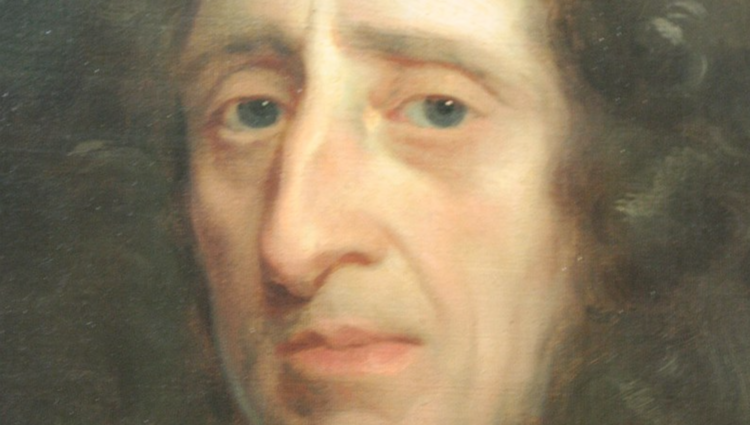
John Locke: The Harmony of Liberty & Virtue

By |2023-08-28T18:01:13-05:00August 28th, 2023|Categories: American Republic, Civil Society, Featured, Federalist Papers, Freedom, John Locke, Leo Strauss, Liberty, Philosophy, Timeless Essays, Virtue|

Government remains limited in civil society because God gave man the ability, through work and reason, to subdue the earth and thereby improve his life by the use of pri­vate property. Understanding Locke John Locke is one of the few major philoso­phers who can be used to provide a theoret­ical and moral foundation for American [...]

M.E. Bradford and the Founding

By |2023-05-07T23:55:59-05:00May 7th, 2023|Categories: American Founding, Lee Cheek, Leo Strauss, M. E. Bradford, Sean Busick, Timeless Essays|Tags: |

M.E. (“Mel”) Bradford’s interest in the Founding follows naturally from his Agrarianism. He believed that, unlike the French and Russian Revolutions, America’s was a conservative revolution. Both the Declaration of Independence and the Constitution were conservative documents. According to Bradford, the American colonies revolted to preserve self-government, not to embark upon a progressive path toward [...]

“The Soul of Politics”: Glenn Ellmers’ Enlightening Biography of Harry Jaffa

By |2022-04-10T14:55:23-05:00April 10th, 2022|Categories: Books, Conservatism, Leo Strauss, Neoconservatism|

Glenn Ellmers has written an enlightening biography of the late Harry Jaffa, a political theorist whose views on the American Founding have become conventional wisdom in certain conservative circles. But I find Willmoore Kendall’s views more persuasive, and his warning about the danger of the Jaffa thesis more prescient. The Soul of Politics: Harry V. [...]

A Bridge to Somewhere: Willmoore Kendall’s Teaching on Democracy

By |2023-08-04T09:29:51-05:00April 7th, 2022|Categories: American Republic, Democracy, Eric Voegelin, History, Leo Strauss, Willmoore Kendall|

Complex and perceptive, Willmoore Kendall's ideas remain relevant as the most important intellectual defense of the American people’s right to rule itself rather than to submit to the tyranny of experts. He is the man who engineered the foundation, structure, and superstructure of a bridge to democracy with his own formidable intellect and tremendous erudition. [...]

The Three Conservative Burkes: Hayek, Strauss, and Kirk

By |2020-03-05T10:18:27-06:00March 5th, 2020|Categories: Bradley J. Birzer, Conservatism, Edmund Burke, Leo Strauss, Politics, Russell Kirk, Senior Contributors, Western Civilization, Western Tradition|

Edmund Burke was the nexus among the classical, medieval, and modern worlds, and the best answer to contemporary ideology. It is worth considering the Burke of Friedrich Hayek, Leo Strauss, and Russell Kirk in order to fully understand his importance to the rise of conservatism in academia after World War II. The somewhat radical (relatively [...]

Leo Strauss vs. Edmund Burke

By |2019-07-30T15:56:42-05:00December 3rd, 2018|Categories: Books, Edmund Burke, History, Leo Strauss, Nature, Philosophy, Political Philosophy, Reason, Truth|

What ought to take primacy when carrying out research and interpreting seminal books: the text itself, or the context? A known critic of historicism and contextualism, Leo Strauss published his seminal essay, ‘What is Political Philosophy?’ in 1957 in the Journal of Politics and introduced a problem with the field: Modern academic obsessions over positivism [...]

Harry Jaffa, Walter Berns, & American Conservatism

By |2019-12-26T16:57:32-06:00November 5th, 2017|Categories: American Republic, Books, Conservatism, Constitution, Federalist, Leo Strauss, Patriotism, Russell Kirk|

Historical context, for members of the Straussian school, is “historicism,” a form of moral relativism that believes that there are no fixed truths, only ideas appropriate for their historical moment… Patriotism Is Not Enough: Harry Jaffa, Walter Berns, and the Arguments That Redefined American Conservatism by Steven Hayward (263 pages, Encounter Books, 2016) Dr. Steven Hayward [...]

On Straussian Teachings

By |2023-07-27T09:10:10-05:00October 6th, 2017|Categories: Economics, Jean-Jacques Rousseau, Leo Strauss, Neoconservatism, Paul Gottfried, Political Economy|

The nexus between the Straussians and neoconservatives has been overstated for partisan ends, but it is still nonetheless there. Sociologically and culturally, the two movements are largely indistinguishable… The Truth About Leo Strauss by Catherine and Michael Zuckert (University of Chicago Press, 2006). In The Truth About Leo Strauss, Catherine and Michael Zuckert, both professors holding [...]

Leo Strauss and the American Right

By |2019-05-14T14:30:01-05:00June 12th, 2017|Categories: American Founding, Books, Bruce Frohnen, Conservatism, Leo Strauss, Religion, Senior Contributors|

Leo Strauss and the American Right has little to do with Leo Strauss and everything to do with liberal fear of attempts to reintroduce standards of religious morality to public conduct… Leo Strauss and the American Right by Shadia B. Drury (St. Martin ’s Press, 1997) Shadia Drury’s first book, The Political Ideas of Leo Strauss (1988), was [...]

Selfish Libertarians and Socialist Conservatives

By |2019-09-02T10:53:29-05:00March 9th, 2017|Categories: Bradley J. Birzer, Conservatism, Featured, Friedrich Hayek, Leo Strauss|

Even if one disagrees with the authors of Selfish Libertarians and Social Conservatives, they have provided a scholarly model for how the media and academia should act: in calmness, in restraint, but also with open vigor and manliness… Selfish Libertarians and Socialist Conservatives?: The Foundations of the Libertarian-Conservative Debate by Nikolai Wenzel and Nate Schlueter (Stanford [...]

How Should Conservatives Respond to President Trump’s Nationalism?

By |2019-08-22T11:22:31-05:00January 30th, 2017|Categories: Donald Trump, Eric Voegelin, Leo Strauss|

Whether or not President Trump is successful with a principled nationalistic agenda or with a more pragmatic one, more traditionally-oriented conservative intellectuals must do some serious thinking, either acceding to nationalism or pragmatism or finding a new story… Donald Trump is nothing if he is not forthright. In his Inaugural Address, the President could not [...]

Leo Strauss: Escaping the Stifling Clutches of Historicism

By |2022-02-23T11:18:05-06:00April 7th, 2016|Categories: Conservatism, Featured, Friedrich Nietzsche, Great Books, Jean-Jacques Rousseau, John Locke, Leo Strauss, Plato, William F. Buckley Jr.|

Leo Strauss (1899-1973) was a native of Germany. "I was," he reported near the end of his life, "brought up in a conservative, even orthodox Jewish home some­where in a rural district of Germany."[1] Strauss received his doctorate from Hamburg University in 1921. In 1938, he emigrated to the United States and commenced teaching political [...]

The Burkean Tradition of Strauss and Voegelin

By |2016-02-22T08:37:44-06:00January 12th, 2016|Categories: Conservatism, Edmund Burke, Eric Voegelin, Featured, History, Leo Strauss, Philosophy|

Leo Strauss and Eric Voegelin were scholars in the field of political philosophy, yet they did not have an explicit political teaching. They studied the great political philosophers of the past in order to learn lessons that might become living truths for us today. But Strauss and Voegelin did not write political treatises defending a [...]

Go to Top