T.E. Hulme on the Religious Attitude

By |2020-09-15T15:34:41-05:00February 8th, 2020|Categories: Bradley J. Birzer, Christian Humanism, Conservatism, Modernity, Senior Contributors, T.E. Hulme|

“Man is in no sense perfect, but a wretched creature who can yet apprehend perfection.”—T.E. Hulme The mediocrity and driftless purposelessness of liberalism had permeated and shattered true humanist culture at the turn of the nineteenth-to-the-twentieth century, the great historian and man of letters Christopher Dawson feared. Too many unthinking liberals had tried to do [...]

Making Sense of a Chaotic World: “Red Metal”

By |2020-02-05T23:52:25-06:00February 4th, 2020|Categories: American Republic, Books, Bradley J. Birzer, Cold War, Communism, Politics, Senior Contributors, War|

“Red Metal” fully understands that we live in a post-Communist world, a world of fundamentalisms as well as of nation-states and tenuous alliances. I highly recommend the novel, not only for its entertainment value, but also for its ability to ask all the right questions we Americans need to be asking. Red Metal, by Mark [...]

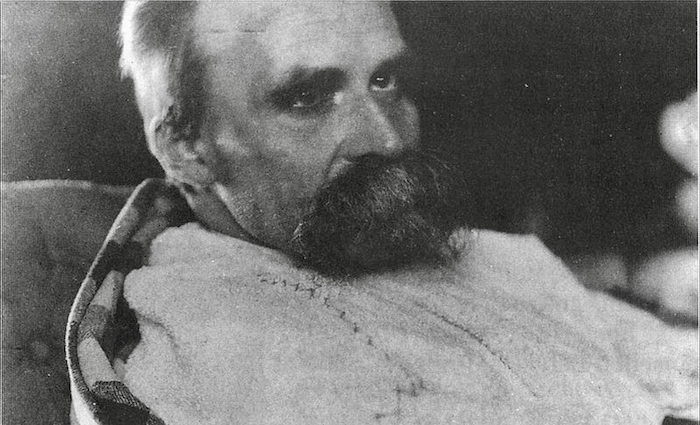
Paul Elmer More’s Nietzsche

By |2020-01-22T11:15:07-06:00January 24th, 2020|Categories: Bradley J. Birzer, Conservatism, Friedrich Nietzsche, Paul Elmer More, Philosophy, Senior Contributors|

Paul Elmer More offered one of the single best critiques of Friedrich Nietzsche, delving deeply into the essence of his thought, in both attraction and repulsion, finding that it is in the attempt to reconcile the love and apprehension about Nietzsche that best allows one to understand him. “Who has ever been concerned for me [...]

Oh, Death, Where is Thy….

By |2024-12-30T09:07:38-06:00January 22nd, 2020|Categories: Bradley J. Birzer, Death, Imagination, Roger Scruton, Senior Contributors|

Death is a truly strange thing. It has touched each of us, to be sure, by visiting loved ones. Yet, sometimes, it seems just unbelievably relentless. Death has already taken so many greats in the first half of January 2020—Neil Peart on January 7; Sir Roger Scruton on January 12; and Christopher Tolkien on January [...]

The Implications of the Logos for Christianity

By |2020-01-15T15:12:10-06:00January 15th, 2020|Categories: Bradley J. Birzer, Christian Humanism, Christianity, Culture, Religion, Senior Contributors|

If, as established in my two previous two essays*, the Logos has its roots in ancient pagan as well as ancient Hebraic thought, what does this mean for Christianity and its adoption of the term? Clearly, the most blatant manifestations of the Greco-Hebraic concept of the Logos—the eternal Word, the unending fire, thought, and imagination—appear [...]

The Ancient Hebrew Roots of the Christian Logos

By |2023-10-08T19:34:06-05:00January 9th, 2020|Categories: Bible, Bradley J. Birzer, Christianity, Classics, Great Books, Senior Contributors|

Though originally a Jew, St. John was clearly a Hellenized Jew who might have taken his own concepts from either the pagans or the Jews. As he describes the Incarnate Word in his Gospel, the Incarnation resembles most closely the Memra of the Jews. As I discussed in my previous essay, the Pagan Logos had [...]

The Pagan Roots of the Christian Logos

By |2020-01-10T09:38:29-06:00January 7th, 2020|Categories: Bradley J. Birzer, Christian Humanism, Christianity, Cicero, Classics, Great Books, Liberal Learning, Virgil|

Any understanding of human dignity in the twenty-first century demands an understanding of the Judeo-Christian Logos (Memra in Hebrew). Without it, there is only chaos and darkness, dispiritedness and confusion, blackness and the abyss. One only has to witness the evil sown by the attempted coup against the Judeo-Christian Logos in the last century by [...]

Rousseau’s Collectivism

By |2023-06-27T19:06:46-05:00January 3rd, 2020|Categories: Bradley J. Birzer, Conservatism, History, Jean-Jacques Rousseau, Philosophy, Politics, Senior Contributors|

“It would be difficult to find anywhere in the history of politics a more powerful and potentially revolutionary doctrine than Rousseau’s theory of the General Will. Power is freedom and freedom is power,” Robert Nisbet argued in his magnum opus, 1953’s Quest for Community. […]

Remembering the Virtues

By |2019-12-30T10:47:46-06:00January 1st, 2020|Categories: Bradley J. Birzer, Culture, Education, Ethics, Senior Contributors, Virtue|

The virtues are rooted in nature, in creation, and in God’s will for us. They can be forgotten, mocked, or distorted, but, being real and true and beautiful, they can never be conquered. It was once true, unfortunately, that history was written by the victors. Now, it seems, we’ve gone terribly far in the other [...]

C.S. Lewis and His Critics

By |2019-12-25T22:55:32-06:00December 25th, 2019|Categories: Bradley J. Birzer, C.S. Lewis, Imagination, Literature, Senior Contributors|

Though C.S. Lewis’ reputation among most practicing Christians today is that of a saint, and though he was lauded as such in his own lifetime, the man, not surprisingly, has also accumulated a number of critics, some of them friendly and some of them brutal. In 1944, Charles Brady reported in the pages of the [...]

C.S. Lewis’ “That Hideous Strength”

By |2019-12-23T10:44:48-06:00December 22nd, 2019|Categories: Books, Bradley J. Birzer, C.S. Lewis, Fiction, Imagination, Literature, Senior Contributors|

Though it would not see publication until August 1945, C.S. Lewis finished his greatest novel, That Hideous Strength, on Christmas Eve, 1943. In terms of depth, style, and audacity, That Hideous Strength is superior to its closest dystopian rivals, Brave New World and 1984. Its characters are far more realistic, and the setting—far from being [...]

How to Think about God: A Pagan “Mere Christianity”

By |2019-12-14T16:06:27-06:00December 14th, 2019|Categories: Books, Bradley J. Birzer, Christianity, Cicero, Culture, Great Books, Religion, Senior Contributors, Western Civilization|

Princeton University Press’s most recent volume, “How to Think About God,” is a handbook of paganism, an antique “Mere Christianity.” While none of its wisdom will get you to Heaven, it will certainly help you lead a better and more fulfilling life here and now. Over the last several years, Princeton University Press has been [...]

Hobbes’ “Leviathan”: A Collectivist Horror

By |2019-12-13T04:10:26-06:00December 12th, 2019|Categories: Bradley J. Birzer, Civilization, Conservatism, Government, Leviathan, Politics, Senior Contributors, Western Civilization|

With the loss of traditional religion as the guiding force of the Western world, following the collapse of the Medieval around 1350, politics quickly became not just a substitute, but a religion in and of itself, a proto-ideology serving as a glue for the emerging nation-states of Europe. Certainties that the Medievals had taken for [...]

The Romantic Theology of Charles Williams

By |2023-02-14T10:14:14-06:00December 4th, 2019|Categories: Bradley J. Birzer, Christianity, Culture, Inklings, Love, Marriage, Religion, Senior Contributors, Theology|

Just as we consume the Eucharist at Mass, recognizing the holiness of the act, so some marriages become profound examples and witnesses of holiness. By habit and faith, Charles Williams contended, the serious Christian begins to see all meals as a shadow of the Eucharist and all love as a shadow of Holy Matrimony. A [...]

Go to Top