

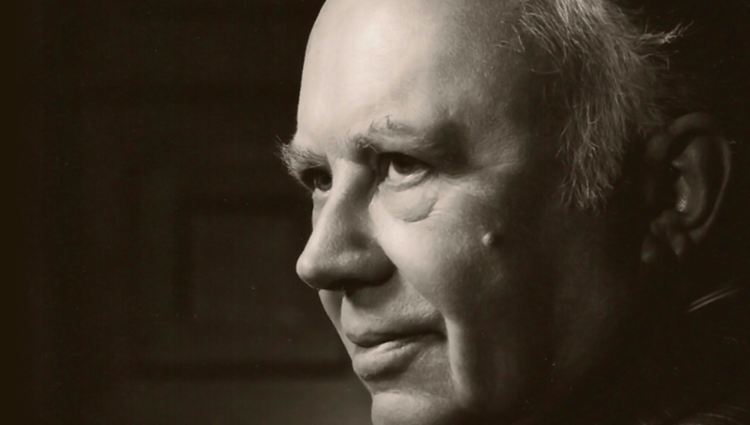
T.S. Eliot: Culture and Anarchy

By |2019-12-13T11:14:37-06:00March 30th, 2014|Categories: Conservatism, Poetry, Religion, T.S. Eliot|Tags: , |

The title of my talk today may strike some of you as curious, if not confused. One recognizes the name of the Nobel-prize-winning Anglo-American poet and critic, T.S. Eliot; one may recall also that, late in his career, he published a small book entitled Notes Toward the Definition of Culture (1948). But the phrase, “Culture [...]

The Politics of Prescription: Russell Kirk’s Fifth Canon of Conservative Thought

By |2021-05-10T23:45:46-05:00March 23rd, 2014|Categories: Edmund Burke, Jean-Jacques Rousseau, Russell Kirk, The Conservative Mind|Tags: , |

Russell Kirk Defending tradition is a difficult task in an age that is predisposed to innovation and change. Yet that has been the challenge to conservatives in the modern age. Modernity inverts the conservative prejudice for prescriptive wisdom; it favors change and innovation as the instruments of progress; it places faith in what [...]

Jefferson as a Man of Moderation

By |2017-02-27T21:37:55-06:00March 17th, 2014|Categories: American Founding, American Republic, Books, Edmund Burke, England, Thomas Jefferson|Tags: |

The Long Affair: Thomas Jefferson and the French Revolution, 1785-1800, by Conor Cruise O’Brien The Long Affair both succeeds and fails. By attacking the American iconic hero of liberty, Conor Cruise O’Brien succeeds in producing a stir, particularly among Jefferson scholars. The Irish scholar-politician selected passages for inclusion in The Atlantic Monthly (October 1996), entitled [...]

Humanity at the Horizon

By |2019-01-04T11:40:06-06:00March 13th, 2014|Categories: Edmund Burke, Ian Crowe, Revolution|

Two hundred and twenty years ago, in January 1794, one of the more illuminating, but also neglected, episodes of the French Revolution was set in motion in the Vendée and surrounding area of west-central France (broadly, the modern-day administrative region of Pays de la Loire). Under the leadership of the Revolutionary general Louis-Marie Turreau, six [...]

GOP Demographic Crisis: Traditional Conservatism ≠ Conformism

By |2014-02-21T15:55:48-06:00February 24th, 2014|Categories: Conservatism, Edmund Burke|Tags: , |

The problem with Republican Party outreach runs deeper than a failure to offer policies tailored to ethnic interests, such as amnesty for illegal immigrants. The core of the GOP demographic crisis isn’t just racial, it’s generational and cultural: as Leon Hadar has noted of the Asian vote, “younger and more educated Asian-Americans are drifting by large [...]

Mel Bradford, Religion, and Original Intentions

By |2015-12-19T11:36:46-06:00February 20th, 2014|Categories: American Founding, American Republic, M. E. Bradford, Religion|Tags: |

The late Mel Bradford (d. 1993) was one of the leading paleo-conservative scholars of the South, teaching at the University of Dallas until his unexpected death due to complications from surgery. Bradford’s scholarly work was primarily in the field of Southern literature (his writings on Faulkner received particular attention), although he branched out from literary [...]

T.S. Eliot’s Comedy

By |2015-04-25T23:44:37-05:00January 31st, 2014|Categories: Books, Dante, Dwight Longenecker, Featured, Poetry, T.S. Eliot|

Although he was friends with Groucho Marx, T.S. Eliot is not usually considered a comedian. His appearance was described as “liturgical.” He was buttoned up. So much so that Virginia Woolf once quipped about him, “Tom will be here in his six piece suit.” Nevertheless, Eliot was capable of real buffoonery. Writing ribald verse for [...]

The Brilliant Agony of Edmund Burke

By |2017-03-06T23:07:10-06:00January 28th, 2014|Categories: American Founding, American Republic, Bradley J. Birzer, Edmund Burke, England|

Two-hundred and forty years ago this spring, Edmund Burke delivered one of his most important as well as one of his most meaningful speeches to Parliament. It is, rhetorically considered, perfect. He delivered it on April 19, 1774, in an attempt to calm down the anger and passions of a Parliament still grappling with the [...]

The Traditionalist as Liberal

By |2020-12-27T21:13:42-06:00January 25th, 2014|Categories: C.S. Lewis, Christianity, Conservatism, Edmund Burke, G.K. Chesterton, Hilaire Belloc, Liberalism|Tags: |

Conservatives, or more specifically Traditionalists, find ourselves in the rather uncomfortable position of revering a group of men who espoused ideas that modern Traditionalists approach with immense reserve—namely, Liberalism and democracy. Conservatives, or more specifically Traditionalists, find ourselves in the rather uncomfortable position of revering a group of men who espoused ideas that modern Traditionalists [...]

Burke and the Problem with “Independents”

By |2016-07-27T12:37:02-05:00January 20th, 2014|Categories: Bruce Frohnen, Edmund Burke, Politics|

Americans pride themselves on their independence, or “rugged individualism,” if you prefer. In politics this often has meant an attraction to the “outsider” who will “shake things up” in Washington by “breaking gridlock” and getting legislators from across the political spectrum to act according to common sense and the public interest. The actual political results [...]

Modern America Through Burke’s Eyes

By |2019-07-02T17:06:33-05:00January 14th, 2014|Categories: American Founding, Conservatism, Culture, Edmund Burke, Jean-Jacques Rousseau|

As those serious about influencing the nation on both sides of the aisle understand, winning in politics first requires winning the culture. Doing so necessitates both a keen eye for recognizing cultural trends and the creative foresight to envision how best to guide a culture back to true principles by which a people can safely [...]

Edmund Burke and Leo Strauss

By |2014-01-16T16:40:08-06:00January 9th, 2014|Categories: Edmund Burke, Leo Strauss, Peter A. Lawler|

I recently attended a conference in Claremont on Strauss and Burke–or what Strauss says about Edmund Burke to close Natural Right and History. For anyone who really checks out what he says there, it’s the strangest part of a strange book. Here are some obvious points that might turn out to be wrong: Burke is an [...]

Go to Top