Political Economy for Embodied Souls

By |2014-03-24T11:44:10-05:00September 11th, 2012|Categories: Culture, Economics, Political Economy, Russell Kirk|Tags: |

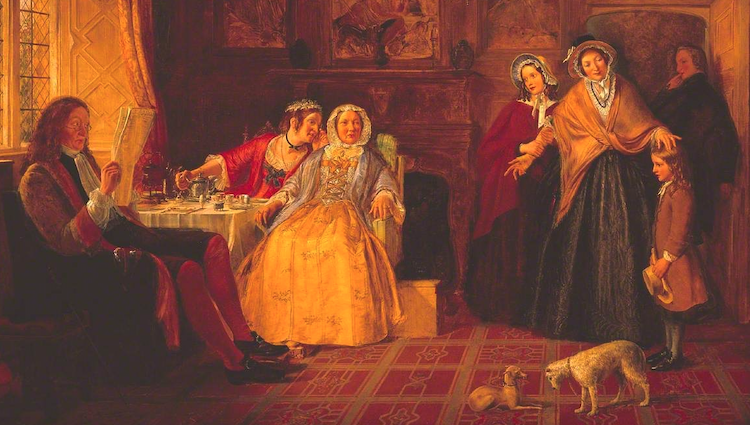
As American conservatism sifts its soul regarding political economy, scrutiny of the economic thought of Dr. Russell Kirk, who more than anyone else gave post-war conservatism coherence and intellectual respectability, is appropriate and timely. Kirk’s economics, and its treatment by modern conservatives, afford an invaluable perspective on this controversy. Kirk believed that economics has been [...]

Artists at Home: Frost and Faulkner

By |2016-08-03T10:37:25-05:00September 4th, 2012|Categories: Christendom, Featured, Literature, M. E. Bradford, Robert Frost, South|Tags: |

M.E. Bradford It is a paradox of our times that close observers of the American literary scene residing beyond our borders receive, from the self-appointed guardians of “high” culture and the life of the mind within this country, so little really useful direction or assistance in identifying what American writing is worthwhile or [...]

A Revolution Not Made But Prevented

By |2021-05-23T11:17:20-05:00August 28th, 2012|Categories: American Founding, American Republic, RAK, Russell Kirk|Tags: |

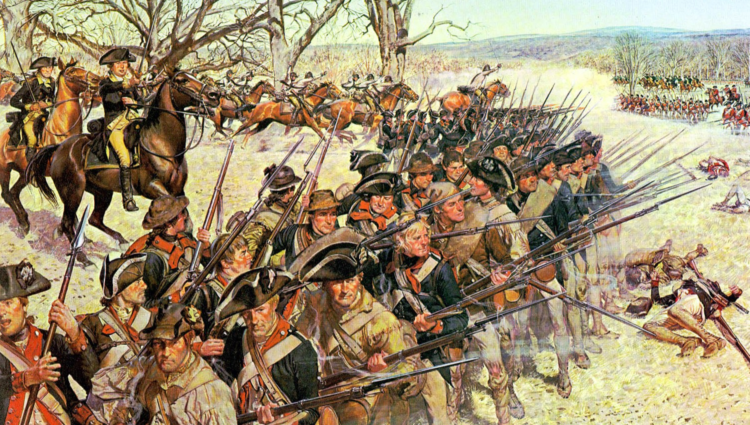
Was the American War of Independence a revolution? In the view of Edmund Burke and of the Whigs generally, it was not the sort of political and social overturn that the word “revolution” has come to signify nowadays. Rather, it paralleled that alteration of government in Britain which accompanied the accession of William and Mary [...]

Low Expectations: The American Presidency

By |2022-02-22T18:01:43-06:00August 15th, 2012|Categories: American Republic, Books, Forrest McDonald, George Washington, Presidency, Thomas Jefferson|Tags: |

The American Presidency, by Forrest McDonald Twice, in The American Presidency, Professor Forrest McDonald states that the executive office of our government “has been responsible for less harm and more good … than perhaps any other secular institution in history.” In the same sentence, he also notes that “the caliber of the people who have served as chief [...]

Millennial America: The Language of Liberty

By |2016-08-03T10:37:27-05:00August 9th, 2012|Categories: American Founding, American Republic, Books, Christendom, History, Kevin Gutzman|Tags: |

The Language of Liberty, 1660-1832: Political Discourse and Social Dynamics in the Anglo-American World, by J. C. D. Clark The historiography of the American Revolution and Founding period has been dominated for more than two decades by works that follow the examples of Bernard Bailyn and Gordon Wood. In their books, particularly Bailyn’s The Ideological [...]

Capitalism and the Moral Basis of Social Order

By |2018-10-16T20:25:02-05:00July 22nd, 2012|Categories: Capitalism, Economics, Featured, Political Economy, RAK, Russell Kirk|Tags: |

A number of Americans, fancying that the world is governed mainly by economic doctrines and practices, are inclined to think that an era of international good feeling lies before us. I intend to sprinkle some drops of cold water on such hasty hopes. I have no faith in the notion that an abstract “democratic capitalism” [...]

Conservatives and Libertarians: Uneasy Cousins

By |2020-09-23T15:40:41-05:00July 15th, 2012|Categories: Conservatism, Edmund Burke, John Stuart Mill, Libertarians, Robert Nisbet|Tags: |

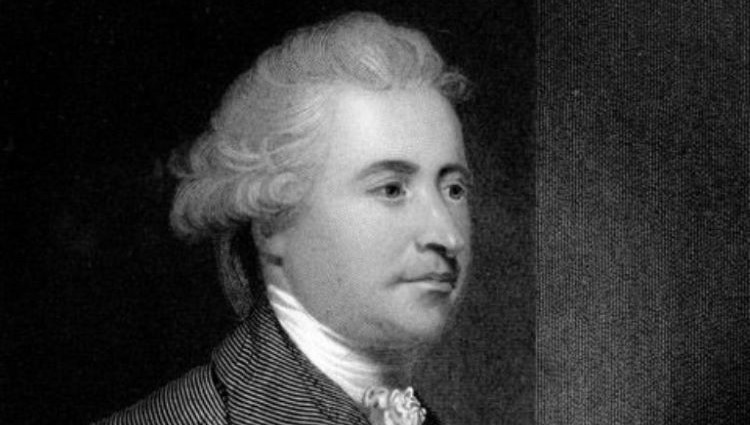
Modern political conservatism takes its origin in Edmund Burke’s insistence upon the rights of society and its historically formed groups such as family, neighborhood, guild and church against the “arbitrary power” of a political government. By common assent modern conservatism, as political philosophy, springs from Edmund Burke: chiefly from his Reflections on the Revolution in [...]

Thomas Jefferson and the American “Provincial” Mind

By |2016-10-23T09:59:42-05:00July 2nd, 2012|Categories: American Republic, Thomas Jefferson|Tags: |

What we think of Thomas Jefferson is likely to express precisely what we believe America is all about. For this most versatile and likeable of the Founding Fathers looms large in our history and in the symbol and imagery by which our imaginations have colored the past. For some, Jefferson is the preeminent voice of [...]

A Conservative Conservationist

By |2019-04-04T11:23:07-05:00June 25th, 2012|Categories: Books, Conservation, Conservatism, Peter A. Lawler|Tags: |

The Greening of Conservative America, by John R. E. Bliese The first thing to say about this fine book is that it is much better than its misleading title. Professor John R. E. Bliese does not really argue that conservatives should join the Green Party or Greenpeace. While true conservatives have always been conservationists, their [...]

A Liberal Wolf in Communal Clothing: Community & Communitarianism

By |2014-03-31T17:04:53-05:00May 23rd, 2012|Categories: Books, Bruce Frohnen, George W. Carey, Jean-Jacques Rousseau|Tags: |

The New Communitarians and the Crisis of Modern Liberalism, by Bruce Frohnen, Lawrence, Kansas: University Press of Kansas, 1996. Community and Tradition: Conservative Perspectives on the American Experience, edited by George W. Carey and Bruce Frohnen, Lanham, Maryland: Rowman and Littlefield, 1998. Communitarianism at one level is a contemporary school of thought that takes to [...]

The Inspired Wisdom of Burke

By |2021-04-13T16:24:37-05:00May 11th, 2012|Categories: Books, Edmund Burke, Featured, George A. Panichas, Russell Kirk, Wisdom|Tags: |

  Edmund Burke: A Genius Reconsidered, by Russell Kirk, with a Foreword by Roger Scruton, Wilmington, Delaware: Intercollegiate Studies Institute, 1997. Russell Kirk’s book on Edmund Burke, first published in 1967, now revised and handsomely re-issued, testifies not only to the “enduring Burke,” but also to the enduring Kirk. As a British statesman and political [...]

The Revolutionary Conservatism of Jefferson and Small Republics

By |2018-12-17T00:21:07-06:00April 26th, 2012|Categories: American Republic, Conservatism, Republicanism, Thomas Jefferson|Tags: |

By the early twenty-first century, Americans had become accustomed to, even took for granted, virtually everything against which George Washington and Thomas Jefferson had warned: gigantic public and private debt, a massive national government, entangling foreign alliances, a standing army, undeclared war in the form of military interventionism, the destruction of American agrarianism, and the [...]

A Poem for Men: The Iliad by Homer

By |2021-02-15T15:42:25-06:00April 18th, 2012|Categories: Classics, Featured, Greek Epic Poetry, Homer, Iliad, Literature|Tags: |

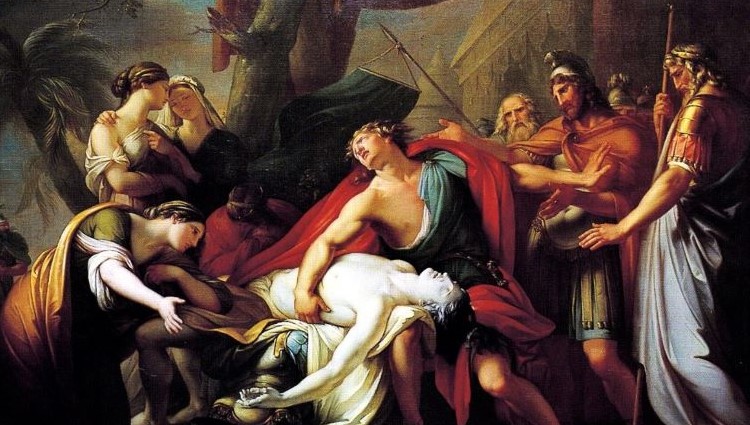
The Iliad by Homer, translated by Herbert Jordan (Norman, OK: University of Oklahoma Press, 2008) It is noteworthy that when the freedman Livius Andronicus (c. 250 B.C.) gave the Romans their first translation of Homer it was the Odyssey, not the Iliad he chose to render in the old Saturnian verse: Virum mihi Camena, insece versutum, [...]

The War of the Three Humanisms: Irving Babbitt and the Recovery of Classical Learning

By |2016-07-26T15:39:50-05:00April 5th, 2012|Categories: Classical Education, Classical Learning, Irving Babbitt, Liberal Learning|Tags: |

Irving Babbitt Where is the wisdom we have lost in knowledge? Where is the knowledge we have lost in information?—T.S. Eliot, Choruses from the Rock Irving Babbitt (1865–1933) is not much remembered today, except perhaps through Sinclair Lewis’s snarky naming of the eponymous villain of the satire of mid-American manners and mores, Babbitt, after [...]

Go to Top