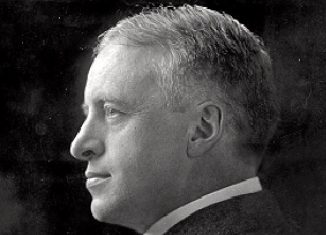
Irving Babbitt & Cultural Renewal

By |2021-04-27T21:46:29-05:00September 18th, 2016|Categories: Culture, Edmund Burke, Irving Babbitt, Jean-Jacques Rousseau, Modernity, Poetry, Timeless Essays|

Today’s offering in our Timeless Essay series affords readers the opportunity to join James Seaton as he discusses the importance of Irving Babbitt’s imaginative conservatism. —W. Winston Elliott III, Publisher It is tempting to think of Irving Babbitt as a voice crying in the wilderness, a lonely prophet attempting the impossible task of reversing the [...]

What “Inside Out” Managed to Leave Out

By |2016-09-15T12:32:32-05:00September 15th, 2016|Categories: Film, Jean-Jacques Rousseau, Modernity, Philosophy|

Pixar certainly has a winning formula. The movie studio seems to have found that little spot behind the collective ear that we like to have scratched. Its first 2015 release, Inside Out, follows the same inimitable story-telling recipe it served up to great applause with films such as Up, WALL-E, and Ratatouille. Pixar films are captivating—artfully done—without losing [...]

“Republican Government” According to John Adams

By |2021-10-29T12:14:40-05:00August 31st, 2016|Categories: American Republic, Featured, Great Books, History, Jean-Jacques Rousseau, John Adams, John Locke, Liberty, Natural Law, Philosophy, Political Science Reviewer, Republicanism|

John Adams wondered why men cannot live together “naturally” at peace, with the justice of their relations emerging immediately from the operation of reason in each individual. As elaborated thus far, natural law teaches that legitimate government is circumscribed by liberty in a dual sense: It derives from the consent of equally free individuals, and [...]

Leo Strauss: Escaping the Stifling Clutches of Historicism

By |2022-02-23T11:18:05-06:00April 7th, 2016|Categories: Conservatism, Featured, Friedrich Nietzsche, Great Books, Jean-Jacques Rousseau, John Locke, Leo Strauss, Plato, William F. Buckley Jr.|

Leo Strauss (1899-1973) was a native of Germany. "I was," he reported near the end of his life, "brought up in a conservative, even orthodox Jewish home some­where in a rural district of Germany."[1] Strauss received his doctorate from Hamburg University in 1921. In 1938, he emigrated to the United States and commenced teaching political [...]

Irving Babbitt: Against Romanticism

By |2019-07-23T14:06:01-05:00August 28th, 2015|Categories: Books, Irving Babbitt, Jean-Jacques Rousseau|Tags: |

Rousseau and Romanticism by Irving Babbitt (Piscataway, NJ: Transaction Publishers, 1991) This reprint of the best-known work by Irving Babbitt (1865–1933) is a sturdy addition to Transaction’s Library of Conservative Thought. When it was initially published in 1919, it was recognized by discerning readers as the landmark it has since become. The New York Evening Post [...]

What Was Irving Babbitt’s Philosophy of Man?

By |2016-07-14T23:47:19-05:00July 15th, 2015|Categories: Christian Humanism, Christianity, Claes Ryn, Irving Babbitt, Jean-Jacques Rousseau|Tags: |

No intellectual task could be more urgent today than refuting the pseudo-scientific distinction between ”facts” and “values” and restoring to the humanities and social sciences a sense of transcendent moral purpose.[1] In this effort we would be well-advised to reconsider the work of a great American whose ideas have yet to be fully comprehended and [...]

The Problem with “Impossible Dreams”

By |2015-07-04T09:49:00-05:00June 23rd, 2015|Categories: Bruce Frohnen, Featured, History, Jean-Jacques Rousseau, Politics|

Motivational speakers, from what little exposure I have been forced to have with them, seem fond of telling people that they should “do the impossible.” This may well be simply part of the meaningless verbiage intended to get employees to pay attention to the context of the facts they face. To “think outside the box” [...]

Idealism and the Constitution

By |2019-02-26T17:50:52-06:00November 23rd, 2014|Categories: Claes Ryn, Constitution, Featured, Imagination, Jean-Jacques Rousseau|Tags: |

For the framers of the U.S. Constitution no task seemed more important than to limit and tame power. The chief reason why they established a government of divided powers and checks and balances was their view of human nature, which was primarily Christian and classical. It seemed to them self-evident that human beings are morally [...]

The Politics of Prescription: Russell Kirk’s Fifth Canon of Conservative Thought

By |2021-05-10T23:45:46-05:00March 23rd, 2014|Categories: Edmund Burke, Jean-Jacques Rousseau, Russell Kirk, The Conservative Mind|Tags: , |

Russell Kirk Defending tradition is a difficult task in an age that is predisposed to innovation and change. Yet that has been the challenge to conservatives in the modern age. Modernity inverts the conservative prejudice for prescriptive wisdom; it favors change and innovation as the instruments of progress; it places faith in what [...]

Modern America Through Burke’s Eyes

By |2019-07-02T17:06:33-05:00January 14th, 2014|Categories: American Founding, Conservatism, Culture, Edmund Burke, Jean-Jacques Rousseau|

As those serious about influencing the nation on both sides of the aisle understand, winning in politics first requires winning the culture. Doing so necessitates both a keen eye for recognizing cultural trends and the creative foresight to envision how best to guide a culture back to true principles by which a people can safely [...]

The Conservative Mission and Progressive Ideology

By |2019-04-25T12:41:55-05:00April 13th, 2013|Categories: Edmund Burke, George W. Carey, Jean-Jacques Rousseau, Progressivism, Thomas Jefferson|Tags: |

At the risk of seeming too parochial, I want to outline the dimensions of a problem that has been of special concern for me and other conservative students of the American political tradition, broadly defined. This concern is not as narrow as it may at first seem. Nor, by any standard, is it insignificant; it [...]

Back at the Libertarian Clinic

By |2015-06-29T18:03:12-05:00February 19th, 2013|Categories: Jean-Jacques Rousseau, Libertarianism, Stephen Masty|

Dr. Himmelman dumped her files onto the common-room table, made a cup of Earl Gray and sat down heavily. It didn’t take a world-famous clinician to see that she was having a bad day. “Looks like you’re having a bad day,” observed Barbara D’Angelo, a world-famous clinician. “Is it Charles again?” Janet shook her head [...]

The Conservatives vs. the Intellectuals?

By |2018-12-21T14:56:56-06:00February 11th, 2013|Categories: Alexis de Tocqueville, Conservatism, Jean-Jacques Rousseau, Peter A. Lawler, Politics|

So everyone’s talking about the article by the intellectual Russell Jacoby on the alleged fact that there are no conservative intellectuals anymore. The article isn’t much good, in fact. One problem is that it doesn’t really explain what an intellectual is. The first outstanding criticism of modern intellectuals came from the lefty philosopher Jean-Jacques Rousseau. [...]

What Sort of Despotism Democratic Nations Have to Fear

By |2024-07-27T21:01:42-05:00February 1st, 2013|Categories: Alexis de Tocqueville, American Founding, American Republic, Books, Christendom, Democracy, Democracy in America, Jean-Jacques Rousseau, William F. Byrne|

An excerpt from Democracy in America. I had remarked during my stay in the United States that a democratic state of society, similar to that of the Americans, might offer singular facilities for the establishment of despotism; and I perceived, upon my return to Europe, how much use had already been made, by most of [...]

Go to Top