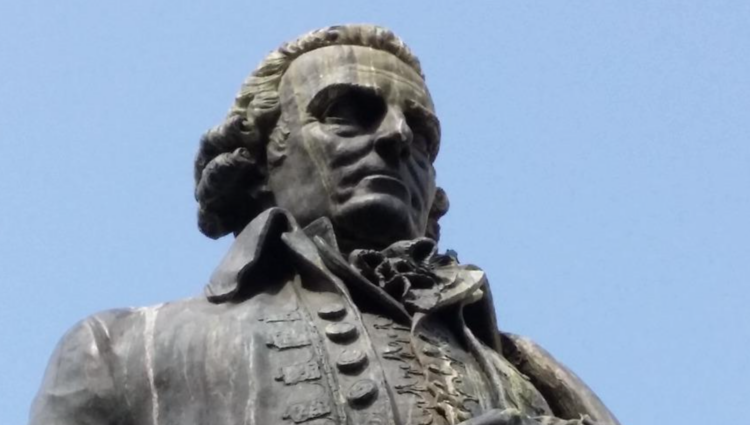
Nit-Picking “Blessed” Adam Smith

By |2022-07-16T21:39:45-05:00February 20th, 2015|Categories: Adam Smith, Books, Edmund Burke, Stephen Masty|

How often can writers pretend to discover some well-known thing for “the first time ever?” With poor Adam Smith it has happened again, but commercial promotion inadvertently raises an important matter that only begins with the great First Economist’s religion… or lack thereof. A prominent newspaper starts its book review by insulting its audience: “As [...]
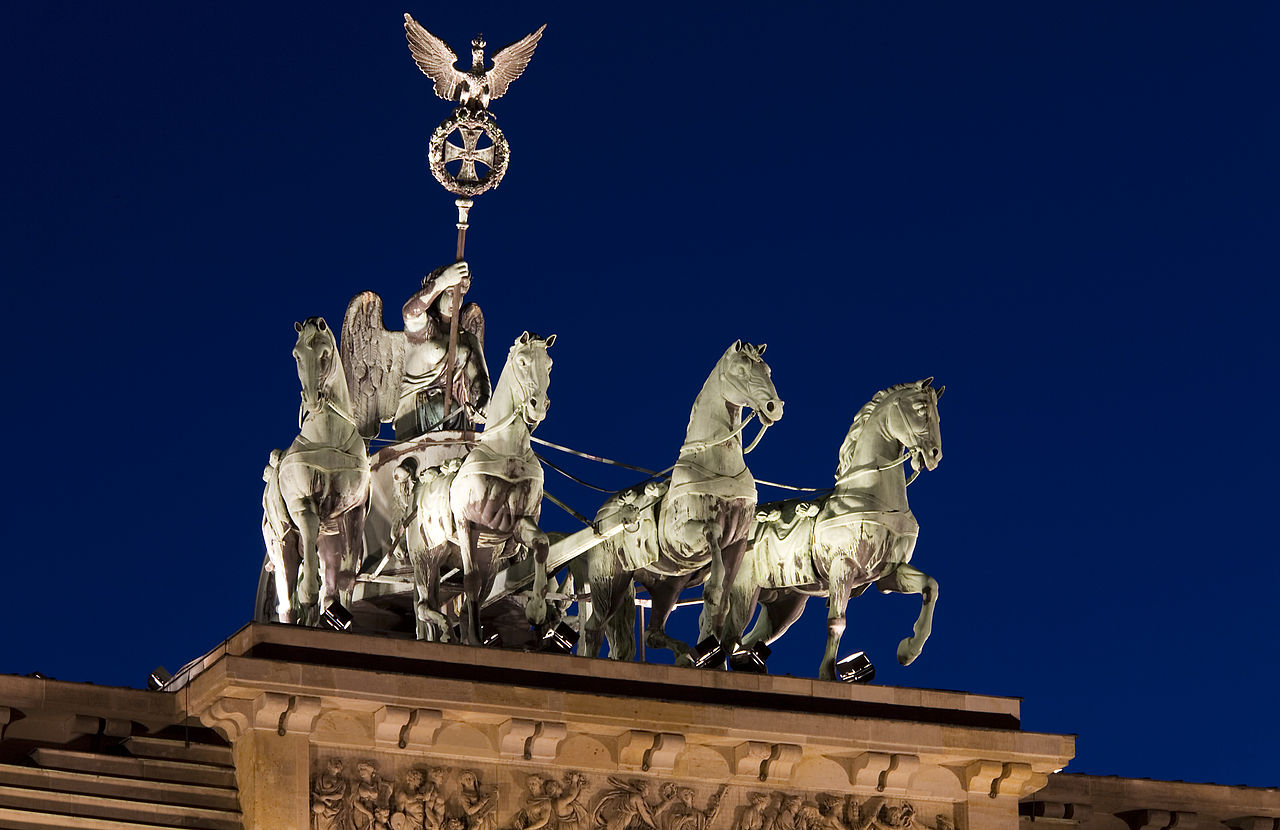
Two Quartets for the End of Time: The Work of T.S. Eliot and Olivier Messiaen

By |2015-02-12T15:07:11-06:00February 15th, 2015|Categories: Catholicism, Dwight Longenecker, Music, Poetry, T.S. Eliot|

Two profound meditations on the end of time sprang from the desolate decade of the 1940s giving an austere hope in the midst of the dark. T.S.Eliot’s Four Quartets, begun in 1937, were finally published in 1943. Olivier Messiaen’s Quartet for the End of Time was composed in 1940 in the most extraordinary circumstances while [...]

Russell Kirk’s Historical Imagination

By |2016-02-12T15:28:02-06:00February 6th, 2015|Categories: Christian Humanism, Christianity, Christopher Dawson, Conservatism, Edmund Burke, Featured, Gerald Russello, Russell Kirk, T.S. Eliot|

“Our religion, our culture, and our political rights all are maintained by continuity: by the respect for the accomplishments of our forefathers, and by our concern for our posterity’s well-being.”[1] In his private library at Piety Hill, Russell Kirk devoted a large bookcase to the works of those he called “philosophical historians.” Kirk placed on [...]

The Philosophy of War and Peace

By |2019-08-13T17:50:51-05:00January 29th, 2015|Categories: Books, Christianity, Eric Voegelin, Featured, Robert Cheeks|

Things fall apart; the centre cannot hold. William Butler Yeats, Second Coming Jenny Teichman, a Cambridge philosophy professor, in her new book, The Philosophy of War and Peace, takes upon herself the challenging task of providing her readership with a concise and abbreviated disquisition on the philosophical foundation of war and peace. The success of the [...]

Liberal Education Liberates

By |2015-05-27T13:22:36-05:00January 5th, 2015|Categories: Education, Featured, Liberal Learning, Richard Weaver|

Richard M. Weaver (1910–1963) was one of the leading thinkers of the post–World War II conservative intellectual movement. Best known for his landmark book Ideas Have Consequences, Weaver was a scholar and rhetorician who taught English at the University of Chicago for almost thirty years. Here he offers insights on the meaning and purpose of [...]

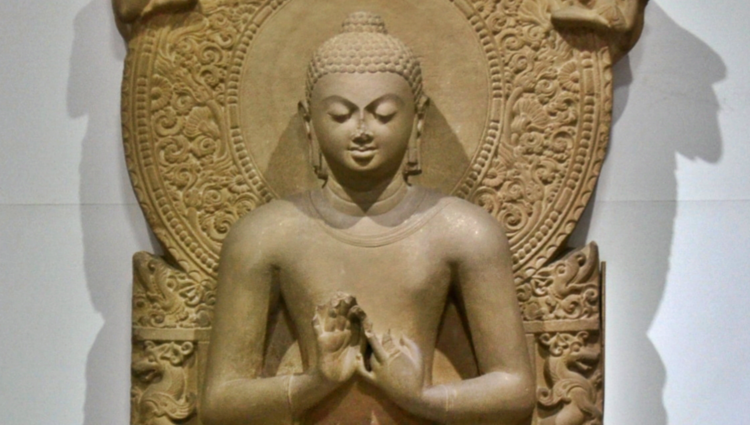
Irving Babbitt and the Buddha

By |2021-08-28T09:16:21-05:00October 23rd, 2014|Categories: Bradley J. Birzer, Eastern Thought, Irving Babbitt, Stoicism, Western Civilization|

Irving Babbitt embraced the inherent Stoic qualities not only of the ancient Western world but also of high, ancient Asian culture as well. One of Western Civilization’s greatest defenders in the twentieth century, Harvard University’s Irving Babbitt, founder of the New Humanism, best friend to Paul Elmer More, and the teacher of T.S. Eliot, considered [...]

Christopher Dawson on the Spiritual Disease of the Secular West

By |2019-09-07T13:01:18-05:00October 21st, 2014|Categories: Christendom, Christian Humanism, Christianity, Christopher Dawson, Culture, Featured, Religion, Secularism|Tags: |

Christopher Henry Dawson has been called “the greatest English-speaking Catholic historian of the twentieth century.“[1] He was also a profound conservative critic of contemporary Western culture and his indictments were based on a synthetic interpretation of the history of mankind which is one of the most impressive ever produced. His analysis of the decline of [...]

G. K. Chesterton & T. S. Eliot: Friends or Enemies?

By |2023-05-26T10:28:51-05:00September 22nd, 2014|Categories: Christendom, Christianity, G.K. Chesterton, Joseph Pearce, T.S. Eliot|

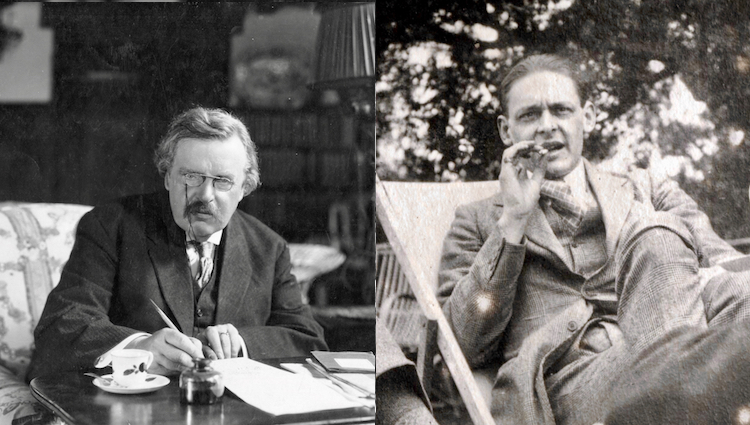
Should G.K. Chesterton and T.S. Eliot be considered friends or enemies? As champions of Christendom, they were united in the friendship of faith. With regards to whether one sides with Eliot… or with Chesterton, apparently Eliot said this: “Mr. Chesterton’s brain swarms with ideas. I see no evidence that it thinks.” ∗∗∗ I think a [...]

The English Spring of Catholicism

By |2016-02-12T15:28:07-06:00September 9th, 2014|Categories: Books, Christian Humanism, Christianity, Christopher Dawson, G.K. Chesterton|

This is a remarkable, indeed a staggering book. Each of the four sections, on G. K. Chesterton, Graham Greene, Christopher Dawson, and David Jones, taken alone, would have made it worthwhile. Taken together, they offer an illuminating analysis of the vigorous Catholic revival that took place in Britain during the early and middle years of [...]

A Humane Economy versus Economism

By |2019-07-18T12:11:09-05:00September 5th, 2014|Categories: Economics, Featured, Politics, Ralph Ancil, Richard Weaver, Wilhelm Roepke|

Introduction Contributing to the multi-faceted crisis Americans now face is the loss of those values and principles that are essential to a healthy economy. We could mention the incestuous relationships between business and politics, the avarice of large banking institutions, misguided Federal Reserve policy, the irrationality of Wall Street investors, and the Gordon Gekko motto [...]

The French Revolution & the Writhings of Nihilism

By |2022-07-13T18:13:42-05:00August 8th, 2014|Categories: Christian Humanism, Christianity, Christopher Dawson, Conservatism, Edmund Burke, Revolution|Tags: |

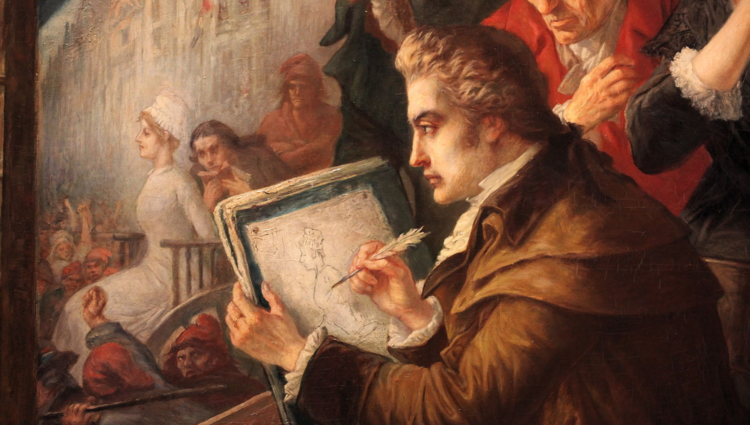
The most searching and dispassionate analysis will yield the irrefutable conclusion that summer is by far the worst season. Both presently and historically, the months when the northern hemisphere faces the full force of the sun are months of turmoil and destruction. Locally, a man will notice his powers suppressed by the sun, his energy [...]

Christopher Dawson: The Historian of the Twentieth Century

By |2021-05-24T12:21:45-05:00July 31st, 2014|Categories: Bradley J. Birzer, Catholicism, Christendom, Christian Humanism, Christianity, Christopher Dawson, Culture, Featured|

Ultimately, the Church—as the only historical entity that transcends nationalisms and ideologies—must use its intellectual strength to combat, attenuate, or destroy that which was loosed from the abyss. “It is, therefore, the duty of those elements in Western Society that still possess a principle of spiritual unity to rally the divided forces of our civilization,” [...]

Go to Top