About Christopher Morrissey

Christopher S. Morrissey teaches Greek and Latin on the Faculty of Philosophy at the Seminary of Christ the King located at the Benedictine monastery of Westminster Abbey in Mission, British Columbia. He also lectures in logic and philosophy at Trinity Western University. He is a Fellow of the Adler-Aquinas Institute and a Member of the Inklings Institute of Canada. He studied Ancient Greek and Latin at the University of British Columbia and has taught classical mythology, history, and ancient languages at Simon Fraser University, where he wrote his Ph.D. dissertation on René Girard. His book of Hesiod’s poetry, Hesiod: Theogony / Works and Days, is published by Talonbooks.

The Elemental Song of Creation: Genesis, Hildegard, Tolkien

By |2023-02-20T22:32:22-06:00December 8th, 2015|Categories: Christianity, Christopher Morrissey, Communio, Featured, J.R.R. Tolkien, Stratford Caldecott|

If we reconstruct J.R.R. Tolkien’s reading of Genesis from the opening pages of The Silmarillion, then, on Tolkien’s interpretation, only days four through six involve the actualization of material existence, whereas the first three days concern creation in an immaterial realm. Stratford Caldecott notes three correspondences between Genesis and Tolkien’s myth: between heaven and the [...]
The Six Days of Creation: Tolkien’s Account

By |2023-02-20T22:37:25-06:00December 2nd, 2015|Categories: Christianity, Christopher Morrissey, Featured, J.R.R. Tolkien, Literature, Myth, Poetry|

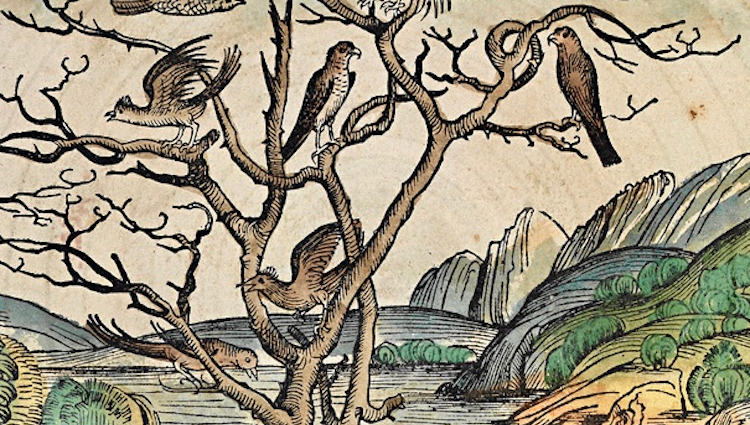
The wisdom of poetic cosmology is that it gives us a complete experience of the hierarchies of order within creation, ranging from the celestial to the corporeal. We ourselves can see the poetic wisdom about song and creation operative, for example, in the book of Genesis. This is possible if we read the poetry of [...]

The Whole Story: Eric Voegelin on the Song of Hesiod

By |2019-10-03T15:11:55-05:00November 25th, 2015|Categories: Christopher Morrissey, Eric Voegelin, History, Poetry, Science|

According to the philosopher Eric Voegelin, there are no more than four fundamental modes of theoretical speculation. Voegelin identifies these four fundamental modes as: cosmogony, anthropogony, theogony, and historiogenesis. These modes speak, respectively, of the genesis of the universe, the genesis of human beings, the genesis of the divine, and the genesis of society. Unsurprisingly, [...]

Laughter & Good Red Wine: Songs for Virtuous Drinking, Rain or Shine

By |2019-01-07T15:16:34-06:00November 21st, 2015|Categories: Christopher Morrissey, Culture, Poetry, Virtue|

One of the best short poems ever written enfolds the classic Latin call to prayer at the end of its lines: Wherever the Catholic sun doth shine, There’s always laughter and good red wine. At least, I’ve always found it so. Benedicamus Domino! Eminently worthy of being committed to memory, this brief masterpiece by Hilaire [...]

Christopher Dawson’s Six Ages of the Church

By |2019-10-23T12:44:19-05:00November 1st, 2015|Categories: Christendom, Christianity, Christopher Dawson, Christopher Morrissey, Culture, Featured, History, Religion|

Christopher Dawson’s Six Ages of the Church exhibit a cyclical pattern in historical events. Each Age exhibits an overall pattern of “rise and fall” during each cycle of spiritual renewal. Each new Age peaks and then encounters a new onslaught of adversities. It is possible to imagine the entire sweep of this non-linear history in [...]

The Essence of Missionary Christianity

By |2015-10-21T01:02:01-05:00October 21st, 2015|Categories: Christianity, Christopher Dawson, Christopher Morrissey, History, Religion, Rome|

Graecia capta ferum victorem cepit et artes intulit agresti Latio “When Greece was captured, she captivated her wild conqueror, and introduced the Arts into savage Rome” — Horace, Epistles, II.1.156 (trans. Laura E. Ludtke) Christopher Dawson has identified Six Ages in the history of the Church. In Dawson’s First Age, we witness a unique encounter of [...]

Christian Culture and the Essence of Europe

By |2019-02-19T14:58:21-06:00October 14th, 2015|Categories: Christianity, Christopher Dawson, Christopher Morrissey, Culture, Europe, Featured, Islam|

How is it that Arabic translations of Greek writings could flourish for only a few centuries (the ninth to eleventh)? Remi Brague points out how these translations were frequently made by Christians under Arabic rule.[1] Empirical data such as this point to an important principle identified by Brague: namely, that Roman “secondarity” always maintains a [...]

The Essence of Rome: A Tale of Three Cities

By |2019-09-24T11:16:19-05:00September 29th, 2015|Categories: Christopher Dawson, Christopher Morrissey, Culture, Europe, Featured, History, Religion, Rome|

Leo Strauss liked to call to our attention the creative tension between Athens and Jerusalem. With Remi Brague, I would like to refocus our attention onto the apparent mediation of this creative tension that was accomplished by Rome. Now, I say that this accomplishment occurred by the apparent mediation of Rome, only to nod to [...]

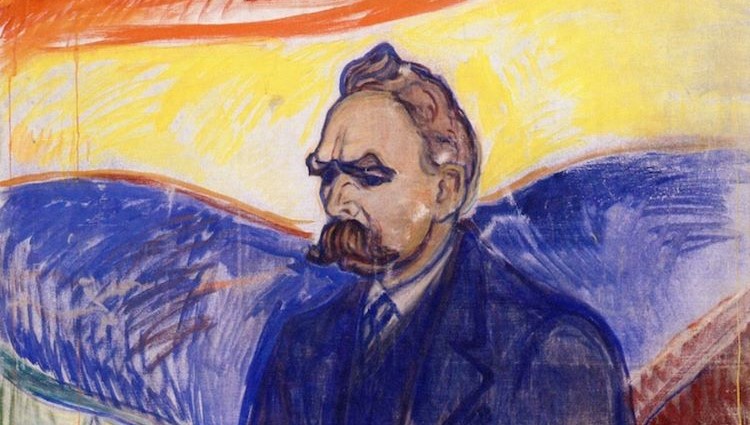
On Nietzsche and Hamlet: How Shakespeare Mirrors Sick Moderns

By |2023-11-25T12:25:41-06:00September 17th, 2015|Categories: Christopher Morrissey, Friedrich Nietzsche, Myth, William Shakespeare|

Our stark choice is indeed as Nietzsche puts it, says René Girard. It is a choice between Dionysus and the Crucified: between the Biblical concern for the mob’s victim, on the one hand, or, on the other hand, the justifications and defenses of the lies of myth. The lies of myth are offered in the [...]

Reading the Signs of the Times Without Surrender

By |2019-09-05T11:55:07-05:00September 10th, 2015|Categories: Art, Christopher Morrissey, Culture, Great Books, Tragedy|

René Girard’s mimetic theory has described how mimesis leads to collective violence. His readings of Greek and Shakespearean tragedy argue that tragedy reveals the origins of violent mimesis in its own mimetic representations. In tragedy, the dramatic representation becomes definitively “tragic” (thereby shaping our subsequent meaning of the word) because what is represented is that [...]

In the Beginning: Hesiod and the First Day of Creation

By |2018-12-21T14:57:06-06:00August 24th, 2015|Categories: Christopher Morrissey, Culture, Greek Epic Poetry, Love, Poetry|

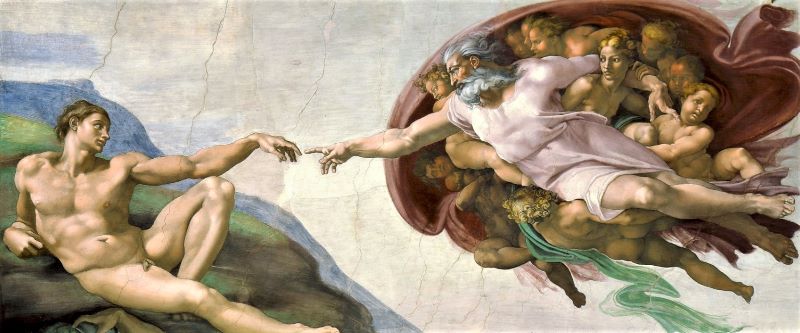
Perhaps most readers are familiar with the account of the beginning of the universe found in the Bible: “1 God, at the beginning of time, created heaven and earth. 2 Earth was still an empty waste, and darkness hung over the deep; but already, over its waters, stirred the breath of God. 3 Then God [...]

Cleverly Postmodern Homer: A Review of the Troy Movie

By |2015-05-19T23:12:16-05:00July 13th, 2013|Categories: Classics, Film, Homer, Iliad|

Briseis is revealed as Achilles’ Achilles’ heel in Wolfgang Petersen’s Troy (2004), a cleverly postmodern retelling of the plot of Homer’s Iliad. Homer himself enclosed the Calydonian boar hunt in his Iliad, a myth within the myth, as both a nod to what was previously big box office for bards, and a guide to old [...]

A Meditation on Malick’s Tree of Life & Voegelin’s Philosophy of Consciousness

By |2014-04-13T10:45:55-05:00May 28th, 2013|Categories: Eric Voegelin, Film|Tags: , |

Terrence Malick’s film, The Tree of Life (2011), is a significant cultural achievement, not only cinematically but also philosophically. Back in 1969, the philosophically inclined Malick produced a bilingual edition of the German philosopher Martin Heidegger’s The Essence of Reasons, supplying the English translation. With The Tree of Life, the meditative practices visible in his previous films–Badlands (1973), Days of [...]

Go to Top