

About Gleaves Whitney

Gleaves Whitney is Senior Contributor at The Imaginative Conservative. He is the Executive Director of the Gerald R. Ford Presidential Foundation. He was the Director of the Hauenstein Center for Presidential Studies from 2003-2020. Mr. Whitney has written, edited, or contributed to several books, including John Engler: The Man, the Leader & the Legacy, American Presidents: Farewell Messages to the Nation, and the revised edition of Russell Kirk’s The American Cause.

Our Age of Anxiety: Surviving Political Realignment

By |2016-12-28T07:45:18-06:00October 17th, 2016|Categories: Democracy, Democracy in America, Featured, Gleaves Whitney, Information Age, Politics, Presidency, Technology|

In 2016 Americans are feeling anxious. It’s not that we are experiencing crises—we are neither in total war nor economic depression. Yet 2016 has forced us to rethink all we thought we knew. A Socialist made a credible run for the Democratic nomination and succeeded in moving the Democratic Party platform farther left than it [...]
Stephen Tonsor: A Professor of Rigor and Variety

By |2016-06-27T10:10:33-05:00February 8th, 2014|Categories: Conservatism, Education, Gleaves Whitney|

Professor Stephen Tonsor Back in the 1980s, when I told a friend that I was doing graduate work in history at Michigan, he looked surprised: “But you are conservative, and there aren’t any conservatives on the faculty in Ann Ar­bor.” “Oh, that’s not true,” I shot back, “I had lunch with him.” Academic [...]

The Conservative Mind at 60

By |2021-05-11T08:56:13-05:00January 28th, 2014|Categories: Gleaves Whitney, Russell Kirk, The Conservative Mind|

Speaking about The Conservative Mind on the book’s sixtieth anniversary, Gleaves Whitney explains why Russell Kirk chose Edmund Burke as his book’s central figure. Kirk believed that Burke understood the fragility of civilization and knew that free peoples will have both parties of innovation and conservation. How our culture appropriately balances the will of the two will dictate [...]

Progressives & Conservatives: Is There Common Ground?

By |2017-03-08T13:36:10-06:00May 17th, 2013|Categories: Conservatism, Gleaves Whitney, Liberalism, Political Philosophy, Politics, Progressivism|

Common Ground between Whom? A lot of people are skeptical about what the Hauenstein Center is trying to do. Seriously now: common ground between conservatives and progressives? Each camp has been telling me how much it can’t stand the other. In popular culture, conservatives regard progressives as arrogant, woolly-minded, and un-American; progressives see conservatives as [...]

The Swords of Imagination: Russell Kirk’s Battle With Modernity

By |2014-03-10T17:56:12-05:00December 31st, 2012|Categories: Books, Gleaves Whitney, Imagination, Jean-Jacques Rousseau, Modernity, Russell Kirk|Tags: |

“Imagination rules the world,” Russell Kirk used to say.[1] He meant that imagination is a force that molds the clay of our sentiments and understanding.[2] It is not chiefly through calculations, formulas, and syllogisms, but by means of images, myths, and stories that we comprehend our relation to God, to nature, to others, and to the self. [...]

Decadence and Its Critics

By |2018-05-29T12:16:59-05:00November 14th, 2012|Categories: Culture, Featured, Gleaves Whitney, Modernity, Western Civilization|Tags: , |

Through the ages the death of civilizations, no less than the death of human beings, has fascinated unnumbered observers of the human condition. For those who seek examples of civilization’s perdurability, the historical record is not reassuring. After all, what is Sumeria today but eroding ziggurats on the plain of Shinar? What remains of the [...]

American Founding–John Adams (Part 3)

By |2019-05-02T13:17:18-05:00August 4th, 2011|Categories: American Founding, Character, Education, Gleaves Whitney, Happiness, Leadership, Religion, Virtue|Tags: , |

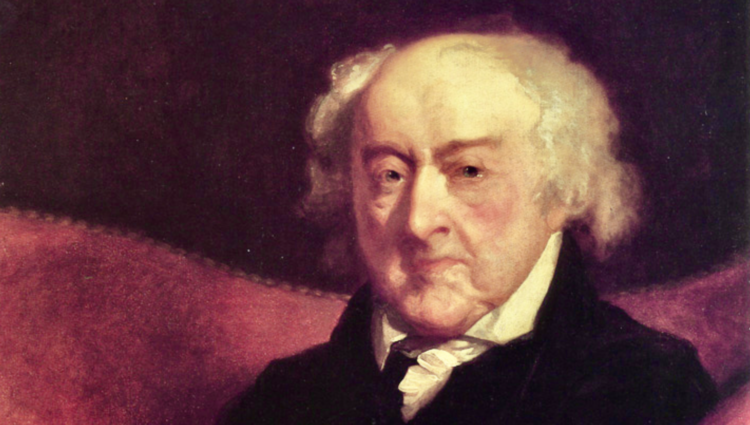
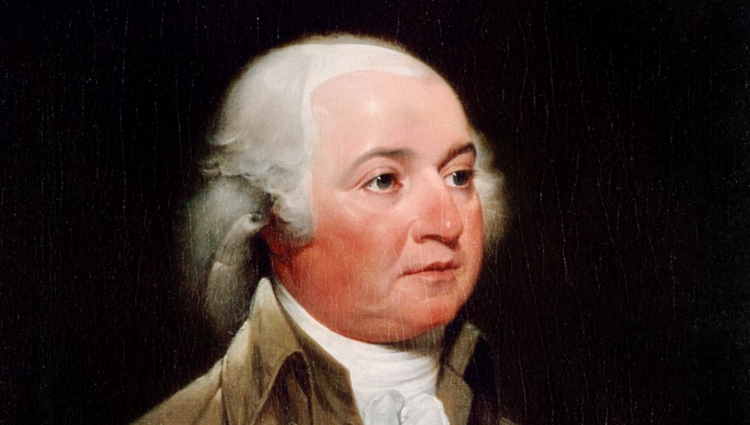
Why the Fame? Given John Adams’s liabilities–his prickly personality, several career setbacks, and the inconvenient fact that his presidency was shoehorned between that of eminent Virginians–it is hardly surprising that his revival came so late–200 years after his retirement from public life. I’d argue that it is not justifiable to give all the credit to [...]

The Founders and Happiness

By |2019-04-15T19:12:16-05:00August 3rd, 2011|Categories: American Founding, Gleaves Whitney, Happiness, Natural Rights Tradition, Virtue|

It was Thomas Jefferson and America’s founding generation that set culture on a new course when they declared that all human beings had the inalienable right to the “pursuit of happiness.” It has been said that that phrase in the Declaration of Independence has done more to shape the sensibilities of the modern age than [...]

John Adams Unbound

By |2021-10-29T12:55:50-05:00July 4th, 2011|Categories: American Founding, American Republic, Film, Gleaves Whitney, John Adams, Leadership|

John Adams’ public life makes for a compelling story. Consider the number of firsts that he is associated with during the early days of the republic. Once Forgotten Founding Father and Philosopher President Makes a Comeback…. Why? Ten years ago, David McCullough told audiences something that still has the capacity to surprise us. The Pulitzer Prize-winning author said [...]

Roots of American Order: Jerusalem

By |2017-06-22T16:04:32-05:00January 20th, 2011|Categories: American Founding, American Republic, Christian Humanism, Christopher Dawson, Culture, Gleaves Whitney, Roots of American Order, Russell Kirk, Western Civilization|

To understand America, do not start with 1787. Or 1776. Or 1492. To understand America—or more precisely the most ancient roots of American order—go back to the second millennium B.C., to the Hebrews. Ancient Israel has had more influence on American culture than you think. So argues Russell Kirk in his magisterial work, The Roots [...]

Russell Kirk and the Roots (and Shoots) of American Order

By |2017-06-22T14:32:10-05:00January 9th, 2011|Categories: American Founding, American Republic, Culture, Edmund Burke, Gleaves Whitney, Roots of American Order, Russell Kirk, Western Civilization|Tags: , |

Russell Kirk and the Roots of American Order Russell Kirk best tells the story of the West in The Roots of American Order. Now in its fourth edition, Roots is “simply one of the finest surveys of the classical, religious, and European influences on American political thought ever composed” (Lee Cheek). In his masterpiece, Dr. [...]

The Founding Fathers – Our First Neocons?

By |2017-06-15T16:03:13-05:00August 7th, 2010|Categories: American Founding, American Republic, Federalist Papers, Gleaves Whitney, Old Republic, Politics|

The imaginative conservative champions certain first principles in response to the fragmenting forces of modernity. Burke articulated a humane order to counter the “armed doctrines” of French revolutionaries in the eighteenth century; in turn, Kirk opposed the galloping statism and rapacious totalitarianism of the twentieth. These avatars set down principles that are drawn from the [...]

Go to Top