About Russell Kirk

Russell Kirk (1918-1994) was the author of some thirty-two books, hundreds of periodical essays, and many short stories. Both Time and Newsweek have described him as one of America’s leading thinkers, and The New York Times acknowledged the scale of his influence when in 1998 it wrote that Dr. Kirk’s 1953 book The Conservative Mind “gave American conservatives an identity and a genealogy and catalyzed the postwar movement.” Dr. Kirk's other books include The Roots of American Order, Prospects for Conservatives, Edmund Burke: A Genius Reconsidered, The Sword of Imagination, and Enemies of the Permanent Things.

Edmund Burke and the Principle of Order

By |2023-04-13T12:06:37-05:00September 8th, 2017|Categories: Conservatism, Edmund Burke, Essential, Featured, Ordered Liberty, RAK, Russell Kirk|

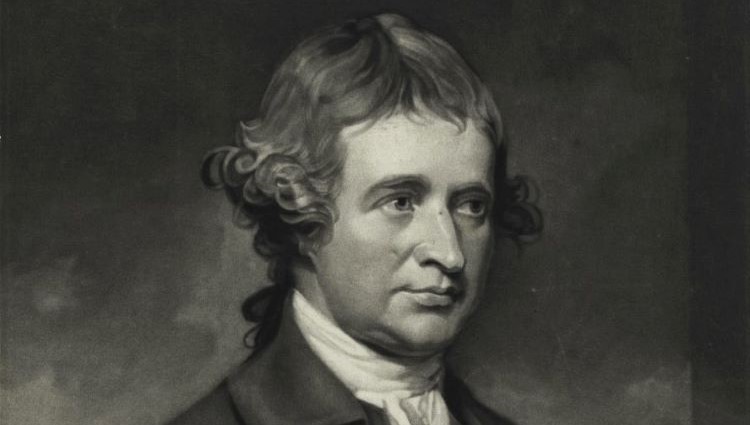
Edmund Burke’s principle of order is an anticipatory refutation of utilitarianism, positivism, and pragmatism, an affirmation of that reverential view of society which may be traced through Aristotle, Cicero, Seneca, the Roman jurisconsults, the Schoolmen, Richard Hooker, and lesser thinkers. It is this; but it is more. What Matthew Arnold called “an epoch of concentration” [...]
Edmund Burke Dispassionately Considered

By |2021-05-25T16:07:56-05:00August 23rd, 2017|Categories: Books, Edmund Burke, Featured, RAK, Russell Kirk|

Edmund Burke transcends party struggles and the questions of his hour; and, though suspicious from first to last of abstract doctrine and theoretic dogma, he will endure not for what he did, but for what he perceived. Burke and the Nature of Politics: The Age of the French Revolution by Carl B. Cone (527 pages, University [...]

Letters from Grub Street

By |2021-05-25T16:25:53-05:00May 26th, 2017|Categories: Books, Featured, Literature, RAK, Russell Kirk|Tags: |

George Gissing found himself more intensely conservative than the Tory politicians of his time, a lover of old ways and old towns, a champion of the countryside, a man who distrusted innovation and spoke for the permanent things. The Collected Letters of George Gissing, Volume Three, 1886-1888, edited by Paul Mattheisen, Arthur C. Young, and Pierre [...]

The Revitalized College: A Model

By |2019-09-05T13:36:31-05:00May 20th, 2017|Categories: Education, Liberal Arts, Philosophy, RAK, Russell Kirk, Virtue|

The peculiar conditions of our time and our society demand now, more than ever before, a reinvigoration of truly liberal learning. This hour is favorable to the restoration or establishment of a college with principle… A few years ago, a graduate of New York University brought suit against that institution. He had been induced to enter [...]

Prudence vs. Fanaticism: On the American & French Revolutions

By |2021-05-25T16:38:24-05:00March 3rd, 2017|Categories: American Founding, RAK, Revolution, Russell Kirk|

The American and French Revolutions provide a contrast between principle and ideology; between prudence and fanaticism; between prescriptive rights and extravagant ambitions; between historical wisdom and utopianism; between free government and democratic despotism. A little book forgotten for a century and a half, Friedrich Gentz’s Origin and Principles of the American Revolution, compared with the Origin and [...]

Abraham Lincoln and the Dignity of the Presidency

By |2020-05-18T15:43:25-05:00February 19th, 2017|Categories: Abraham Lincoln, American Founding, Presidency, RAK, Russell Kirk|

Abraham Lincoln was a conservative statesman on the intellectual model of Cicero. In his dignity there was no hubris; much, he knew, must be left to Providence. The Roman Republic was at the back of the minds of the framers of the American Constitution; it was their hope that the chief magistrate of these United [...]

Edmund Burke, Providence, & Archaism

By |2023-10-19T08:49:55-05:00January 11th, 2017|Categories: Books, Edmund Burke, Moral Imagination, RAK, Russell Kirk|

Practical politics, Edmund Burke knew, is the art of the possible. We cannot alter singlehandedly the climate of opinion, or the institutions of our day, by a haughty adherence to inflexible and abstract doctrines. The Political Reason of Edmund Burke, by Francis Canavan (S.J. Duke University Press, 1960) Edmund Burke and Ireland, by Thomas H.D. [...]

The Humane Businessman

By |2021-05-25T16:51:06-05:00September 27th, 2016|Categories: Education, Featured, Liberal Learning, RAK, Russell Kirk, Technology|

American businessmen are inhumane. I do not mean that they are inhuman; they are all too human. I do not mean that they are insufficiently humanitarian. I mean that American businessmen, like most other Americans, are deficient in the disciplines that nurture the spirit. They are largely ignorant of the humanities, which, in a word, [...]

What Constitutes the Common Heritage of America & Europe?

By |2022-03-17T20:17:14-05:00August 20th, 2016|Categories: Alexis de Tocqueville, Education, Featured, Great Books, History, Politics, RAK, Russell Kirk, Tradition|

The patrimony of a civilization can be lost at the very moment of that civilization’s material triumph. In any culture worthy of the name, men must be something better than the flies of a summer; generation must link with generation. Some men among us are doing whatever is in their power to preserve and reinvigorate [...]

Edmund Burke on Healthy & Unhealthy Constitutions

By |2023-10-19T08:50:15-05:00July 8th, 2016|Categories: Conservatism, Constitution, Edmund Burke, Featured, RAK, Russell Kirk|Tags: |

“We are at the beginning of great troubles.” Once upon a time, it was the assumption of most of the people in the world that the fundamental constitutions of their society would endure to the end of time; or at least for a very great while; or certainly for the lifetime of those who had [...]

A Revolution Not Made But Prevented

By |2020-07-08T16:20:05-05:00July 3rd, 2016|Categories: American Founding, Declaration of Independence, Edmund Burke, Featured, RAK, Revolution, Russell Kirk, The Imaginative Conservative, Timeless Essays|

Was the American War of Independence a revolution? It was certainly not the sort of political and social overturn that “revolution” has come to signify. Was the American War of Independence a revolution? In the view of Edmund Burke and of the Whigs generally, it was not the sort of political and social overturn that [...]

The Promises and Perils of Christian Politics

By |2022-03-31T18:11:13-05:00May 10th, 2016|Categories: Christendom, Featured, Politics, RAK, Religion, Russell Kirk|Tags: |

Is there such a thing as a Christian polity? T.S. Eliot raised the right questions about such matters, on the eve of the Second World War, and offered some answers; but, as Eliot put it at another time, there are no lost causes because there are no gained causes.[1] Every generation fights the same battles [...]

The Real End of Economic Production

By |2023-10-19T08:54:18-05:00May 4th, 2016|Categories: Economics, Prospects for Conservatives, Quotation, RAK|

For the conservative, the real end of economic production is to raise man above the savage level, to make possible the leisure which sustains civilization, and to free man from the condition of a simple drudge. When efficiency or production becomes an end in itself, then truly technology has triumphed over humanity. —Prospects for Conservatives: [...]

Go to Top