Edmund Burke Against the Antagonist World

By |2019-10-16T15:49:26-05:00October 31st, 2016|Categories: Bradley J. Birzer, Civil Society, Civilization, Community, Conservatism, Culture, Edmund Burke, Edmund Burke series by Bradley Birzer, History|

Should one generation ever consider itself greater than any other generation, past or future, Edmund Burke warned in his magisterial Reflections on the Revolution in France, the entire fabric of a civilization might very well unravel and, ultimately, disintegrate. Our modern ears have no right to discount Burke’s argument as simple hyperbole. What takes centuries [...]
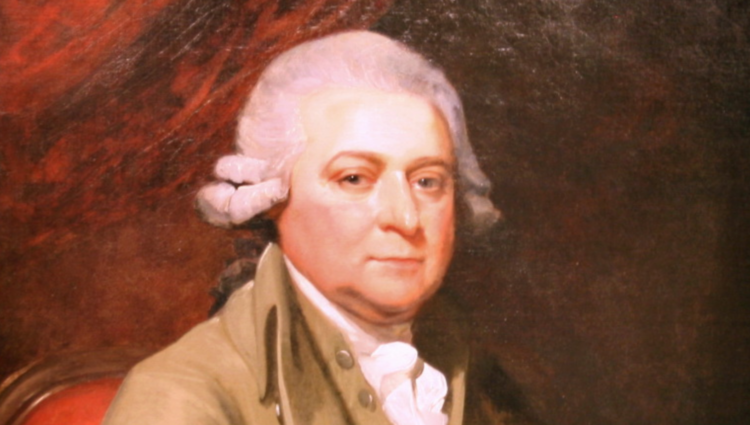
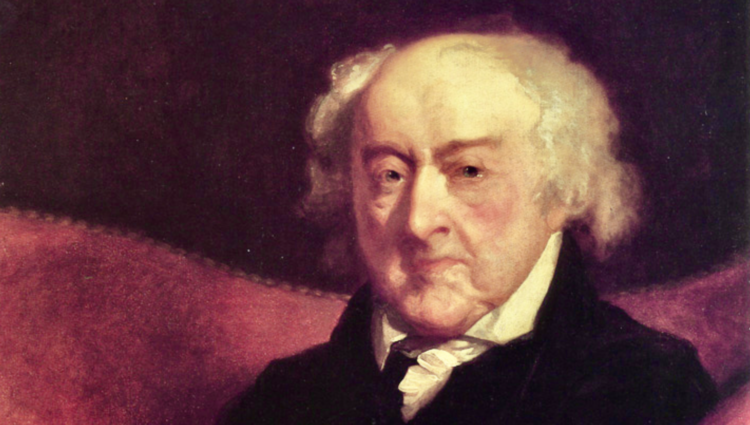
John Adams on the Passion for Distinction in Society

By |2021-10-29T11:26:17-05:00September 14th, 2016|Categories: American Founding, American Republic, Civil Society, Democracy, Featured, John Adams, Liberty, Monarchy, Politics, Social Order|

The first task of the wise legislator in his effort to regulate emulation is to actively conduct the passion toward politically useful objects and thereby place the passion "on the side of virtue." Political Architecture: The Natural Order of the Many A full understanding of the passion for distinction requires that we look at man [...]

John Adams on Nobility and Social Architecture

By |2021-10-29T11:34:38-05:00September 8th, 2016|Categories: Adam Smith, American Founding, American Republic, Civil Society, History, John Adams, Virtue|

Even when wealth and noble birth are connected with talents, the two sets of talents differ, and those possessed by the nobleman are likely to be of greater worth than are those possessed by the man of wealth. Within his general view of man as naturally social, John Adams explored the nature of the passion [...]

The Evil of America’s Polarization

By |2019-08-30T10:52:02-05:00August 30th, 2016|Categories: American Republic, Civil Society, Featured, Politics|

Philip Zimbardo, a former president of the American Psychological Association, observed that the American soldiers who committed atrocities at the Abu Ghraib prison were not inherently evil: “The line between good and evil is permeable. Any of us can move across it… I argue that we all have the capacity for love and evil—to be [...]

Life in the Image-World

By |2019-09-05T12:54:46-05:00August 23rd, 2016|Categories: Character, Civil Society, Culture, Featured, Film, George Stanciu, History, Information Age, Modernity, St. John's College, Technology, Television|

Recently, I went with a group of friends to a concert of American choral music based on black spirituals. At the intermission, my friends and I spoke excitedly about what we experienced. The sole musician amongst us praised the balance of the ensemble and the conductor’s energy. One woman noticed how nervous the lead soprano [...]

What Is the Cause of Angry Politics?

By |2019-09-24T10:16:52-05:00June 11th, 2016|Categories: Civil Society, Featured, John Horvat, Order, Politics, Virtue|

  Everyone agrees that there is something different about today’s angry politics. The ordinary issues that have shaped the political debate for years have largely remained the same. The economy is still in bad shape, terrorism remains a top concern and the deficit is still growing as fast as ever. The mood of the nation, [...]

Global Citizenship: When Words Turn into Semantic Quicksand

By |2016-05-25T23:40:28-05:00May 25th, 2016|Categories: Alexis de Tocqueville, Civil Society, Community, Freedom, Modernity, Social Institutions, Ted McAllister, Western Civilization|

We are told to be careful with our words, to be aware of how our words might make other people feel, or of how we might be misunderstood. However important is this advice (and it is both important and grossly overused), these are not the primary reasons we should be thoughtful about our language. Words [...]

Can Civility Be Restored to Our Campuses?

By |2016-05-22T13:28:49-05:00April 17th, 2016|Categories: Bruce Frohnen, Civil Society, Civilization, Featured, Liberalism, Liberty, Ordered Liberty|

Critics have taken to calling the leftist agitators who are running roughshod over university campuses hypocrites. The reasoning is that these self-described social-justice warriors, by shouting down speakers, silencing dissent on social media, and forcing resignations from those they accuse of “injustice,” are betraying the very toleration that allows them to speak freely. Unfortunately, the [...]

Wisdom of the East: Saving Europe From Cultural Invasion

By |2023-08-19T16:40:46-05:00March 9th, 2016|Categories: Christianity, Civil Society, Civilization, Culture, Europe, Featured, Islam, Viktor Orbán|

Our Europe is built on Christian foundations, and whatever our personal beliefs, none of us can want our Europe to submit when faced with a torrent of people deliberately channelled towards us, and when faced with aggressive demands for the assertion of different morals and different customs. Editor’s Note: The following is an abridged version [...]

The New Organization: Putting Knowledge to Work

By |2019-09-02T10:11:28-05:00February 10th, 2016|Categories: Civil Society, Labor/Work, Quotation|

Society, community, and family are all conserving institutions. They try to maintain stability and to prevent, or at least to slow, change. But the modern organization is a destabilizer. It must be organized for innovation and innovation, as the great Austro-American economist Joseph Schumpeter said, is ‘creative destruction.’ And it must be organized for the [...]

Discipline or Punish?

By |2019-04-30T14:14:43-05:00April 16th, 2013|Categories: Bruce Frohnen, Character, Civil Society, Culture|

Years ago, while I was teaching at a left-wing liberal arts college (one of those places where the students wear black to show how depressing it is to be young and well off) a colleague bragged to me about a study he had done on how to keep convicted criminals from returning to a life of [...]

Begin Here: Civility or Equality?

By |2014-01-16T12:59:47-06:00March 20th, 2013|Categories: Civil Society, Culture, Equality|Tags: |

“The thing that is in danger is the whole structure of society, and it is necessary to persuade thinking men and women of the vital and intimate connection between the structure of society and the theological doctrines of Christianity.”–Dorothy L. Sayers, “Creed or Chaos?” “But what is a practical joke in a world of nonsense, [...]

Go to Top