The Counsel of Despair? Albert Jay Nock on Self-Government

By |2020-08-18T16:42:09-05:00September 22nd, 2016|Categories: Economics, Featured, Free Markets, Libertarianism|Tags: |

Albert Jay Nock believed that the Jeffersonian project depended on the improvability of citizens through education, but that the ordinary mass of humans simply could not be so improved. In Zen Buddhism, the lineage of student to master is extremely important—it is the channel through which the Dharma is transmitted. There is a story of [...]
The Crisis of Human Order

By |2020-01-14T11:42:47-06:00September 19th, 2016|Categories: Civilization, Economics, History, Social Order, Western Civilization|

Editor’s Note: This is the third and final essay in a series; the first essay may be found here; the second may be found here. Analyzed Partial Responses Two other responses to crisis can be identified: economic individualism and spiritual individualism. Here we can give only a simplified characterization of each position. For unlike the unanalyzed [...]

Hilaire Belloc & G.K. Chesterton: Romanticizing the Middle Ages?

By |2016-09-14T05:00:24-05:00September 13th, 2016|Categories: Distributism, Economics, G.K. Chesterton, Hilaire Belloc, Joseph Pearce|

One of the wonderful things about The Imaginative Conservative is the way in which it has become a powerful forum for thoughtful and thought-provoking writers to exchange thoughtful and thought-provoking ideas. There’s none of the knee-jerk and thoughtless reaction to events to be found on other cultural and political journals. Deo gratias! This does not mean, [...]

John Adams on Nobility and Social Architecture

By |2021-10-29T11:34:38-05:00September 8th, 2016|Categories: Adam Smith, American Founding, American Republic, Civil Society, History, John Adams, Virtue|

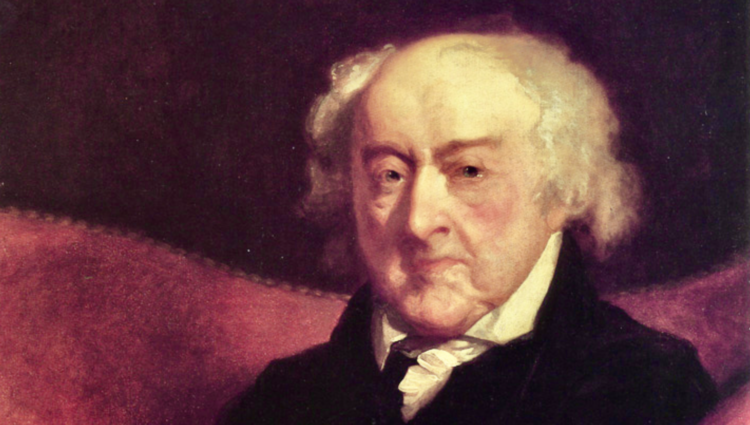
Even when wealth and noble birth are connected with talents, the two sets of talents differ, and those possessed by the nobleman are likely to be of greater worth than are those possessed by the man of wealth. Within his general view of man as naturally social, John Adams explored the nature of the passion [...]

Should Christians Romanticize the Middle Ages?

By |2020-07-26T13:15:21-05:00September 7th, 2016|Categories: Architecture, Catholicism, Distributism, Economics, G.K. Chesterton, Hilaire Belloc|

Many Catholics treat the High Middle Ages as a veritable ideal of civilization. But the medieval period produced problematic ideas about aesthetics, eccentric theories of economics, and dangerous assumptions about politics. Over a decade ago a then-acquaintance of mine inquired as to my economic views, my response being that I was “a distributist by default.” [...]

What Does Chesterton Have To Do with Solzhenitsyn?

By |2018-11-09T11:35:32-06:00September 1st, 2016|Categories: Aleksandr Solzhenitsyn, Distributism, G.K. Chesterton, Joseph Pearce, Senior Contributors|

At first sight, it would seem that G.K. Chesterton and Alexander Solzhenitsyn have very little in common. The one has a reputation for jollity and rambunctiousness, the other for sobriety and solemn sternness. One penned swashbuckling fantasies about lovable eccentrics, the other wrote gritty works of realism set in prison camps or cancer wards. Although [...]

A New Political Party for Conservatives?

By |2024-03-14T14:59:08-05:00August 28th, 2016|Categories: Economics, Joseph Pearce, Political Philosophy, Politics|

The policies of the American Solidarity Party come as a breath of much-needed fresh air in the stale and suffocating atmosphere of contemporary politics. I was greatly heartened to read Paul Gottfried’s excellent essay in The Imaginative Conservative in which he lambasts so-called “conservatives” for their abandonment of all that has always been meant by [...]

Does the Church Oppose the Free Market?

By |2016-08-29T16:24:30-05:00August 27th, 2016|Categories: Catholicism, Charity, Economics|

It’s quite easy to forgive those who experience an attack of nausea upon hearing the phrase “Catholic Social Thinking.” In light of the misuse from which that phrase has suffered over the past half-century alternative responses are all too likely to indicate either that a person has not been paying attention or is lacking in [...]

Homelessness and the Progressive Mentality

By |2019-09-19T13:50:01-05:00August 24th, 2016|Categories: Bruce Frohnen, Culture, Economics, Politics, Progressivism|

The city of Santa Rosa, just north of San Francisco, has declared a “homeless emergency.” This entails “allowing” the homeless to live in their cars year-round instead of only in winter and inclement weather. There also will be some additional services for homeless people. San Francisco itself decided to address this growing problem by adding [...]

Egalitarianism, American-Style

By |2016-08-14T22:31:29-05:00July 31st, 2016|Categories: Alexis de Tocqueville, Bruce Frohnen, Culture, Equality, Free Markets, Russell Kirk, Senior Contributors|

Russell Kirk posed as one of the “canons” of conservatism the existence of orders in society. Critics have responded for decades that such a view shows that traditional conservatives are by nature aristocratic in their orientation, that they are in some sense “un-American” in their rejection of egalitarianism. The assumption appears to be that a [...]

What Is the Promise of the Free Enterprise System?

By |2019-11-14T14:59:47-06:00June 27th, 2016|Categories: Alexander Hamilton, Audio/Video, Economics, Equality, Freedom, Rights|

The Free Enterprise System is dynamic. It is disruptive, yet also full of opportunities in its competitive nature. It requires hard work and virtue in order for it to be possible. If capitalism is to rise above cronyism, a proper understanding must not only be cultivated but also promoted. Dr. David Azerrad offers us such an [...]

The End of Socialism

By |2016-06-04T22:09:55-05:00June 4th, 2016|Categories: Adam Smith, Bradley J. Birzer, Economics, Free Markets, Socialism, Wilhelm Roepke|

James R. Otteson, the Thomas W. Smith Presidential Chair in Business Ethics at Wake Forest University, possesses one of the greatest minds in defense of classical liberalism in the modern era. He has authored two definitive works on Adam Smith, a clear rebuttal of the ethics of Peter Singer, and now a crucial attack on [...]

Go to Top