Alasdair MacIntyre: From Socratic Subverter to Supporter of the State

By |2020-05-20T16:23:46-05:00April 7th, 2016|Categories: Foreign Affairs, Government, Liberalism, Political Philosophy, Politics, Socrates, War|

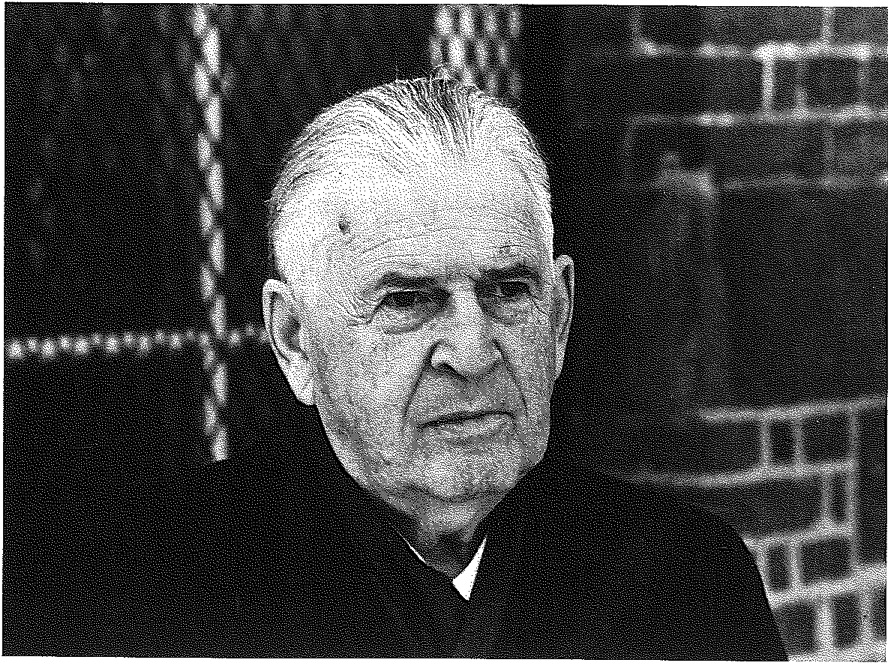
What Alasdair MacIntyre used to know is that the modern nation-state cannot do anything truly good for its citizens. So how can we explain his recent call for the strong use of nation-state power in the realms of health, education, military service, and public speech? I. What Alasdair MacIntyre Knows What Alasdair MacIntyre used to [...]

Slogans: Belief without Thought

By |2019-09-05T10:42:20-05:00April 6th, 2016|Categories: Christopher B. Nelson, Education, Featured, Great Books, Liberal Learning, Socrates, St. John's College|

A good slogan, whether it’s comical or serious, catches your attention. Slogans satisfy our innate desire for simplicity and pith. Sometimes they even rhyme, which implants them deeply into our minds—rhyme and music being powerful aids to memory. (Remember the rhyme “Thirty days hath September, / April, June, and November”? How could you forget it?) [...]

Plato’s Tale of the Wolf-Tyrant: A Lesson for Our Times?

By |2016-05-14T10:50:44-05:00April 6th, 2016|Categories: Christopher Morrissey, Democracy, Featured, Plato, Socrates, Tyranny|

How can the wealthiest people make democracies worse? Plato investigates the question in Book VIII of the Republic. Socrates suggests there that, in pursuit of more and more wealth, oligarchic citizens within the democracy will exploit the lower economic classes, even to the point of undermining their own oligarchic economic interests. In other words, the [...]

Socrates on Democracy and the Just City

By |2023-05-21T11:31:00-05:00April 4th, 2016|Categories: E.B., Eva Brann, Featured, Liberal Learning, Myth, Senior Contributors, Socrates, St. John's College, The Music of the Republic series by Eva Brann|

A. 1. Socrates is about to go on with the investigation of the unjust cities when he is again restrained, as once before on his way up to Athens (327), by a conspiracy of Polemarchus and Adeimantus (499). After some whispering, a vote is taken and the decree that has been passed is announced by Thrasymachus [...]

Birth of a Tyrant: The Dreams of the Mob

By |2023-04-14T11:32:59-05:00March 30th, 2016|Categories: Christopher Morrissey, Great Books, Morality, Myth, Plato, Socrates|

The disordered souls of the tyrannical mob, in projecting their power through the individual tyrant that they select as their leader, will all suffer by being betrayed and disowned by the tyrant. And what more could be expected? Plato gives an account in the ninth book of the Republic of how a tyrannical soul is [...]

Socrates on the Founding & Degeneration of Cities

By |2023-05-21T11:31:02-05:00March 28th, 2016|Categories: E.B., Eva Brann, Featured, Great Books, Justice, Myth, Senior Contributors, Socrates, St. John's College, The Music of the Republic series by Eva Brann|

A. 1-2. We come now to the arguments, the logoi, that form the broad middle ring encircling the center. Just as the question concerning the connection of justice to happiness is answered by bringing to light the human soul in its mythical shape, so the soul itself, that is, its formal “constitution,” is discovered by [...]

What Has Become of Journals of Imagination?

By |2021-08-20T09:46:22-05:00March 23rd, 2016|Categories: Bradley J. Birzer, Imagination, J.R.R. Tolkien, Myth, Plato|

The day of the printed journal of imagination—dealing with ideas, literature, and poetry—seems to be fading. To be sure, it has been fading rather dramatically ever since the Second World War. Political and ideologically-oriented magazines, specialized academic journals packed full of discipline-specific jargon, and even the so-called best sellers have replaced the journals of imagination. [...]

The Theology of Socratic Piety

By |2020-03-18T23:58:56-05:00March 23rd, 2016|Categories: Apology, Crito, Greek Epic Poetry, Homer, Myth, Phaedo, Socrates|

We know that Socrates was accused of introducing new gods and of corrupting the youth. But what was Socrates’ true position concerning the gods? “One Being, the only truly wise, does not and does agree to be called Zeus.” – Heraclitus This reading of the Euthyphro will grapple with the accusations of impiety leveled against [...]

Socrates’ Descent into Hell

By |2023-05-21T11:31:03-05:00March 21st, 2016|Categories: E.B., Eva Brann, Featured, Myth, Plato, Senior Contributors, Socrates, St. John's College, The Music of the Republic series by Eva Brann|

In Plato's "Republic," Socrates descends to Hades, is caught in conversation in the house of Pluto, and tells down there the story of his own descent. This then is the setting of the "Republic": Hades with its tales and a deliverer willing to go down and able to come up. A. "Socrates begins most of [...]

The Sword of Damocles: No Friends for the Tyrant

By |2021-03-21T08:20:30-05:00March 17th, 2016|Categories: Christopher Morrissey, Cicero, Featured, History, Plato, Tyranny|

Plato tried to act as a political advisor to the tyrant Dionysius II of Syracuse. Famously, it was a fiasco. What are the sources of this failure? Cicero, in his Tusculan Disputations, has an interesting section on Dionysius. He tells us how Dionysius ruled over the Syracusans for thirty-eight years, beginning his rule when he [...]

Losing Your Mind in Art

By |2018-12-18T15:10:15-06:00March 4th, 2016|Categories: Art, Christopher Morrissey, Featured, Plato, Poetry, Socrates|

Plato’s Ion contains an unforgettable image describing artistic experience. In conversation with a rhapsode named Ion, Socrates likens the activity of poets to the operation of a magnet. Ion’s own professional expertise lies in the recitation of the poetry of Homer, and so Socrates says: “The gift which you possess of speaking excellently about Homer [...]

The Elements: The Key to Understanding the Cosmos

By |2021-02-09T12:51:30-06:00March 3rd, 2016|Categories: Christopher B. Nelson, Education, Featured, Iliad, Mathematics, Plato, St. John's College|

The quest for elements is the best way we humans have of getting to the roots of things and making sense of our experience. And working at this together, in a community dedicated to learning, is one of the best services we can do, both for our own souls and for those of our fellow [...]

The Legacy of the Pre-Socratics

By |2019-07-30T15:31:04-05:00February 24th, 2016|Categories: Christianity, Christopher Morrissey, History, Homer, Myth, Philosophy, Socrates|

In the history of philosophy, what is the permanent achievement of the Pre-Socratics? Did they attain anything in thought that we can rightly credit to them? Or must they forever be seen as precursors to something greater? The very name used by scholars to classify them seems to condemn them forever to the status of [...]

Jacob Klein: European Scholar and American Teacher

By |2023-05-21T11:31:09-05:00February 1st, 2016|Categories: E.B., Education, Eva Brann, Featured, Jacob Klein, Liberal Learning, Meno, Plato, Senior Contributors, St. John's College|

The subtitle of my talk might be “Liberal Education: Program and/or Pedagogy?” The reason is that I think of Jacob Klein’s life as being an embodiment of that slash, “and/or” and therefore an occasion for asking what seems to me a question the answer to which determines the success—I mean the lively and secure survival—of [...]

Go to Top