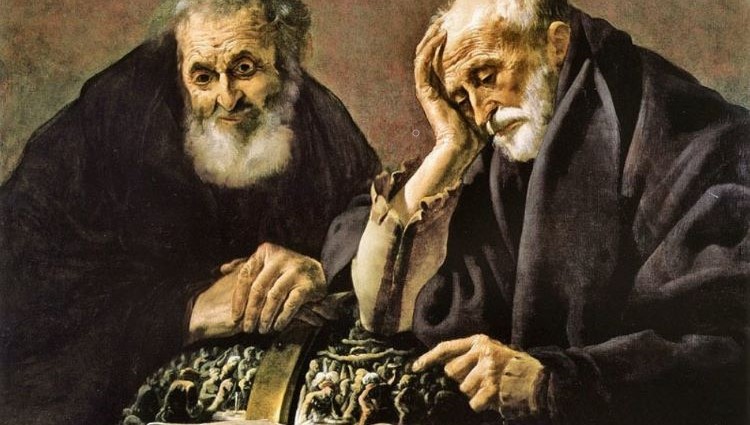
Pre-Socratics or First Philosophers?

By |2023-05-21T11:31:10-05:00January 26th, 2016|Categories: Classics, E.B., Eva Brann, Featured, History, Liberal Learning, Philosophy, Senior Contributors, Socrates, St. John's College|

Think how peculiar this appellation is: “Pre-Socratics.” A whole slew of thinkers, poetical, aphoristic, prosaic—condemned to be known as the precursors of a man who wrote nothing! Forerunners are, it seems, ipso facto inferior to the rightly anointed. Take John the Baptist, the canonical precursor, who says of himself: “…he that cometh after me is [...]
The Unspoken Moral Truths of “4 Adventures of Reinette & Mirabelle”

By |2016-01-20T12:39:40-06:00January 20th, 2016|Categories: Christopher Morrissey, Film, Morality, Socrates|

French filmmaker Eric Rohmer (1920-2010) created an impressive oeuvre of fine films. I first encountered him through the DVD box-set from The Criterion Collection containing six of his films known as the “Six Moral Tales.” The set also contains a 262-page paperback book of the six stories that Rohmer originally wrote, upon which he later [...]

Soul, World, and Idea: Interpreting Plato

By |2023-05-21T11:31:13-05:00December 29th, 2015|Categories: Books, E.B., Eva Brann, Featured, Phaedo, Philosophy, Plato, Senior Contributors, St. John's College|

Soul, World, and Idea: An Interpretation of Plato’s Republic and Phaedo by Daniel Sherman. (Lanham, MD: Lexington Books, 2013) “To save the phenomena” of heavenly motions by undergirding them with rational, that is, mathematical, hypotheses—that is said to be the problem Plato set for astronomers in a passage from the Republic frequently referenced by Daniel [...]

The Dangers of Egalitarianism in a Democracy

By |2018-12-09T08:42:06-06:00November 23rd, 2015|Categories: Democracy, Featured, Great Books, Louis Markos, Plato, Timeless Essays|

(Today’s offering in our Timeless Essay series affords our readers the opportunity to join Louis Markos as he examines democracy and egalitarian sameness. —W. Winston Elliott III, Publisher) Most Americans take for granted that democracy is an absolute good. If it can be said of an idea or a program that it promotes equality, Americans, whatever their [...]

A History of the Will

By |2023-05-21T11:31:20-05:00November 17th, 2015|Categories: Audio/Video, E.B., Eva Brann, Great Books, Senior Contributors, Socrates, St. Augustine, St. John's College|

http://www.podtrac.com/pts/redirect.mp3/traffic.libsyn.com/partiallyexaminedlife/PEL_ep_120pt1_6-26-15.mp3 Dr. Eva Brann recently wrote an important book, Un-Willing: An Inquiry into the Rise of Will’s Power and an Attempt to Undo It (2014), which asks certain questions regarding human will: What is the will? Is it an obvious thing that we all can see in ourselves when introspecting? If so, then why is there so [...]

Escaping Plato’s Cave: The Quest for True Literacy

By |2018-12-18T17:45:42-06:00October 23rd, 2015|Categories: Christianity, Featured, Liberal Arts, Liberal Learning, Literature, Plato, Steven Jonathan Rummelsburg|

There is exponentially more to literacy than what meets the eye. The distinction between material and formal literacy does not indicate movement on a linear graph, but an organic three-dimensional expansion of intellectual apprehension into previously undiscovered realms. The claims believers make about materially undiscoverable countries and the transcendent origin of language evokes ire and [...]

Are We Living in an Illiterate Age?

By |2015-11-17T18:57:18-06:00October 9th, 2015|Categories: Common Core Curriculum, Education, Featured, Great Books, Liberal Learning, Literature, Plato, Steven Jonathan Rummelsburg|

Many mistakenly believe this is a literate age. But in reality there is a literacy crisis the world over. The vast majority of people are in possession of literacy skills that constitute the mere shadow of true literacy. As a people, we are no longer able to detect the tones of reality or perceive their [...]

The Wise Harmony of Justice

By |2015-09-22T11:36:26-05:00September 30th, 2015|Categories: Justice, Philosophy, Plato, Quotation|

And the truth is, justice was something like that, as it seems, but not anything connected with doing what properly belongs to oneself externally, [443D] but with what’s on the inside, that truly concerns oneself and properly belongs to oneself, not allowing each thing in him to do what’s alien to it, or the classes [...]

Converting the Cosmos of the Mind

By |2023-05-21T11:31:26-05:00September 23rd, 2015|Categories: E.B., Eva Brann, Plato, Quotation, Senior Contributors, Socrates, St. John's College|

At every moment of this present life, our readiness to learn was, and is now, up to us, was and is our responsibility, and on every day our life breaks around the before and after of a life-changing choice… though all the past choices ease or obstruct the present one. Our cosmos, the place of [...]

Socrates on Statesmanship: The Actual Intention

By |2023-05-21T11:31:26-05:00September 22nd, 2015|Categories: Books, Cicero, E.B., Eva Brann, Featured, Plato, Senior Contributors, Socrates, St. John's College|

Statesmanship is concerned with the virtues of justice, temperance, courage, and wisdom. Education in the city should be set up so as to cancel political ambition Cicero famously said of Socrates that he was the one who brought philosophy down from heaven to earth. This must be some other Socrates than the one of the [...]

Plato’s Theory of Ideas

By |2023-05-21T11:31:29-05:00September 1st, 2015|Categories: Aristotle, E.B., Eva Brann, Jacob Klein, Phaedo, Plato, Senior Contributors, Socrates, St. John's College|

Philosophy can come from a cool, sober sense that the ways of the world should be exposed and explained, its myths dismantled and its depths made plane; that not what is best but what is individual, not what is common but what is ordinary, should preoccupy our efforts. My subject, as proposed, is “Plato’s Theory [...]

Adventures of the Mind

By |2021-05-19T12:05:48-05:00August 12th, 2015|Categories: Featured, Great Books, Liberal Learning, Plato, Quotation, Socrates, St. John's College|

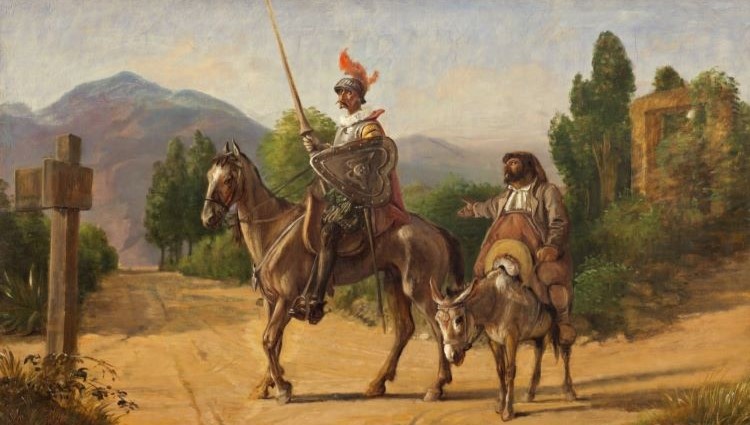
So the reader of Plato joins Socrates in inquiry, as Sancho Panza joined Don Quixote, for adventures of the mind. And although there is a deep consent, like a fire kindled deep in the mind, there is always a tension between the squire and the knight-errant, the little man with proverbs for wisdom riding on [...]

The Dispassionate Study of the Passions

By |2023-05-21T11:31:33-05:00August 4th, 2015|Categories: Apology, Aristotle, Books, Cicero, E.B., Eva Brann, Featured, Plato, Senior Contributors, Socrates, St. John's College|

Plato’s dialogue Gorgias ends with a long speech culminating in a rousing cry by an aroused Socrates. He is speaking to Gorgias’s student Callicles about his swaggering opinionatedness and their common uneducatedness. The words he uses are neanieusthai, ‟to act like a youth,” to behave like a kid, and apaideusia, ‟lack of teaching,” ignorance. And [...]

Go to Top