With Gratitude to a Sentinel of Classical Learning

By |2021-07-12T16:24:54-05:00January 19th, 2019|Categories: Classical Education, Classical Learning, Great Books, In Honor of Eva Brann at 90 Series, Liberal Learning, St. John's College, Wisdom|

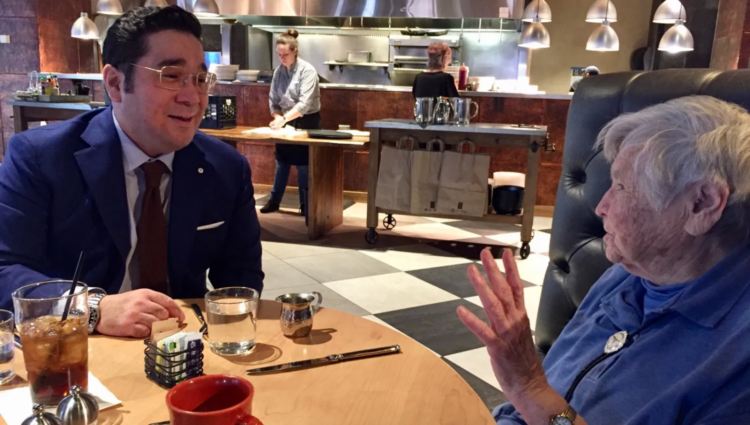
From time to time, there is the need for sentinels of classical learning, individuals who, if one is fortunate to be around them, beckon the meandering intellect back to the pursuit of the truth, the discovery of the good, and the conservation of the beautiful. In the end, the student is invited to the quest [...]

An Education to Restore Wonder

By |2019-08-06T17:19:31-05:00December 29th, 2018|Categories: Classical Education, Classical Learning, Classics, Education, Great Books, Liberal Arts, Liberal Learning, Wyoming Catholic College|

We’ve reached a time when fewer and fewer on the outside know what the liberal arts are, or the value of them to the individual person, an organization, and the marketplace of ideas. In an age when people are so focused on science and technology via “STEM” subjects, we’ve lost our sense of wonder… On [...]

A Classical Educational Creed

By |2019-08-08T11:17:15-05:00December 28th, 2018|Categories: Classical Education, Classical Learning, Education, Liberal Arts|

Classical educators agree on the ends of liberal education, namely, the possession of the true, good, and beautiful, wisdom, and the development of the intellectual and imaginative powers that enable their attainment. But the pedagogical means to these ends are less obvious. Here is an attempt to set out a set of principles and claims [...]

The Liberal Arts vs. Progressive Education

By |2024-05-05T21:59:36-05:00April 26th, 2018|Categories: Classical Education, Classical Learning, Humanities, Liberal Arts|

Progressive Education is about training up boys and girls who know how to follow. The classical education model is more concerned about helping students become capable decision-makers in their community and in their families. Search the web and you will find any number of lofty “purposes of education:” Education enables us to develop to the [...]

How Should Classical Schools Teach STEM?

By |2018-10-23T13:06:18-05:00June 23rd, 2017|Categories: Classical Education, Classical Learning, Common Core Curriculum, Education, Liberal Learning, Mathematics, Science, Technology|

Trying to put science in a classical paradigm is putting new wine into old wineskins. Modern science just does not easily fit into a classical paradigm… STEM, or science, technology, engineering, and math, is the newest acronym for what is considered a great education, and it often leads to a satisfying and financially rewarding career [...]

The Classical Tradition in Antebellum America

By |2019-03-10T14:03:22-05:00May 16th, 2017|Categories: Books, Christian Kopff, Classical Education, Classical Learning, Classics, Featured|Tags: , |

The classical curriculum remained the educational gold standard in nineteenth-century America. In fact, its influence grew, as women’s academies with a classical curriculum were founded all over the expanding nation… The Golden Age of the Classics in America: Greece, Rome, and the Antebellum United States by Carl J. Richard (Harvard University Press, 2009) With The [...]

What Is Education?

By |2016-10-28T12:13:55-05:00September 24th, 2016|Categories: Classical Education, Classical Learning, Featured, Humanities, Liberal Arts, Liberal Learning, Wyoming Catholic College|

It is necessary for the perfection of human society that there should be men who devote their lives to contemplation. —St. Thomas Aquinas The trouble with mere pragmatism is that it doesn’t work. —G.K. Chesterton What is education? I emphasize “is” because I am not here asking what education is thought to be, or what [...]

The Protestant Heritage of Classical Humanism: Melanchthon & Cicero

By |2019-07-09T10:46:16-05:00August 17th, 2016|Categories: Christian Humanism, Cicero, Classical Learning|

Here is the grand fact that Protestant theologians always overlook. They, in reality, always present nature and grace as two antagonistic powers, and suppose the presence of the one must be the physical destruction of the other. Luther and Calvin, weary of the good works, and shrinking from the efforts to acquire the personal virtues [...]

The Twilight of the Professors

By |2015-04-29T07:45:13-05:00August 21st, 2013|Categories: Classical Education, Classical Learning, Conservatism, Culture, Education, Liberal Learning|Tags: |

The traditional ideal of the professor—a vaguely eccentric, impractical seeker of truth always teetering, like the Greek philosopher Thales, on the brink of some well or other—has all but disappeared. Though obviously a caricature, this stereotype at least captured the essence of what a professor should be: someone whose life is passionately consumed with the [...]

The Classics and the Traditional Liberal Arts Curriculum

By |2019-08-08T14:44:32-05:00March 21st, 2013|Categories: Christian Kopff, Classical Education, Classical Learning, Classics, Education, Featured, Liberal Learning|Tags: , |

Before I started writing this essay, I went to University of Colorado library and took out one of the best books in English on education, Albert Jay Nock’s Theory of Education in the United States (1932). It is significant for our topic that, while Nock‘s irritable tirade, Our Enemy, the State, is easily available in [...]

A Proper Core Curriculum is Political & Ought Not Be “Politicized”

By |2019-12-26T23:10:16-06:00February 2nd, 2013|Categories: Classical Education, Classical Learning, Education, Featured, Liberal Learning|Tags: , |

The idea for this essay came from a question posed during a meeting of the National Association of Scholars, where several of the presentations had decried recent academic movements of the sort led by Marxists, feminists, homosexualists, or Black separatists, and complained of these groups having politicized higher education. Subsequently, a panel discussing the idea [...]

Stoicism and the Logos

By |2022-07-08T09:29:49-05:00October 20th, 2012|Categories: Bradley J. Birzer, Classical Education, Classical Learning, Stoicism|Tags: |

Stoicism did not serve as mere speculation for the Hellenistic Greeks; it revealed the path to a virtuous life. And the end and the beginning were always there Before the beginning and after the end. And all is always now. Words strain, Crack and sometimes break, under the burden, Under the tension, slip, slide, perish, [...]

Classical Education: Entrusting The Future of the West to Our Children

By |2018-12-12T16:24:35-06:00July 18th, 2012|Categories: Andrew Seeley, Catholicism, Christianity, Classical Education, Classical Learning, Film, J.R.R. Tolkien|Tags: |

I am grateful to the founding parents and benefactors of the Lyceum that you have not had to grow up in a cultural wilderness as I did. Why anyone would be nostalgic for the 70’s I do not know. To give you an idea of how bad it was: In 1973, Admiral Jeremiah Denton returned [...]

The New Classical Education

By |2015-04-29T07:45:15-05:00June 29th, 2012|Categories: Classical Education, Classical Learning, Liberal Learning, Michael Oakeshott|Tags: |

In September 1974, the English philosopher Michael Oakeshott delivered the Abbott Memorial Lecture at Colorado College. Entitled “A Place for Learning,” Oakeshott’s lecture attacked the dominant model of education, a model predicated on the theories of the American educationist John Dewey. Learning, Oakeshott observed, should take place under “conditions of direction and restraint designed to [...]

Go to Top