A Life of Flannery O’Connor: A Review

By |2016-08-02T22:24:23-05:00March 28th, 2013|Categories: Books, Flannery O'Connor, Robert Cheeks, South|

A Life of Flannery O’Connor, by Brad Gooch Mary Flannery O’Connor described herself as a 13th century Catholic and she was right. Surprisingly in an age given to nihilism, progressivism, and consolidation this traditional, Southern, cerebral, talented and orthodox Catholic is among America’s most important writers. There are any number of literary, cultural, and psychological [...]
Flannery O’Connor: Mystery & Metaphor

By |2019-07-23T15:04:03-05:00March 25th, 2013|Categories: Books, Christianity, Featured, Flannery O'Connor, Gregory Wolfe, Literature, South|Tags: , , |

Flannery O’Connor Flannery O’Connor and the Language of Apocalypse, by Edward Kessler. Princeton: Princeton University Press, 1986. The Correspondence of Flannery O’Connor and the Brainard Cheneys, edited by C. Ralph Stephens. Jackson: University Press of Mississippi, 1986. A recent review in the New York Times employed the phrase, the Flannery O’Connor industry,” in [...]

Hannah Coulter & The Bourgeois Family

By |2016-02-12T15:28:29-06:00February 21st, 2013|Categories: Agrarianism, Books, Christianity, Community, Culture, David L. Schindler, Robert Cheeks, Social Order, Wendell Berry|

The rise of techno-capitalism has signaled the triumph of the “bourgeois family” and the demise of the “traditional” family. Christian theologian Stanley Hauerwas said that economist Adam Smith was well aware that the “weakening of familial ties would increase the necessity of sympathy between strangers and result in cooperative forms of behavior that had not [...]

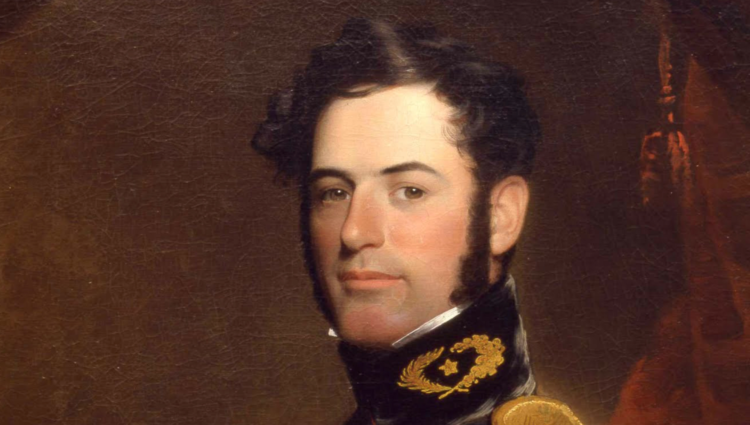
Freeman’s Robert E. Lee

By |2024-01-18T20:34:53-06:00February 19th, 2013|Categories: Books, Civil War, Robert E. Lee, Sean Busick, South|

Though written in the early twentieth century, Douglas Southall Freeman’s biography of Robert E. Lee contains a vital message for the young men and women of today. Lee, especially as presented by Freeman, provides an excellent model for young people to emulate. “Teach him he must deny himself,” said Lee. That was the general’s advice [...]

Rhetoric and Ranting: Inspired by Richard Weaver

By |2016-08-03T10:37:19-05:00January 8th, 2013|Categories: Christendom, Conservatism, Featured, Poetry, Rhetoric, Richard Weaver, South|Tags: , |

Richard Weaver In his autobiography, The Education of Henry Adams (1907), Adams tells us that he was born into one world in the nineteenth century and lived on into another. Born in Quincy, Massachusetts, in 1838, he lived to see the emergent twentieth century—a world in which a secular Dynamo replaced Venus and the [...]

Economy of the Tao: Wendell Berry & Economic Health

By |2019-07-23T13:05:48-05:00December 30th, 2012|Categories: Agrarianism, Economics, Featured, Political Economy, Ralph Ancil, Wendell Berry, Wilhelm Roepke|

Berry’s economic program, what he calls the “little economy,” is a smaller wheel in the larger motion of the “Great Economy.” To understand the former, it is vital to grasp the latter. In the following, then, Berry’s vision of the broader drama of human action is set forth, followed by a presentation of his narrower [...]

Artists at Home: Frost and Faulkner

By |2016-08-03T10:37:25-05:00September 4th, 2012|Categories: Christendom, Featured, Literature, M. E. Bradford, Robert Frost, South|Tags: |

M.E. Bradford It is a paradox of our times that close observers of the American literary scene residing beyond our borders receive, from the self-appointed guardians of “high” culture and the life of the mind within this country, so little really useful direction or assistance in identifying what American writing is worthwhile or [...]

M.E. Bradford’s Constitutional Theory: A Southern Conservative’s Affirmation of The Rule of Law

By |2016-07-04T01:03:01-05:00May 4th, 2012|Categories: American Founding, Constitution, Declaration of Independence, Featured, M. E. Bradford, Political Science Reviewer, Republicanism, Southern Agrarians|

A Better Guide Than Reason: Studies in the American Revolution. (La Salle, IL: Sherwood Sugden & Company Publishers, 1979). Cited in the text as Guide. Remembering Who We Are: Observations of a Southern Conservative. (Athens, GA: The University of Georgia Press, 1985). Cited in the text as Remembering. A Worthy Company: The Dramatic Story of [...]

It All Turns on Affection by Wendell Berry

By |2016-05-24T15:41:48-05:00April 25th, 2012|Categories: Agrarianism, Audio/Video, Economics, Political Economy, W. Winston Elliott III, Wendell Berry|

Wendell Berry In this lecture Mr. Berry challenges our assumptions about the economy, our culture and our place in the world. He also asks profound questions regarding our connections with each other and the environment. Will we seek to escape our limits and reconnect with nature, our families, our neighbors and our own [...]

Poetry: Donald Davidson’s “Aunt Maria and the Gourds”

By |2014-01-23T12:55:33-06:00April 8th, 2012|Categories: Donald Davidson, John Crowe Ransom, Literature, M. E. Bradford, Moral Imagination|Tags: |

While studying at the University of Dallas in the early ’90’s, I was taught and influenced by a few notable professors, such as Janet Smith, Frederick Wilhelmsen, Wayne Ambler, Leo Paul de Alvarez, along with a few others. Following Prof. Wilhelmsen after many class lectures back to his office or at least to the university mall, I [...]

The Southern Critics: An Anthology

By |2015-11-10T17:53:03-06:00April 4th, 2012|Categories: Andrew Lytle, Books, Julie Baldwin, South, Southern Agrarians|

The Southern Critics: An Anthology Edited by Glenn C. Arbery, ISI Books A Southern critic by any other name would be an Agrarian or Fugitive. Four of the writers featured in this book defended their way of life against modernity 80 years ago at Vanderbilt University in “I’ll Take My Stand.” The others given voice here [...]

Means and Ends: Education and Poetry in a Secular Age

By |2015-05-27T13:22:41-05:00March 26th, 2012|Categories: Cleanth Brooks, Education, Featured, Liberal Learning|Tags: |

The serious writer of today lives in a very much secularized world, a world of measurable objects, a world of space and time considerations, a world that must be studied not only rationally, but scientifically. Now, this situation did not suddenly come about in the middle of the seventeenth century. It has been developing since [...]

Calhoun, Jefferson, and Popular Rule

By |2020-07-13T18:08:49-05:00March 20th, 2012|Categories: American Republic, John C. Calhoun, Lee Cheek, Politics, Republicanism, South, Thomas Jefferson|

According to John C. Calhoun, Thomas Jefferson served as the “Republican Patriarch,” the political thinker who had incorporated the republican understanding of liberty into a theory of federal relationships most conducive to the life of the community and political order. John Caldwell Calhoun inherited the social and political tradition of his South Atlantic world, confirmed [...]

Go to Top