“I’ll Take My Stand” as Southern Epic

By |2023-05-17T19:10:34-05:00May 17th, 2023|Categories: Agrarianism, Books, South, Timeless Essays|

Ever since the first stir they created in the early 1930s the Southern Agrarians have been difficult to assess. How serious, politically and economically, were they in what they advocated? How much agreement was there among them? The four collected above papers point up and even accentuate their divergence, investigating wide-ranging and, at least on [...]

M.E. Bradford’s Revolutionary “A Better Guide Than Reason”

By |2023-03-22T18:33:40-05:00March 22nd, 2023|Categories: Agrarianism, American Founding, American Republic, Books, John Dickinson, M. E. Bradford, Patrick Henry, South, Southern Agrarians, Thomas Jefferson, Timeless Essays|

No one who reads and digests “A Better Guide Than Reason” can fail to be revolutionized. We had thought that the great Southern political tradition—that of Patrick Henry, Thomas Jefferson, John C. Calhoun, and the agrarians—was dead. Not so. A Better Guide Than Reason: Studies in the American Revolution by M.E. Bradford (241 pages, Sherwood Sugden [...]

Choosing Southernness, Choosing My Father’s Way

By |2023-07-31T23:58:42-05:00February 12th, 2023|Categories: Conservatism, Featured, Mark Malvasi, South, Timeless Essays, Tradition|

Southern ways are held up to ridicule, and Southern virtues are out of fashion. But because Southerners think, believe, live and act within an inheritance, they enjoy a sense of confidence, faith and stability that may prove an invaluable asset as the foundations of our society begin to collapse. Late in August 1965, a young [...]

The Tragic South

By |2023-01-24T17:43:07-06:00January 24th, 2023|Categories: Civil War, Joseph Pearce, South, Timeless Essays, Tragedy|

The tragedy is that the South’s tragic flaw—its defense of slavery—led to the defeat of its just demand for states’ rights and the consequent rise of the Federal Government, so that the original concept of the nation has been entirely lost. Recently, whilst staying with friends in Dickson, Tennessee, I came across an article in [...]

Southern Life, Agrarian Vision: The Apprenticeship of Andrew Lytle

By |2023-01-17T16:25:33-06:00January 17th, 2023|Categories: Agrarianism, Andrew Lytle, History, Literature, Mark Malvasi, Senior Contributors, South, Southern Agrarians, Timeless Essays|

The South, Andrew Lytle feared, had been poor and virtuous for too long and now found the temptations of industry and commerce too alluring to resist. Material prosperity weakened family, community, and tradition and deprived rural southern life of its vitality, rendering it both tumultuous and desolate. Born in Mufreesboro, Tennessee on the day after [...]

Russell Kirk’s “Southern Valor”

By |2022-07-02T21:16:23-05:00July 2nd, 2022|Categories: Clyde Wilson, Conservatism, John Randolph of Roanoke, Russell Kirk, South, Timeless Essays|Tags: , |

American culture and public life are in a perilously low state, but how much worse off we would be if it had not been for Russell Kirk and his valorous life in behalf of the moral imagination that is the essence of our civilization. We have no better example of resourceful defense of unchanging principle, [...]

Andrew Lytle & the Politics of Agrarianism

By |2022-02-07T16:01:13-06:00February 7th, 2022|Categories: Agrarianism, Andrew Lytle, History, Literature, Mark Malvasi, Senior Contributors, South, Southern Agrarians|

Automated and impersonal, American society, Andrew Lytle feared, was coming to be peopled by the rootless masses ensnared in dreary, routine, unimaginative, and irrelevant occupations—a society of interchangeable parts and interchangeable men. This condition was the very antithesis of the Christian economy. I. By the 1930s, Andrew Lytle thought the signs of impending disaster everywhere [...]

Andrew Lytle and the Order of the Family

By |2022-02-07T15:58:47-06:00November 14th, 2021|Categories: Agrarianism, Andrew Lytle, Family, History, Literature, Mark Malvasi, Senior Contributors, South, Southern Agrarians|

Andrew Nelson Lytle—novelist, dramatist, essayist, and professor of literature—extolled the order of the family, which by the 1930s he thought all but spent, precisely because it was rooted in the very concept of divine order that the modern world had decried and rejected. As patriarchy deteriorated, as acceptance of divine supremacy vanished, the family languished, [...]

Old Rowan Oak: William Faulkner’s Conservatism

By |2021-09-24T15:42:10-05:00September 24th, 2021|Categories: Books, Conservatism, Literature, South, Timeless Essays|

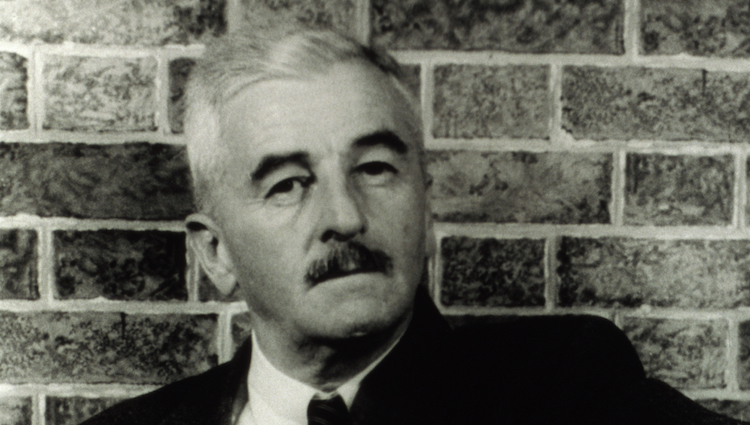
Russell Kirk’s Ten Conservative Principles reflect the way William Faulkner wrote, acted, and organized his life. As a property owner with notions of limited government, he brought that orientation to his fiction, to his work in Hollywood, to his commentary on civil rights, and to his everyday relationships with his family and community. His conservatism [...]

“A Journey Through Texas”

By |2021-03-02T00:38:39-06:00March 2nd, 2021|Categories: American West, Quotation, South, Texas|

“You are welcomed by a figure in blue flannel shirt and pendant beard, quoting Tacitus, having in one hand a long pipe, in the other a butcher’s knife; Madonnas upon log walls; coffee in tin cups upon Dresden saucers; barrels for seats, to hear Beethoven’s symphony on the grand piano.” —From "A Journey Through Texas, [...]

Whittaker Chambers & the Nashville Agrarians: The Ground Beneath Their Feet

By |2021-07-12T13:27:50-05:00February 10th, 2021|Categories: Agrarianism, Civilization, Culture, South, Southern Agrarians|

The kinship between the Nashville Agrarians and Whittaker Chambers is seen in three main ways: the farming life itself, the concept of private property, and the religious dimension of human existence. Chambers emerges as a singular figure who, more so than the Nashville group, provides a model for those who are called to live a [...]

Lessons From the American South for Healing Our Nation

By |2020-12-18T09:43:43-06:00December 17th, 2020|Categories: Civil War, South|

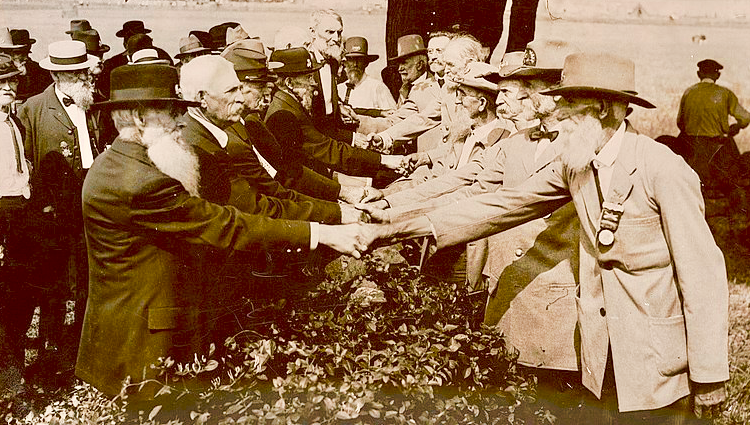
After the War Between the States, there was a conscious effort at reconciliation on the part of many in both North and South. This postbellum reconciliation has mostly unraveled, in no small part thanks to conservative establishmentarians who for years have refused to raise a peep—or, in many cases, collaborated—during the leftist campaign against Southern [...]

Ideas Still Have Consequences: Richard Weaver on Nominalism & Relativism

By |2020-12-04T13:00:57-06:00December 6th, 2020|Categories: Philosophy, Relativism, Richard M. Weaver, Southern Agrarians|

Richard Weaver’s book “Ideas Have Consequences” presents the harmful effects of nominalism on Western civilization since it gained prominence in the Late Middle Ages. Many of our modern woes stem from the acceptance of nominalism and the rejection of philosophical realism back in the fourteenth century. By the time of his untimely death in 1963 [...]

Go to Top