Thomas Stearns Eliot (26 September 1888 – 4 January 1965) was an essayist, publisher, playwright, literary and social critic and “one of the twentieth century’s major poets.” Born in St. Louis, Missouri in the United States, he moved to the United Kingdom in 1914 and was naturalised as a British subject in 1927.
Faith and Redeeming the Time

By |2026-03-26T15:10:13-05:00March 26th, 2026|Categories: Barbara J. Elliott, Community, Culture, Film, Russell Kirk, T.S. Eliot, Timeless Essays|

If the people who profess belief in God were to actually live with intentionality—in their business decisions, in their classrooms, in their television broadcasts and movie scripts, in their community organizations, and in their art—together we would transform the culture. One advantage I have in this conversation is that the Elliott household continues the discussion [...]


T.S. Eliot’s Long Lent

By |2026-02-17T17:21:14-06:00February 17th, 2026|Categories: Ash Wednesday, Beauty, Catholicism, Culture, Dwight Longenecker, Featured, Lent, Poetry, Religion, T.S. Eliot, Timeless Essays|

In “Ash Wednesday,” T.S. Eliot repudiated his ironic style along with his despairing and nihilistic view of the world. When he wrote it, he was turning from the hell of the wasteland of unbelief to receive his ashes and begin his long Lent. T.S. Eliot’s secret baptism in 1927 marked one of the most remarkable [...]

“Ash Wednesday”

By |2026-02-17T17:17:18-06:00February 17th, 2026|Categories: Ash Wednesday, Lent, Poetry, T.S. Eliot, Timeless Essays|

Because I do not hope to turn again Because I do not hope Because I do not hope to turn Desiring this man’s gift and that man’s scope I no longer strive to strive towards such things (Why should the aged eagle stretch its wings?) Why should I mourn The vanished power of the usual [...]

Enemies of the Permanent Things

By |2025-07-24T18:25:21-05:00July 24th, 2025|Categories: Benjamin Lockerd, Books, Civil Society, Cluny, Conservatism, Culture, History, Literature, Permanent Things, Russell Kirk, T.S. Eliot, Timeless Essays, Tradition|

The necessity of personal morality in a thriving community is denied by the enemies of the permanent things, who do not believe that there are permanent standards of behavior or indeed an unchanging human nature, and who seek to create political systems that will make everyone happy without much effort. Enemies of the Permanent Things: [...]

T.S. Eliot and Reconversion on Ash Wednesday

By |2025-03-05T06:18:14-06:00March 4th, 2025|Categories: Ash Wednesday, Christianity, Faith, Imagination, Literature, Poetry, T.S. Eliot, Timeless Essays|

T.S. Eliot’s “Ash-Wednesday” helps us to consider our earthly transience, just as Ash Wednesday reminds us of this same fact that our time on earth is passing. Nel mezzo del cammin di nostra vita . . . There is something telling about man’s tendency to view his life as a journey, for journeys convey the [...]

Death at Yuletude: T.S. Eliot and “The Journey of the Magi”

By |2025-01-05T19:24:08-06:00January 5th, 2025|Categories: Advent, Christianity, Epiphany, Imagination, Literature, Poetry, T.S. Eliot, Timeless Essays|

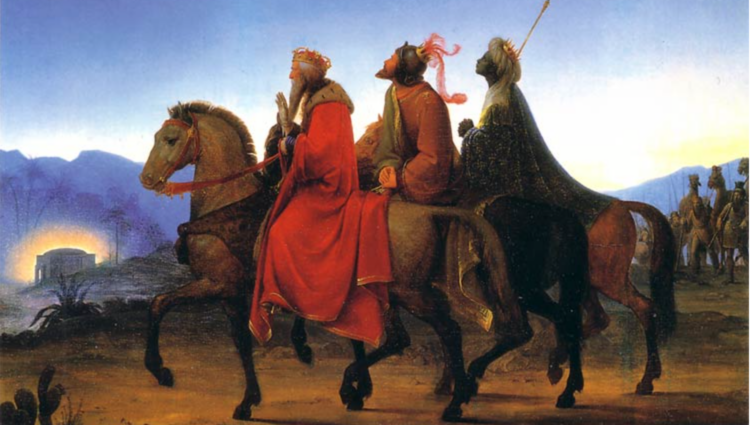
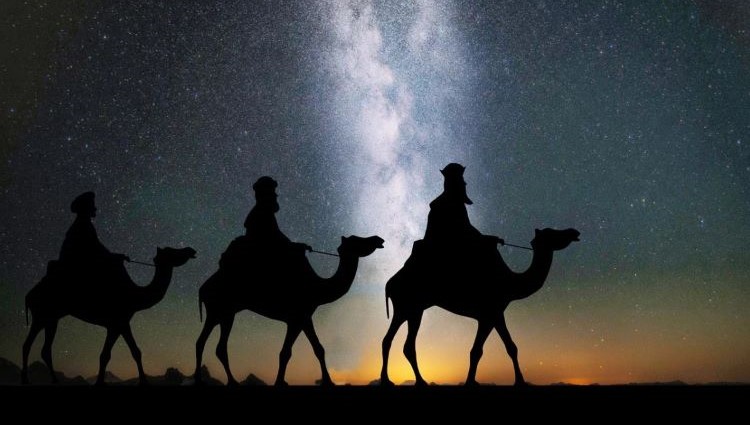
T.S. Eliot’s “The Journey of the Magi” is as sincere a conversion poem as one can have it: No fancy light shining down from the heavens or a thunderous call to holiness; just one small event that left a Magus perplexed by a new worldview that was unsettling and strange, for it put into question [...]

On the Twelfth Day of Christmas: Belloc & Eliot on Twelfth Night & Epiphany

By |2025-01-04T18:50:40-06:00January 4th, 2025|Categories: Christianity, Christmas, Epiphany, Hilaire Belloc, Joseph Pearce, Literature, Poetry, Senior Contributors, T.S. Eliot, Timeless Essays|

On the Twelfth Day of Christmas two of my great loves sent to me a couple of great meditations on the mystery of the Nativity. The first and better-known meditation is by T.S. Eliot, whose “Journey of the Magi” places the poet in the entourage of the Three Wise Men as they journey to Bethlehem. [...]

The Power of the Poet: In Conversation With T.S. Eliot About a Burning World

By |2025-01-03T11:55:42-06:00January 3rd, 2025|Categories: Audio/Video, Music, Poetry, T.S. Eliot, Timeless Essays|

You see, the poet haunts, casting a spell on the reader or listener. The power of the word in poetic form is nearly incomprehensible. Especially when paired with melody, the effect is extraordinary. This means that a songwriter, a hundred years down the road, having read only small, peripheral portions of his poetry, and having [...]

Crimes Against the Humanities: The Tragedy of Modernity

By |2024-10-24T18:04:56-05:00October 24th, 2024|Categories: Christianity, Culture, Evelyn Waugh, G.K. Chesterton, History, Humanities, Joseph Pearce, Literature, T.S. Eliot, Timeless Essays|

One of the most heinous crimes against humanity that modernity has perpetrated is its war on the humanities. And let’s not forget that the humanities are thus called because they teach us about our own humanity. A failure to appreciate the humanities must inevitably lead to the dehumanizing of culture and a disastrous loss of [...]

John Paul II, T.S. Eliot, & the Culture of Life

By |2024-10-25T16:34:41-05:00October 21st, 2024|Categories: Catholicism, Christianity, Conservatism, Culture, Culture War, Death, Poetry, St. John Paul II, T.S. Eliot, Timeless Essays|

Both John Paul II and T.S. Eliot give people something to hope for: St. John Paul speaks of a new springtime on the horizon signaling the emergence of a culture of life, and Eliot ends “The Waste Land” on a hopeful, if cryptic, note. We are all familiar with Saint John Paul II’s description of [...]

T.S. Eliot: Hope Beyond the Waste Land

By |2024-10-16T13:31:13-05:00October 16th, 2024|Categories: Literature, Poetry, St. Augustine, T.S. Eliot|

In The Waste Land, T.S. Eliot displays the dark and depraved qualities of humanity. These qualities are especially prevalent in “The Fire Sermon,” where society has fallen victim to sexual immorality and corruption. Due to this subject matter, scholars conclude that Eliot is pessimistic about the future of Western Civilization, but this point of view [...]

The Power of Beauty

By |2024-08-20T19:47:02-05:00August 20th, 2024|Categories: Art, Barbara J. Elliott, Beauty, Culture, Permanent Things, T.S. Eliot, Timeless Essays|

Art has the twin functions of reflecting a culture and shaping it. The problem that contemporary artists face is a difficult one: how to express meaning to a world that has become culturally over-stimulated by the spectacular, the hyper-sexualized, and the dumbed-down by inanity, and which has increasingly become antagonistic to manifestations of Christianity. “We [...]

Go to Top