Prudence as Excellence: Edmund Burke, Abraham Lincoln, & the Problem of Greatness

By |2022-03-30T09:12:00-05:00March 29th, 2022|Categories: Abraham Lincoln, Edmund Burke, Virtue|Tags: |

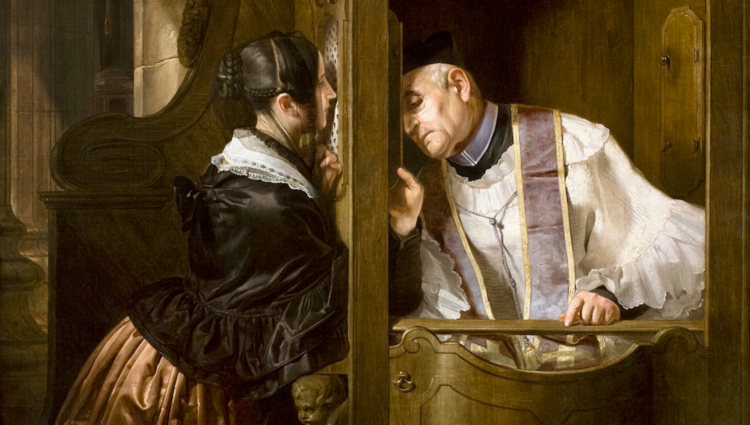
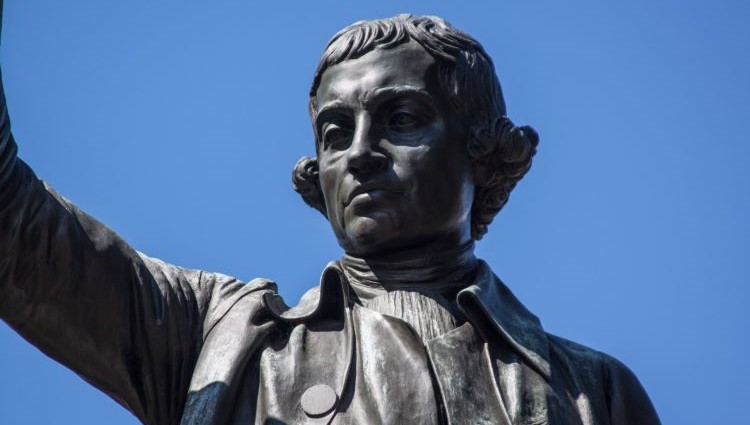
In a democratic age, how can greatness come to be? Edmund Burke offers a way forward: prudence as a form of excellence. Our conference is subtitled “equality and the survival of heroism.” My concern is the survival of prudence amid the longing for heroism—in particular, the misalignment between ambition and circumstance, the persistent pursuit of [...]
Reflections on Leadership

By |2022-03-17T21:52:14-05:00March 13th, 2022|Categories: Democracy, Featured, George A. Panichas, Irving Babbitt, Leadership, Timeless Essays|Tags: , |

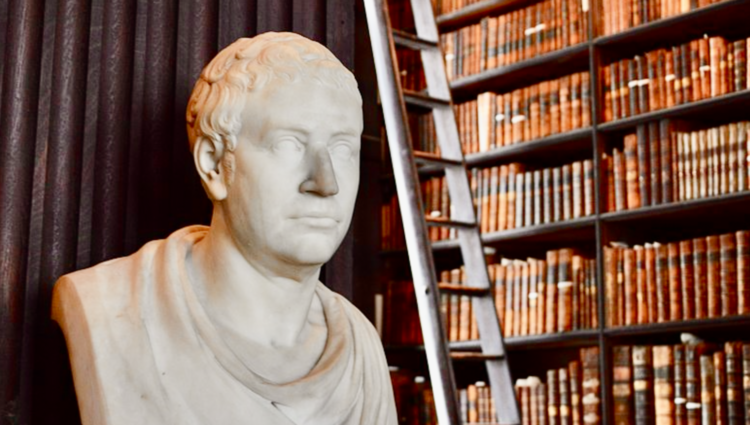
We need to restore moral value to leadership. In whom do we now recognize and salute leaderly qualities? Who are representative of great leadership? What accounts for the growing diminution of standards of leadership? “In the long run democracy will be judged,” writes Irving Babbitt in Democracy and Leadership (1924), “no less than other forms [...]

Looking Beyond the Bloody Chaos of History

By |2022-02-18T10:13:41-06:00February 12th, 2022|Categories: Christendom, Christianity, Christopher Dawson, Quotation, St. Augustine|

It was in this age of ruin and distress that St. Augustine lived and worked. To the materialist, nothing could be more futile than the spectacle of Augustine busying himself with the reunion of the African Church and the refutation of the Pelagians, while civilisation was falling to pieces about his ears. It would seem [...]

Irving Babbitt and the Crisis of Nationalism, 1915

By |2022-01-17T09:22:42-06:00January 17th, 2022|Categories: Bradley J. Birzer, Irving Babbitt, Senior Contributors|

For Irving Babbitt, a saving remnant of those who possess a humane understanding of the West and its great men and great ideas existed—one that could counter the nationalists and internationalists and those promoting either leviathan or the superman. In the 1910s, one of America’s greatest humanists, Irving Babbitt (1865-1933), surprisingly decided to dive into [...]

T.S. Eliot & Christopher Dawson on Religion and Culture

By |2023-10-12T05:23:23-05:00January 6th, 2022|Categories: Benjamin Lockerd, Christian Humanism, Christianity, Christopher Dawson, Culture, Featured, T.S. Eliot, Timeless Essays|

Eliot scholars have ignored the Dawson connection. The central claim Dawson and Eliot made, based on their wide-ranging knowledge of anthropology and history, was that every culture has a cult, some religious system that serves as an ultimate source of value and meaning. “Eliot’s reputation as a critic of society has been worse than his [...]

The Essence of Conservatism

By |2021-10-19T08:21:07-05:00October 18th, 2021|Categories: Conservatism, Edmund Burke, Essential, History, RAK, Russell Kirk, The Imaginative Conservative, Timeless Essays, Tradition|

Everything worth conserving is menaced in our generation. Mere unthinking negative opposition to the current of events, clutching in despair at what we still retain, will not suffice in this age. A conservatism of instinct must be reinforced by a conservatism of thought and imagination. A friend of mine, whom we shall call Miss Worth, fell [...]

Who Reads Robert Nisbet Anymore?

By |2021-09-29T16:58:25-05:00September 29th, 2021|Categories: Books, Community, Conservatism, Featured, Government, Robert Nisbet, Timeless Essays|

Is Robert Nisbet’s “The Quest for Community” a historical artifact or a living source of wisdom? Has his insight into the natural human desire for community become a moot point in light of the rise of the State, which has replaced the church, family, and neighborhood? Of the many books that Robert Nisbet wrote during [...]

M.E. Bradford: Nuancing American Whiggism

By |2021-08-07T20:26:06-05:00August 8th, 2021|Categories: American Republic, Books, M. E. Bradford, Politics, Ralph Ancil|

The late historian M.E. Bradford’s examination of early American history provides us with a framework for understanding the American experience and so gives a standard to clarify our present darkness. His Old Whiggism is a rhetoric of the heart, an appeal to stand in the old ways, to keep alive the spirit of the original [...]

10 Books Every Imaginative Conservative Should Read

By |2021-04-22T10:04:02-05:00April 12th, 2021|Categories: Books, Bradley J. Birzer, Imaginative Conservative Books, Senior Contributors, The Imaginative Conservative|

So, you’re attracted to imaginative conservatism, and you’re wondering how such a school of thought came about. The roots, to be sure, are planted firmly in the first half of the twentieth century as a number of diverse thinkers strove to fight populism and progressivism (left and right, gentle and severe) in all their myriad [...]

Edmund Burke and the Progressive Mind

By |2021-03-19T15:14:54-05:00March 19th, 2021|Categories: Edmund Burke, Glenn Arbery, Great Books, Senior Contributors, Wyoming Catholic College|

Not swayed by popular enthusiasm, Edmund Burke was the first substantial thinker to address the full-blown entrance of radical ideas into the political sphere and the first to express a truly conservative umbrage at the imposition of abstractions onto a world of particular, distinctive circumstances. Juniors at Wyoming Catholic College have just read in Humanities [...]

John Winthrop as Imaginative Conservative

By |2021-04-22T09:35:36-05:00March 14th, 2021|Categories: Bradley J. Birzer, Community, History, Senior Contributors, The Imaginative Conservative|

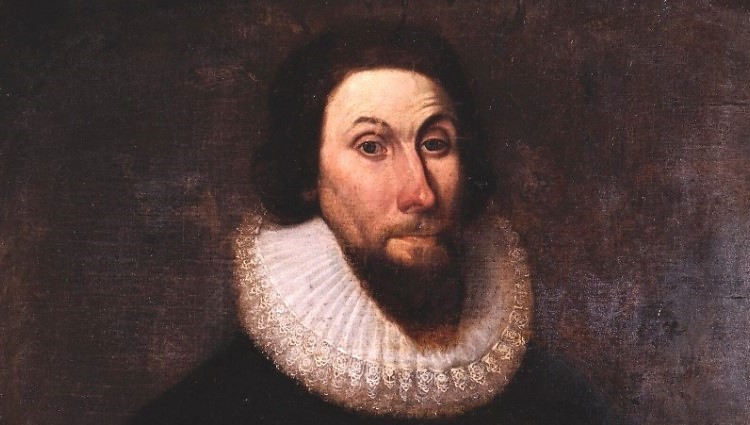
Though rooted in a certain time and a certain place, elements of John Winthrop’s teachings are timeless, and, whether we agree with him completely or not, we should recognize him as an important and imaginative conservative of yesteryear. Between 1629 and 1640, roughly 21,000 Puritans (and servants) immigrated from England (especially East Anglia) to New [...]

Robert Nisbet’s “The Social Group in French Thought”

By |2021-02-24T19:24:01-06:00February 24th, 2021|Categories: Bradley J. Birzer, Civilization, Jean-Jacques Rousseau, Political Philosophy, Politics, Robert Nisbet, Senior Contributors|

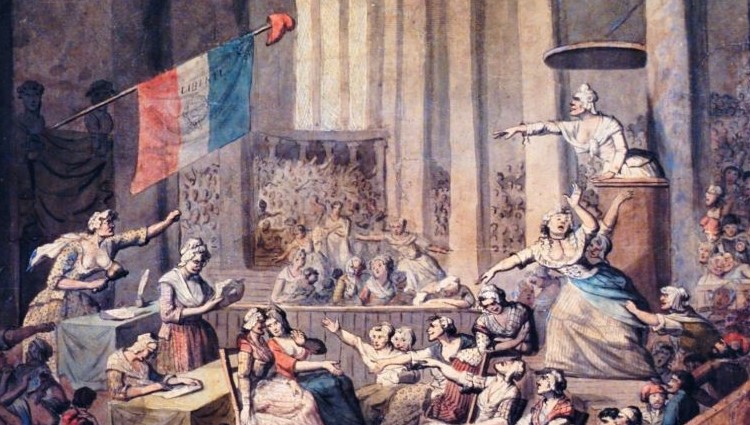
In “The Social Group in French Thought,” Robert Nisbet explains that social philosophers such as Bodin, Hobbes, and Rousseau undermined and sabotaged private law and intermediary institutions. Their thought culminated in the French Revolution and in its radical and nationalist legislation. Robert Nisbet’s dissertation began by lamenting that the history of freedom has been written [...]

Robert Nisbet’s Chance Dissertation

By |2021-02-22T14:06:47-06:00February 22nd, 2021|Categories: Bradley J. Birzer, Robert Nisbet, Senior Contributors|

Robert Nisbet had written and completed his dissertation, “The Social Group in French Thought,” rather speedily, beginning it in January 1939 and finishing it a mere six months later. Though Nisbet would publish his most famous work, “The Quest for Community,” fourteen years later, that book would not have been possible without the dissertation. When [...]

Go to Top