Is “Christian Humanism” Gone Forever?

By |2021-02-11T13:00:07-06:00February 11th, 2021|Categories: Books, Bradley J. Birzer, C.S. Lewis, Christian Humanism, Senior Contributors, T.S. Eliot|

In his book “The Year of Our Lord 1943,” writing on Christian humanism, Alan Jacobs considers the fears and desires of five major but seemingly disparate figures in 1943 as they envision a post-war world after an allied victory: W.H. Auden, T.S. Eliot, C.S. Lewis, Jacques Maritain, and Simone Weil. The Year of Our Lord [...]

Robert Nisbet’s Youth

By |2021-02-05T11:05:29-06:00February 5th, 2021|Categories: Bradley J. Birzer, Robert Nisbet, Senior Contributors|

Growing up in Maricopa, the young Robert Nisbet fell deeply in love with libraries. Almost as soon as he learned to read—sitting on his mother’s lap as she read to him—the young man began to devour books voraciously, loving the literature of the Age of Coolidge. Though proudly possessing the Confederate soul of a southern [...]

Roosevelt’s Folly: Robert Nisbet’s Second World War

By |2021-01-25T16:07:45-06:00January 25th, 2021|Categories: History, Robert Nisbet, War, World War II|

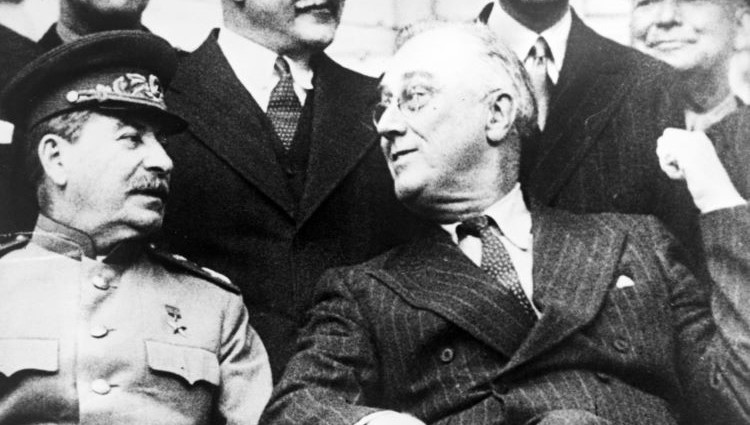
From the beginning of their friendship, Franklin D. Roosevelt could not see Joseph Stalin as anything other than an ally, an anti-imperialist and proto-democrat, representing all that was modern and rational and equalitarian. Robert Nisbet concludes that Roosevelt’s arrogant blindness was the key to Soviet mischief. World War II—especially the European theatre—intrigued Robert A. Nisbet [...]

Give, Sympathize, and Surrender: Surviving Our Wastelands

By |2021-01-22T12:03:50-06:00January 22nd, 2021|Categories: Christianity, Literature, T.S. Eliot|

Though written in the 20th century, T.S. Eliot’s “The Waste Land” is a poem for our generation. It speaks to our own longings and losses, casting its bitter light on the wastelands of our lives. And, while he identifies the wasteland with brutal honesty, Eliot also sketches a path that can lead us out of [...]

Reflections on Imaginative Conservatism

By |2023-05-21T11:29:05-05:00January 21st, 2021|Categories: Conservatism, E.B., Essential, Eva Brann, Imagination, In Honor of Eva Brann at 90 Series, Senior Contributors, St. John's College, The Imaginative Conservative|

My first and last care is not politics but education. Education seems to me inherently conservative, being the transmission, and thus the saving, of a tradition’s treasures of fiction and thought. But education is also inherently imaginative. Author’s Note: I wish to dedicate this essay to a writer of books whose greatness is at once [...]

Robert Nisbet’s Mentor: Frederick Teggart

By |2021-01-14T15:58:26-06:00January 15th, 2021|Categories: Bradley J. Birzer, History, Robert Nisbet, Senior Contributors|

Robert Nisbet was greatly influenced by his professor Frederick Teggart and his many ideas. Teggart was a brilliant scholar and historian, one of University of California Berkeley’s most successful lecturers, and “an impressive stretcher of minds.” “I have met no one since then who has approached him in range, diversity, and depth of knowledge,” Robert [...]

T.S. Eliot’s “The Cocktail Party”: The Language & Doctrine of Atonement

By |2020-12-15T10:37:44-06:00December 19th, 2020|Categories: Christianity, Culture, T.S. Eliot, Theater|

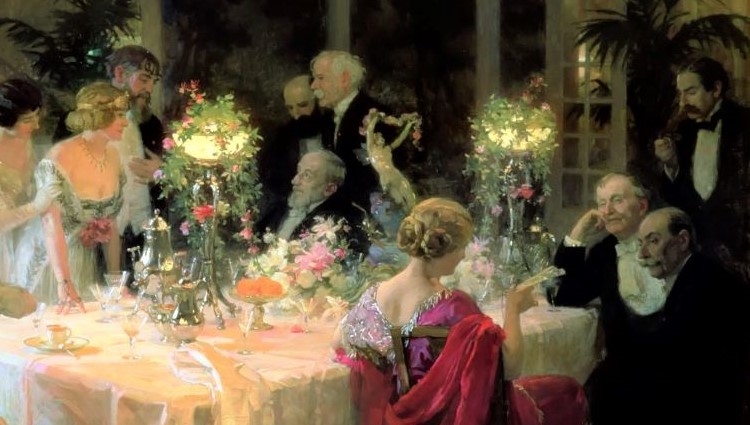
In the years between 1939 and 1949, T.S. Eliot’s task was to enshrine Christian martyrdom and to restore poetic drama. His most popular drama was “The Cocktail Party,” a comedy which develops dramatically into a philosophically darker spiritual trial and wrestles with the theme of atonement. In one of his manifesto letters to William Carlos [...]

Burke on the French Revolution and Britain’s Role

By |2020-11-15T14:09:43-06:00November 15th, 2020|Categories: Bradley J. Birzer, Edmund Burke, England, Government, History, Politics, Revolution, Senior Contributors|

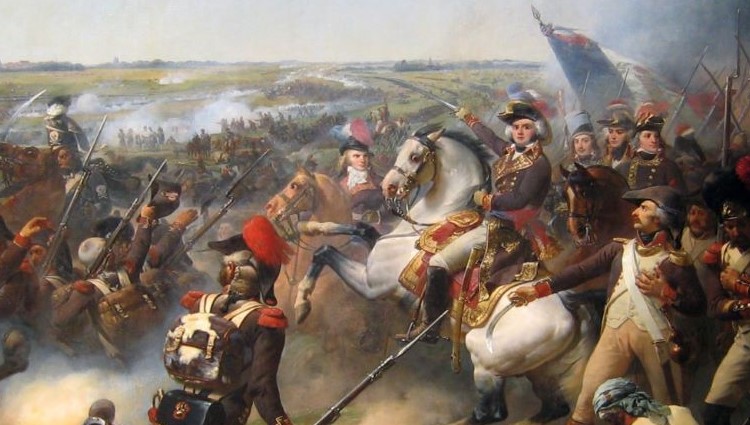
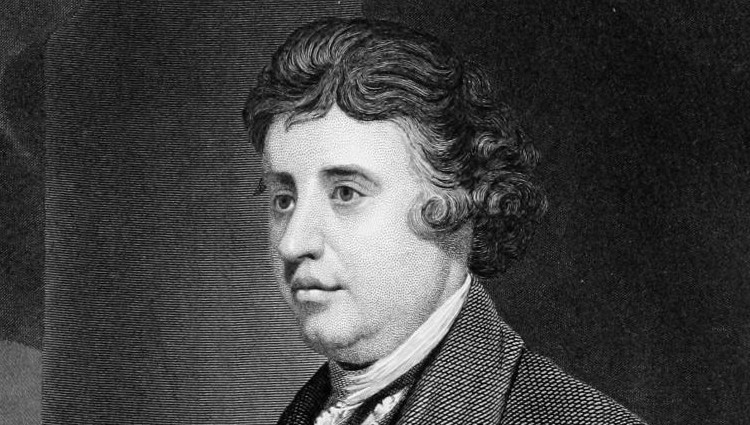
Once the British had returned to first principles and right reason, Edmund Burke argued, they would also be reminded of the practical things, such as good government, the cultivation of the middle class, and the protection of property. In other words, through the fight against the French Revolution, the British would return to being properly [...]

“The Reactionary Imperative” Revisited

By |2020-10-18T16:54:10-05:00October 21st, 2020|Categories: American Republic, Conservatism, Constitution, Government, M. E. Bradford, Politics|

In “The Reactionary Imperative,” Mel Bradford calls for a return to the roots of American order. Sadly, a return to a revised form of the Articles of Confederation is all but impossible. Hope, however, lies in a revivification of the principles of the Old Republicans of Thomas Jefferson’s day. Mel Bradford published a collection of [...]

Burke’s First Letter on a Regicide Peace

By |2020-10-15T09:55:34-05:00October 8th, 2020|Categories: Bradley J. Birzer, Civilization, Edmund Burke, Government, History, Politics, Revolution, Senior Contributors|

As Edmund Burke observed, real community begins with the free and natural choice to associate at the most personal, familial, and local level, with each community growing from the ground up. By misunderstanding this, the French Revolutionaries seceded not just from Christendom, but from the laws of nature. In the final years of his life, [...]

Arguing With Lincoln: The Views of M.E. Bradford & Richard Weaver

By |2020-09-21T16:43:27-05:00September 21st, 2020|Categories: Abraham Lincoln, Civil War, M. E. Bradford, Richard Weaver|

If for M.E. Bradford, Abraham Lincoln was a gnostic renegade and heretic beyond the pale, he was for Richard Weaver a political and rhetorical father figure with whom one might argue but never condemn. These Southerners’ differing critiques of Lincoln’s person, views, and actions cast some light on this complex figure, one who continues to [...]

Robert Nisbet’s Ten Conditions of Revolution

By |2021-01-22T14:12:04-06:00September 17th, 2020|Categories: Bradley J. Birzer, Revolution, Robert Nisbet, Senior Contributors|

Given the present moment in this era of confusion in American history, one wonders whether the events of the last year count as revolutionary. Robert Nisbet’s ten conditions of real revolution may provide an answer. One of the twentieth century’s most astute observers of society, sociologist, historian, and man of letters, Professor Robert Nisbet (1913-1996), [...]

Nock and Nisbet on Society and State

By |2020-09-04T15:20:28-05:00September 4th, 2020|Categories: Bradley J. Birzer, Civilization, Community, Culture, Robert Nisbet, Senior Contributors, Social Institutions|

As Albert Jay Nock argued in the 1930s, and Robert Nisbet in the 1960s, the state plays a zero-sum game: It desires to assume all power over society, even to the point of taking the place of the Church as the glue that holds all together, and thus it renders society obsolete in the long [...]

Robert Nisbet’s 11 Tenets of Conservatism

By |2020-08-27T17:19:55-05:00August 27th, 2020|Categories: Bradley J. Birzer, Community, Conservatism, Robert Nisbet, Senior Contributors|

Though less poetic than Russell Kirk, Robert Nisbet has as much right to be considered a “father of post-war conservatism” as does his Michiganian ally—especially given the timing of his eleven tenets of conservatism. Indeed, his ideas about society and the social relations of man are thoughtful and inspiring. Though conservatism arose as a reaction [...]

Go to Top