Nihilism or Idolatry: All Things Shining

By |2016-08-03T10:36:59-05:00December 26th, 2013|Categories: Books, Christendom, Christianity, Classics, Homer, Modernity, Religion|Tags: , |

All Things Shining: Reading the Western Classics to Find Meaning in a Secular Age by Hubert Dreyfus and Sean Dorrance Kelly The authors of this latest attempt to give life “meaning” and to “uncover the wonder” of the world—concealed, as it has been, by modern technological culture—begin their argument with an episode. In 2007, a young [...]

“Cry Wolf”: An “Animal Farm” for the 21st Century

By |2022-08-16T16:06:00-05:00November 16th, 2013|Categories: Great Books, Literature, Politics, Social Order|Tags: , |

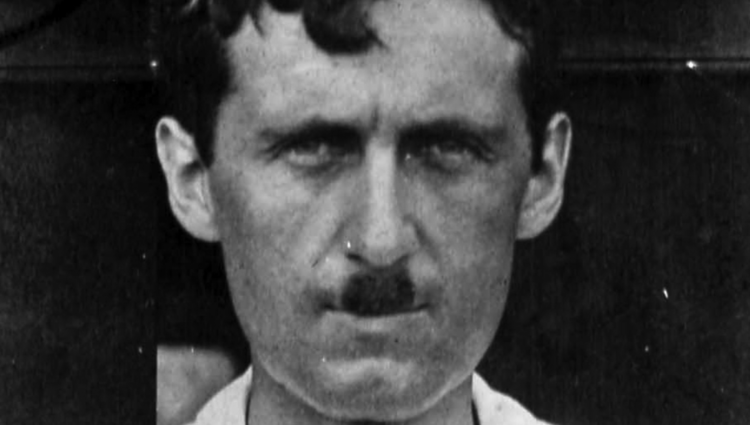
George Orwell’s delightful, brief narrative acts as a fable: its animal characters allow us to see afresh well-worn and conventional truths. The fable warns us of what we already know, but must learn again and again if we are not to be fooled into historical optimism. By the time George Orwell’s Animal Farm appeared in August [...]

A Critical Biography: Russell Kirk, A Man in Full

By |2014-01-31T14:18:53-06:00November 9th, 2013|Categories: Russell Kirk|Tags: , |

Russell Kirk: A Critical Biography of a Conservative Mind, by James E. Person, Jr., Madison Books, Lanham, MA, 1999 In the book before us, James E. Person, Jr. has sought “to craft a critical primer” on the thought of Russell Kirk—a man whose 50 years of professional life yielded 32 books, 800 essays and reviews, [...]

Of More Than Routine Interest: Ten Ways to Destroy the Imagination of Your Child

By |2016-09-05T19:02:58-05:00September 29th, 2013|Categories: Anthony Esolen, Books, Christianity|Tags: |

Here is a book that will send a reviewer—and all decent-minded readers—groping for superlatives. Indeed, I find it difficult to refrain from cluttering my review with mere rhapsodies, which might be warranted, but which do not throw much light on things. Anthony Esolen mounts a crushing and delightful riposte to the whole array of theories [...]

George Orwell’s Despair

By |2021-08-16T09:24:31-05:00September 23rd, 2013|Categories: George Orwell, RAK, Russell Kirk, Socialism|Tags: |

In the twentieth century, no novelist exerted a stronger influence upon political opinion, in Britain and America, than did George Orwell. Also Orwell was the most telling writer about poverty. In a strange and desperate way, Orwell was a lover of the permanent things. Yet because he could discern no source of abiding justice and [...]

Thinking in Slogans Means Thinking in Bullets

By |2019-03-20T16:43:12-05:00September 14th, 2013|Categories: American Republic, Culture, Russell Kirk|Tags: |

While some books deserve their obscurity, others are unjustly forgotten; Russell Kirk’s early text, The American Cause, should be remembered. Not as developed and mature as his later work, still this little book reminds us of human nature and its limitations, thereby warning us against ideology and its violent tendencies. For Kirk, prudent acceptance of limitation—what he [...]

Conservative Postmodernism, Postmodern Conservatism

By |2018-12-18T14:52:04-06:00September 5th, 2013|Categories: Christianity, Conservatism, Constitution, Modernity, Peter A. Lawler, St. Augustine|Tags: , |

Astute thinkers from Hegel onward have claimed that we live at the end of the modern world. That does not mean the modern world is about to disappear: the world, in truth, is more modern than ever. So we must contest Hegel’s assertion that the modern world is the end, the fulfillment, of history. The [...]

Juliet and Other Shakespearean Nominalists

By |2016-08-03T10:37:03-05:00August 27th, 2013|Categories: Christendom, William Shakespeare|Tags: |

Shakespeare “It was William of Occam,” writes Richard Weaver in his seminal work, Ideas Have Consequences, “who propounded the fateful idea of nominalism, which denies that universals have a real existence.” Weaver compares this development in the intellectual history of Western man to Macbeth’s ominous meeting with the Weird Sisters: “Have we forgotten our [...]

The Twilight of the Professors

By |2015-04-29T07:45:13-05:00August 21st, 2013|Categories: Classical Education, Classical Learning, Conservatism, Culture, Education, Liberal Learning|Tags: |

The traditional ideal of the professor—a vaguely eccentric, impractical seeker of truth always teetering, like the Greek philosopher Thales, on the brink of some well or other—has all but disappeared. Though obviously a caricature, this stereotype at least captured the essence of what a professor should be: someone whose life is passionately consumed with the [...]

Thanatos Syndrome: Life and Death Matters

By |2016-07-26T15:28:42-05:00July 29th, 2013|Categories: Books, Christianity, Gregory Wolfe, Walker Percy|Tags: , , |

Review of The Thanatos Syndrome, by Walker Percy. In spite of his six widely read novels, his two works of nonfiction (with their original contributions to the study of language and the human psyche), and his two national literary awards, Walker Percy remains a figure on the fringes of the American literary establishment. When he [...]

The Twentieth Century: An Historical Meditation

By |2017-09-05T23:06:17-05:00July 21st, 2013|Categories: History, Mark Malvasi, Western Civilization, World War II|Tags: |

The theme of this “historical meditation” is the crisis and decline of civilization in the West during the twentieth century. That perspective is the product both of an individual temperament and also of a historical consciousness. One hundred, or even fifty, years hence neither the temperament nor the perspective may matter very much. But I [...]

Marion Montgomery: Prophet Philosopher

By |2021-08-12T10:15:22-05:00June 19th, 2013|Categories: Books, Featured, Flannery O'Connor, Marion Montgomery, South|Tags: , |

The Prophetic Poet and the Spirit of the Age by Marion Montgomery (in three volumes): Why Flannery O’Connor Stayed Home (1981), Why Poe Drank Liquor (1983), Why Hawthorne Was Melancholy (1984) Marion Montgomery’s trilogy is an ambitious, indeed audacious, assessment of the social, political, literary, religions, and philosophical temper of the Western world since the [...]

Crisis & Decline: the Twentieth Century

By |2017-09-05T23:06:27-05:00June 1st, 2013|Categories: Democracy, History, Mark Malvasi, War|Tags: , |

The theme of this “historical meditation” is the crisis and decline of civilization in the West during the twentieth century. That perspective is the product both of an individual temperament and also of a historical consciousness. One hundred, or even fifty, years hence neither the temperament nor the perspective may matter very much. But I [...]

Agrarianism Reborn: On the Curious Return of the Small Family Farm

By |2014-01-31T16:06:59-06:00May 21st, 2013|Categories: Agrarianism, Culture|Tags: , , |

In 1941 the Prairie Farmer, America’s oldest farm periodical, celebrated its one hundredth anniversary. The centennial cover features a drawing of the iconic twentieth-century “new” farmer: tall, young, and slender. Bulky overalls have given way to tailored city clothes; the straw hat to a fedora. In the artist’s words, he is “a strong, virile, keen, [...]

Go to Top