Learning Wisdom in the Midst of Reversals
The West shall shake the East awake While ye have the night for morn. — James Joyce, Finnegan’s Wake 企者不立;跨者不行; 自見者不明;自是者不彰; 自伐者無功;自矜者不長。 其在道也,曰:餘食贅行。 物或惡之,故有道者不處。 — Lao Tzu, Tao te Ching, Chapter 24 […]


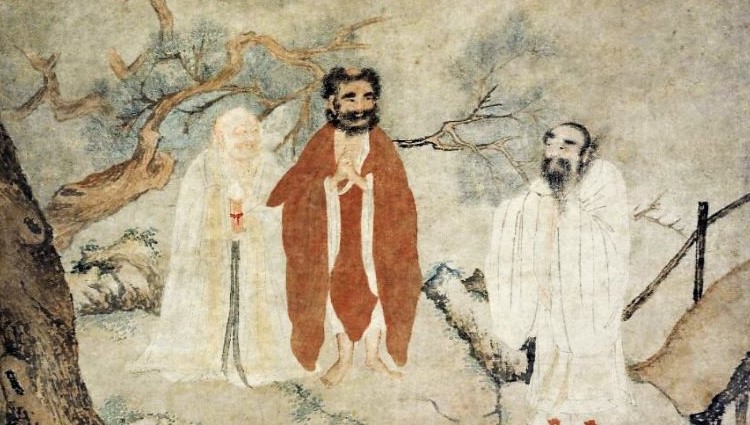
The West shall shake the East awake While ye have the night for morn. — James Joyce, Finnegan’s Wake 企者不立;跨者不行; 自見者不明;自是者不彰; 自伐者無功;自矜者不長。 其在道也,曰:餘食贅行。 物或惡之,故有道者不處。 — Lao Tzu, Tao te Ching, Chapter 24 […]
In the first chapter of Understanding Media (1964), called “The Medium is the Message,” Marshall McLuhan begins the book by explaining his most famous aphorism. Over time, the proposition has acquired the status of a cliché, such that its original meaning and intent can become obscured. But as W. Terrence Gordon, the editor of the Critical [...]
Modern technological innovation has made globalization possible. And globalization’s new social reality is unparalleled in history. Accordingly, it presents politics with new challenges. But it also presents politics with unprecedented technological power to deal with these new challenges. However, the power of these technologies is ambiguous, since they can create two types of experiences: “hot” [...]
In order to explain surprising political phenomena like Donald Trump and Brexit, we have to look at the unprecedented impact of new technologies on our total environment. Douglas Rushkoff, the author of Throwing Rocks at the Google Bus, has entertained the thesis that the television age, which brought people together, is over. He opines that [...]
If Marshall McLuhan were around today to comment on the results of Britain’s referendum about whether to “Remain” or to “Leave” the European Union, no doubt he would offer comments that would be surprising and puzzling. Nevertheless, it is the unexpected quality of McLuhan’s probing remarks (he himself liked to designate his aphorisms with the [...]
Euthanasia and physician-assisted death is a topic much in the news these days. After the Supreme Court of Canada’s recent ruling, the Canadian government is busy with legislation overseeing such practices. Perhaps the viewpoint of an ancient school of philosophical thought, Stoicism, may aid contemporary reflections on the matter of physician-assisted suicide, especially since such [...]
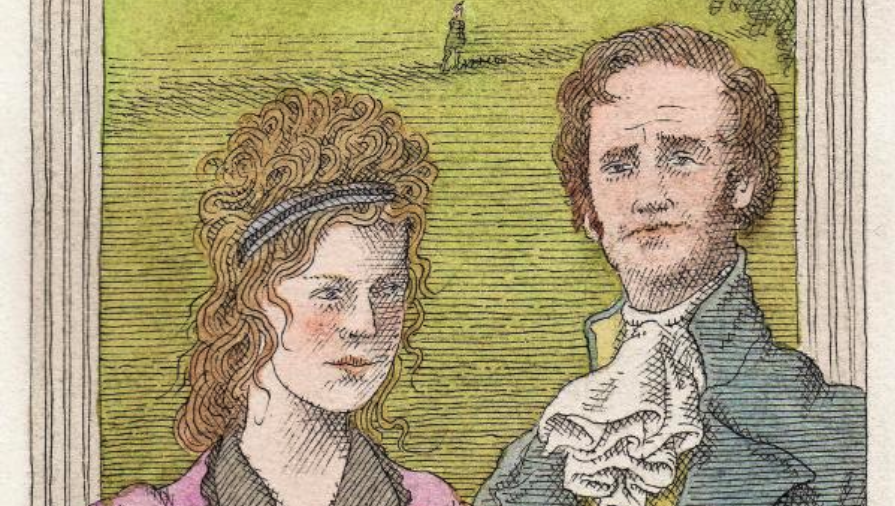
We are not born into a savage wilderness but into a beautiful mansion of the Lord that the Lord and those who have gone before us have built. We must avoid neglecting this mansion but rather glorify and preserve it—as we should all of the Lord’s Creation. Whit Stillman, in the novel version of his [...]
Whit Stillman’s Love & Friendship is a magnificent Jane Austen adaptation, not least because it conceives of the perfect ending for the unpolished project of Austen’s juvenescence, Lady Susan. This is Jane Austen, and it is a comedy, so of course there must be a wedding at the end. But how does one best pull [...]
Because Whit Stillman has adapted Jane Austen’s Lady Susan for his new movie, Love & Friendship, it is worth asking the question: Will most people find that Mr. Stillman has discovered, in this early work of Austen, something new and unfamiliar about her, and made it accessible? The question is prompted by the reports of [...]
Whit Stillman’s new movie, Love & Friendship, is an adaptation of Jane Austen’s Lady Susan. Mr. Stillman takes this piece of Austen juvenilia, an epistolary novella, and fleshes it out into a screenplay faithful to the spirit of Austen. Not only that, but also he has reworked Austen’s story into a novel of his own, [...]
There is a classic passage in Vergil’s Aeneid in which Anchises commends to future Romans what is, in effect, the “mission statement” for the Roman Empire. In these lines, the father of Aeneas is telling us what his son Aeneas, the Trojan who has journeyed from the fallen city of Troy, will set in motion [...]
Are superheroes members of society? The movie Batman v Superman: Dawn of Justice introduces a new development in the cinematic universe of Batman and Superman. We are invited to question the godlike status of such superheroes. Are they fit to live among us? Because superheroes possess unusual superpowers, they are designated as “meta-humans.” Do such [...]
In Plato’s Republic, we hear of the tale of Gyges’ ring. This famous tale has been adapted in equally famous ways: one need only think of The Lord of the Rings, or Wagner’s Ring Cycle, to realize its perennial influence. But what is the meaning of this tale in the original form in which the Republic [...]
How can the wealthiest people make democracies worse? Plato investigates the question in Book VIII of the Republic. Socrates suggests there that, in pursuit of more and more wealth, oligarchic citizens within the democracy will exploit the lower economic classes, even to the point of undermining their own oligarchic economic interests. In other words, the [...]