Honor and Fame

By |2025-09-09T18:59:57-05:00September 9th, 2025|Categories: Aristotle, Conservatism, Culture, Glenn Arbery, Homer, Plato, Timeless Essays, William Shakespeare, Wyoming Catholic College|

Should honor and fame no longer be ends of ambition in such a world? The ancient philosophers doubted the ultimate merit of fame, but they also looked for the most spirited students, those most inclined to “undertake extensive and arduous enterprises." In response to my essay about baptizing ambition, a friend from Boston College recommended [...]

Why Government Cannot Educate

By |2025-07-18T19:05:07-05:00July 13th, 2025|Categories: Aristotle, Bureaucracy, Christianity, Education, Enlightenment, Family, Government, Liberal Learning, Love, Plato, Progressivism|

Saying that government cannot educate is not a partisan political position, but a simple statement of fact: government cannot educate, because government cannot love. Even more bluntly, government should not even try to run institutions of love, because, slowly but surely, its administrators inevitably pervert them in their desire for security or lust for power. [...]

The Imaginative Conservative: 14 Years of Preserving & Advancing

By |2024-07-11T10:08:05-05:00July 9th, 2024|Categories: Aristotle, Bradley J. Birzer, Cicero, Reason, Russell Kirk, Senior Contributors, The Imaginative Conservative, Timeless Essays|

May we always defend like Socrates and Cicero and Thomas More. May we always preserve like the monks of Lindesfarne. May we always see the world through the eyes of Russell Kirk, Christopher Dawson, and T.S. Eliot. May we always cherish the humanity and the divinity of the Second Person of the Most Blessed Trinity. [...]

Why “The Great Music” Is as Important as “The Great Books”

By |2024-06-17T14:05:34-05:00June 17th, 2024|Categories: Aristotle, Classical Education, Culture, Great Books, Liberal Learning, Music, Timeless Essays|

Ignorance of the great works of music is as bad, for someone who seeks to be educated in Western culture, as ignorance of Dante and Shakespeare in literature, and Plato and Aristotle in philosophy. So important is it to have some sort of understanding of how the noble art of music works, and so important is [...]

Men of Valor: Tacitus & Thomas Aquinas on Virtue

By |2024-04-29T16:30:26-05:00April 29th, 2024|Categories: Aristotle, Christopher Morrissey, Featured, Film, St. Thomas Aquinas, Timeless Essays, Virtue|

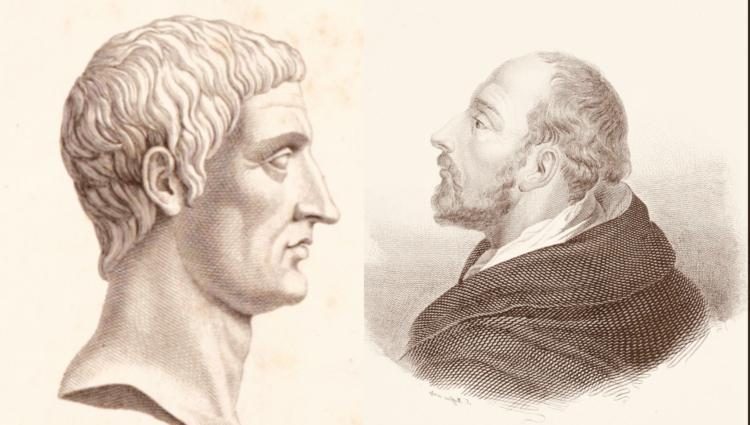
In valor, there is hope—namely, the hope that our virtue may be fully complete. It is as men of valor that we will be all we can be. In valor, there is hope. —Tacitus   When it played in the movie theaters, the terrific movie Act of Valor (2012) earned notoriety for two reasons. First [...]

Eating Alone: Aristotle & the Culture of the Meal

By |2023-02-26T17:46:43-06:00February 26th, 2023|Categories: Aristotle, Christian Living, Civilization, Family, Friendship, Paul Krause, Senior Contributors, Timeless Essays, Tradition|

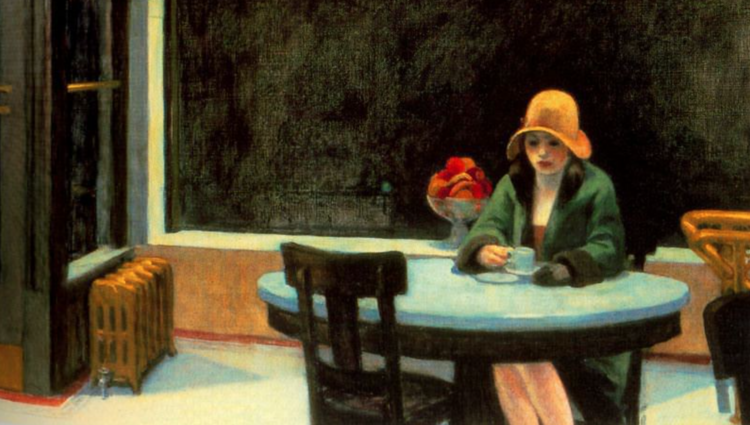
Eating together, as a social event, is meant to be time-consuming because it is meant to be an intimate experience where friendship—true friendship—is experienced, rekindled, and love stands at the center of the dinner table. It is, in its own way, a call to sacrifice. Aristotle identified man’s eating habits as one of the cornerstones of civilization—one [...]

The Goods of Friendship

By |2022-12-30T15:11:59-06:00December 30th, 2022|Categories: Aristotle, Friendship, Great Books, Timeless Essays, Virtue|

In “Nicomachean Ethics,” Aristotle offers students a refreshing alternative to the instrumentality of modern life: the pursuit of goodness. Goodness inspires honor, and mutual honor is the stuff of friendships of virtue. These are the friendships which yield the greatest happiness. Recently, I had the great pleasure afforded by technology in our chaotic, pandemic times [...]

The Crisis of the Intellectual Life

By |2022-11-06T15:45:29-06:00November 6th, 2022|Categories: Aristotle, Featured, Humanities, Liberal Learning, Plato, St. John's College, Timeless Essays|

The removal of intellectual life from the world, the withdrawn person’s independence from contests over wealth or status, provides or reveals a dignity that can’t be ranked or traded. This dignity, along with the universality of the objects of the intellect—that is, that they are available to everyone—is what opens up space for real communion. [...]

A Short History of the Human Soul

By |2022-09-25T17:34:37-05:00September 25th, 2022|Categories: Aristotle, Christianity, Great Books, History, Philosophy, Plato, Timeless Essays|

To understand the journey of the human imagination across civilizations and centuries, one must grasp how the utterly fascinating Hellenic invention of the “democratized” concept of moral judgment in the afterlife came into its beautiful philosophical maturity. And so they came to Rome —Acts IV. “I was not, I was, I am not, I do [...]

Aristotle: Education for Virtue and Leisure

By |2022-09-29T11:29:33-05:00May 10th, 2022|Categories: Aristotle, Books, Philosophy, Virtue|

Aristotle says that friendship makes life worth living, but despite being a central feature of daily life for almost every human being who has ever lived, friendship seems curiously absent from many philosophies of education. Aristotle, however, reminds us that education should focus on what is central to a flourishing life, and so it must [...]

The Political Relevance of St. Augustine

By |2022-02-25T11:54:04-06:00February 25th, 2022|Categories: Aristotle, Christendom, Christianity, Essential, Politics, St. Augustine, St. Thomas Aquinas, Timeless Essays|

St. Augustine observed, “To begin with, there never has been, nor, is there today, any absence of hostile foreign powers to provoke war.” Evil men lusting after power—aggressors—are endemic to human history, and noted Augustine, “When they go to war what they want is to make, if they can, their enemies their own, and then [...]

Can We Be Friends? Spirit, Duty, & Our Canine Companions

By |2023-05-21T11:28:57-05:00August 26th, 2021|Categories: Aristotle, Books, Classics, E.B., Eva Brann, Friendship, Senior Contributors, St. John's College, Wisdom|

This book is full of observations about friendship—discerningly borrowed and observantly original; it is a credible descendant of those wonders of human perspicacity, Aristotle’s books on friendship. One of those borrowed observations is that “the point of being friends is to charm each other.” Willing Dogs and Reluctant Masters: On Friendship and Dogs by Gary [...]

Go to Top