Nihilism, American-Style

By |2021-05-19T11:00:51-05:00August 14th, 2016|Categories: Democracy in America, Featured, George Stanciu, Philosophy, Politics, Religion, St. John's College|

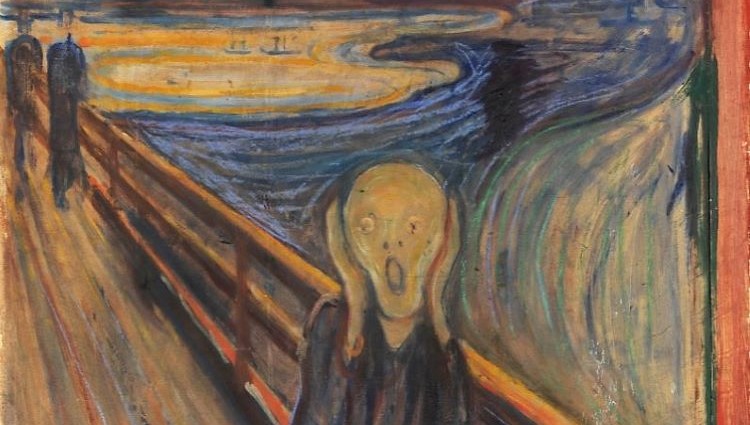
Old-World nihilism belongs to a handful of intellectuals persuaded by philosophical arguments that human knowledge, on the whole, is worthless as a reliable guide for living. Consider Heinrich von Kleist, the nineteenth century dramatist and short-story writer, who became intellectually unglued when he read Immanuel Kant’s The Critique of Pure Reason. In a letter to [...]
Egalitarianism, American-Style

By |2016-08-14T22:31:29-05:00July 31st, 2016|Categories: Alexis de Tocqueville, Bruce Frohnen, Culture, Equality, Free Markets, Russell Kirk, Senior Contributors|

Russell Kirk posed as one of the “canons” of conservatism the existence of orders in society. Critics have responded for decades that such a view shows that traditional conservatives are by nature aristocratic in their orientation, that they are in some sense “un-American” in their rejection of egalitarianism. The assumption appears to be that a [...]

“The Conservative Mind”: An Act of Recovery?

By |2023-05-11T10:39:15-05:00July 10th, 2016|Categories: Conservatism, Democracy in America, Edmund Burke, Featured, Russell Kirk, Ted McAllister, The Conservative Mind, Timeless Essays|

Russell Kirk’s greatest gift to American political thought is his brilliant articulation and cultivation of a rich cultural patrimony that helps define the meaning of our most cherished ideals from within a context that is both historically textured and open to the transcendental. Since the nation’s founding, a salutary tension has informed American political thought—a [...]

What Manner of Men are Conservatives?

By |2016-07-15T23:22:04-05:00July 2nd, 2016|Categories: Alexis de Tocqueville, Conservatism, Featured, Modernity|

Writing with all the Romantic appreciation of the dialectic of opposites and polarities, Walt Whitman said, “Do I contradict myself? Very well then I contradict myself, I am large, I contain multitudes.” Whitman and the Romantics expressed eloquently and frequently the profound observation that the essence of life is polarity, opposition, and contradiction, and that [...]

Global Citizenship: When Words Turn into Semantic Quicksand

By |2016-05-25T23:40:28-05:00May 25th, 2016|Categories: Alexis de Tocqueville, Civil Society, Community, Freedom, Modernity, Social Institutions, Ted McAllister, Western Civilization|

We are told to be careful with our words, to be aware of how our words might make other people feel, or of how we might be misunderstood. However important is this advice (and it is both important and grossly overused), these are not the primary reasons we should be thoughtful about our language. Words [...]

Do Americans Still Share a Common Political Life?

By |2016-06-26T17:54:40-05:00May 11th, 2016|Categories: Alexis de Tocqueville, Featured, Liberty, Politics, Populism, Presidency|

What do Eurosceptic movements, support for Donald Trump, and recent college protesters have in common? All are populist reactions to political correctness and its precondition of abolishing our common political sense of what we can do together. Such a lesson one can garner from French philosopher Pierre Manent, who is little known in America, but [...]

Why New England Democracy Disappeared

By |2021-05-19T11:45:34-05:00April 27th, 2016|Categories: Alexis de Tocqueville, Democracy, Featured, George Stanciu, Government, History, Modernity, St. John's College|

One day my fourteen-year-old daughter came home from her part-time job at the Goffstown New Hampshire Public Library and announced at dinner that she had volunteered me to serve as a Library Trustee. Two weeks later, I received a call from Mrs. Woodbury, the Town Clerk. She informed me that I could not run for [...]

The Promise and Failure of Democracy

By |2016-05-09T16:08:32-05:00August 21st, 2015|Categories: Alexis de Tocqueville, Books, Democracy, Featured|Tags: |

After Tocqueville: The Promise and Failure of Democracy, by Chilton Williamson, Jr. (ISI Books, 2012) Twenty years ago, as the Cold War ended with the triumph of the West over Communism, Francis Fukuyama proclaimed the “end of history,” by which he meant that human political community had reached its final and best stage of development [...]

Is Equality Greater than Freedom?

By |2019-07-30T14:07:13-05:00July 29th, 2015|Categories: Alexis de Tocqueville, Democracy in America, Great Books|

Democracy in America Book 2. Influence of Democracy on the Feelings of Americans Chapter I: Why Democratic Nations Show a More Ardent and Enduring Love of Equality than of Liberty The first and most intense passion which is engendered by the equality of conditions is, I need hardly say, the love of that same equality. My [...]

Protest, Don’t Simply Shriek Amidst the Winds of Doctrine

By |2022-05-14T10:30:07-05:00June 7th, 2015|Categories: Alexis de Tocqueville, Education, Graduation, Liberal Learning, Philosophy, RAK|

In this stubborn old college and at this pleasant old town of Hillsdale, the young ladies and gentlemen, who are being graduated today, have enjoyed four years of sanctuary from the hurly-burly of our era; four years of immunity from the violence and fraud of an age that some call “the post-Christian era.” That four [...]

Liberal Education is for Everyone

By |2015-04-17T15:54:00-05:00April 17th, 2015|Categories: Alexis de Tocqueville, Education, Peter A. Lawler|

What Villanova should be famous for is its well-funded and brilliantly staffed ”great books” gen-ed alternative program and a real surge in “great books” humanities majors. The program really does has a Christian/Augustinian focus without in any way neglecting either classical or modern authors. Now, according to Tocqueville, the point of higher education today is [...]

Why Pierre Manent Should Be on Your Bookshelf

By |2015-03-24T17:08:49-05:00March 19th, 2015|Categories: Alexis de Tocqueville, Books, Featured, Peter A. Lawler|Tags: |

So I have in my hands the galleys of our Ralph Hancock’s lovingly expert translation of Pierre Manent’s Seeing Things Politically. Let me explain why you should buy it from St. Augustine’s Press as soon as it comes out. Pierre Manent is probably the most deeply original, broadly erudite, and genuinely politically engaged thinker alive [...]

A Reading of the Gettysburg Address

By |2023-05-21T11:31:46-05:00March 17th, 2015|Categories: Abraham Lincoln, Alexis de Tocqueville, Civil War, Declaration of Independence, Democracy in America, E.B., Eva Brann, Senior Contributors, St. John's College|

Liberal education ought to be less a matter of becoming well read than a matter of learning to read well, of acquiring arts of awareness, the interpretative or “trivial” arts. Some works, written by men who are productive masters of these arts, are exemplary for their interpretative application. Lincoln’s Gettysburg Address is such a text, [...]

Go to Top