Did Edmund Burke Support the American Revolution?

By |2025-07-18T14:51:44-05:00July 18th, 2025|Categories: American Founding, American Republic, Bradley J. Birzer, Conservatism, Declaration of Independence, Edmund Burke, History, Independence Day, Robert Nisbet, Russell Kirk, Senior Contributors, Timeless Essays|

Many conservatives have assumed that Edmund Burke was opposed to the American Revolution. It is, to my mind, an erroneous assumption. “Burke broke his agentship and went publicly silent on the American cause once war broke out,” Robert Nisbet claimed in his most definitive analysis of Edmund Burke, written and published in 1985. His fellow [...]
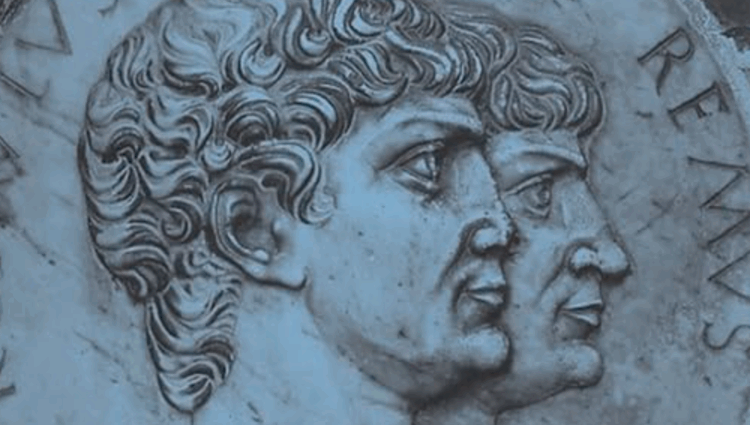
The Sons of Remus & the Question of Western Identity

By |2025-07-16T15:53:55-05:00July 16th, 2025|Categories: Books, Culture, Europe, Featured, History, Rome, Timeless Essays, Western Civilization|

Andrew C. Johnston’s “The Sons of Remus” provides a window into not only how European identities were formed, but how all societies engage in a constant process of negotiation and renegotiation in determining who they are, where they came from, and where they are going. The Sons of Remus: Identity in Roman Gaul and Spain, by [...]

Why Government Cannot Educate

By |2025-07-18T19:05:07-05:00July 13th, 2025|Categories: Aristotle, Bureaucracy, Christianity, Education, Enlightenment, Family, Government, Liberal Learning, Love, Plato, Progressivism|

Saying that government cannot educate is not a partisan political position, but a simple statement of fact: government cannot educate, because government cannot love. Even more bluntly, government should not even try to run institutions of love, because, slowly but surely, its administrators inevitably pervert them in their desire for security or lust for power. [...]

How One Monk Began Rebuilding the West

By |2025-07-10T21:40:58-05:00July 10th, 2025|Categories: Catholicism, Christianity, Culture, History, St. Benedict, Timeless Essays|

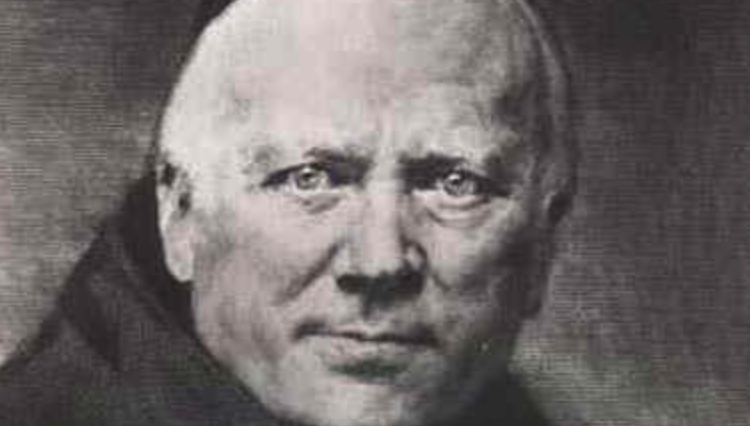
The life of Venerable Dom Prosper Guéranger, a Benedictine monk, is truly one of rebuilding the Church from the ruins of the French Revolution and the lingering corruption of the Gallicanism which preceded it. In an age of great disintegration, Guéranger can be a model of rebuilding for all of the faithful. July 11 is [...]

The End Times? When Culture Comes Full Circle

By |2025-07-07T12:08:08-05:00July 6th, 2025|Categories: Beauty, Christianity, Culture, History, Michael De Sapio, Senior Contributors|

It was claimed that the past would cease to matter amid the restless rush of progress. This has not happened. Instead, the wonders of technology and research have made the past more prominent than ever before. In light of all this, I want to ask a simple question: Is this recapitulation, this summing up of [...]

July 4, 1776: Congress Adopts the Declaration of Independence

By |2025-07-03T23:18:58-05:00July 3rd, 2025|Categories: American Founding, American Republic, American Revolution, Declaration of Independence, History, Independence Day, Thomas Jefferson, Timeless Essays|

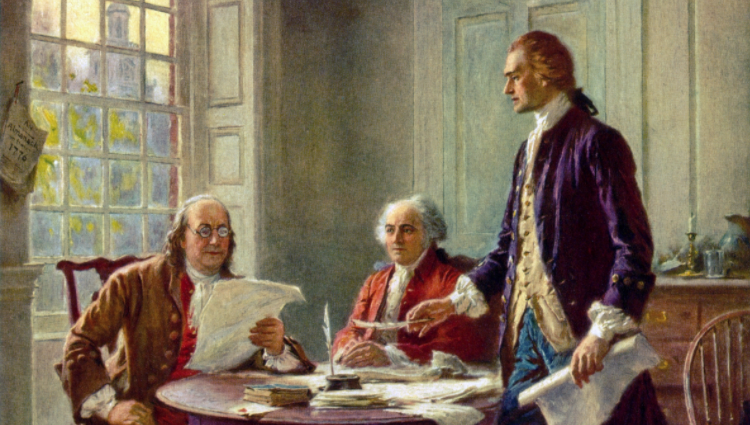
The adoption of the Declaration of Independence of “the thirteen united States of America” on July 4, 1776 formally ended a process that had been set in motion almost as soon as colonies were established in what became British North America. The early settlers, once separated physically from the British Isles by an immense ocean, [...]

History: The Miracles of Memory and Tradition

By |2025-06-30T21:30:39-05:00June 30th, 2025|Categories: Family, Featured, History, Quotation, Timeless Essays, Will Durant, Wisdom|

The very excess of our present paganism may warrant some hope that it will not long endure; for usually excess generates its opposite. One of the most regular sequences in history is that a period of pagan license is followed by an age of puritan restraint and moral discipline. So the moral decay of ancient [...]

Considerations on Mercantilism

By |2025-06-17T11:19:05-05:00June 17th, 2025|Categories: Economics, History, Mark Malvasi, Nationalism, Senior Contributors|

Mercantilism was an attempt to fashion a national economy at the same time that the so-called New Monarchs throughout parts of Western Europe were attempting to construct the institutions of the modern national state. I. The Historical Background Designed to effect a favorable balance of trade, Donald Trump’s economic policies constitute the revival of mercantilism.[i] [...]

Roused to Tranquility

By |2025-06-07T21:23:51-05:00June 7th, 2025|Categories: Books, Catholicism, Cluny, History, Literature|

Robert Hugh Benson's "The King’s Achievement" does what good historical fiction should do: it renders a complex historical situation justly and it brings characters to life in a story that is interesting for its own sake. On October 31, 1904, Robert Hugh Benson wrote his mother that he had just finished his novel on Henry [...]

Dwight Eisenhower: Military Politician

By |2025-06-05T16:38:53-05:00June 5th, 2025|Categories: Books, Dwight Eisenhower, Featured, History, Timeless Essays, War|

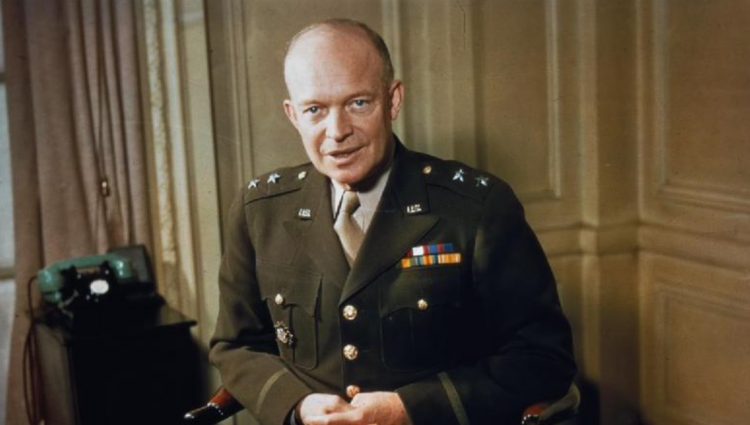
Propelled into Supreme Command, and without ever having commanded in battle, Dwight Eisenhower was put into an almost impossible situation, having to meet the demands of his battlefield subordinates while satisfying the conflicting expectations and orders of his masters, both military and political. Eisenhower at War, 1943-1945, by David Eisenhower (977 pages, Random House, 1986). [...]

History Between the Crosses, Row-on-Row

By |2025-05-26T08:41:15-05:00May 25th, 2025|Categories: History, Memorial Day, War|

This year, when my father’s name is announced along with others from World War II, I will step forward and place that red carnation at the base of his white cross. Mid-week I’ll load the Jeep with a few things including food for Cora Jolene, the Dog. We will make a pilgrimage, a road-trip, some [...]

Charles Lindbergh’s Philosophy of Vital Instinct

By |2025-05-20T13:07:04-05:00May 20th, 2025|Categories: Civilization, History, Philosophy, Science, Timeless Essays, Western Civilization, Western Tradition|

The heightened pace of life in industrial societies, Charles Lindbergh realized, necessitated reflection on what type of life is best suited for man. Which of the two, reason or vital instinct, constitutes the best function of human beings? Which of the two contributes best to man’s happiness and lasting well-being? Charles Lindbergh begins his Autobiography [...]

Go to Top