The Achievement of Russell Kirk

By |2021-05-27T12:58:09-05:00December 31st, 2017|Categories: Books, Conservatism, History, Imagination, Moral Imagination, Russell Kirk|Tags: , |

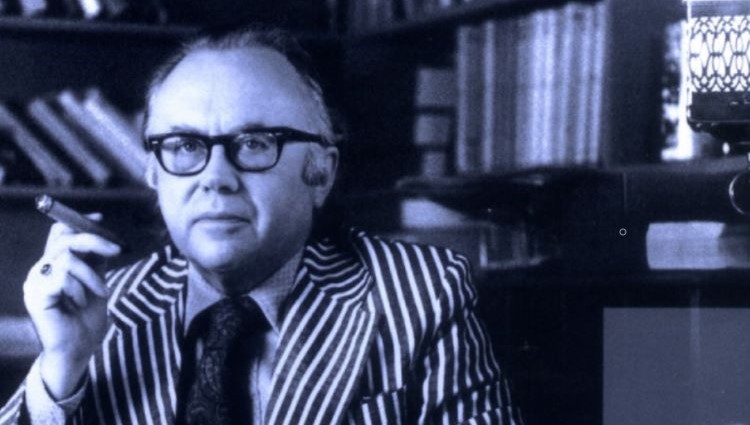
According to Russell Kirk, the moral imagination is the power of knowing man, despite his weaknesses and sinful nature, as a moral being, meant for eternity. It recognizes that human beings, after all, are created in the image of God. Russell Kirk and the Age of Ideology by W. Wesley McDonald (264 pages, University of Missouri, [...]
Why We Need to Read Literature

By |2017-12-07T21:54:27-06:00December 7th, 2017|Categories: Education, Great Books, Imagination, Liberal Learning, Literature, Moral Imagination|

Literature is delightful. It’s wondrous, exciting, and often terrifying fun. It offers us escape without the cost of a plane ticket, adventure without deadlines or endpoints. It’s spontaneous and soul-searching, lengthy and pointed, poignant and hilarious... College is full of books: textbooks and biographies, encyclopedias and novels, history books and essays. You finish your Epic of [...]

The Moral Imagination of “Leave It to Beaver”

By |2020-12-22T23:18:14-06:00October 12th, 2017|Categories: Culture, Family, Marriage, Moral Imagination, Morality, Russell Kirk|

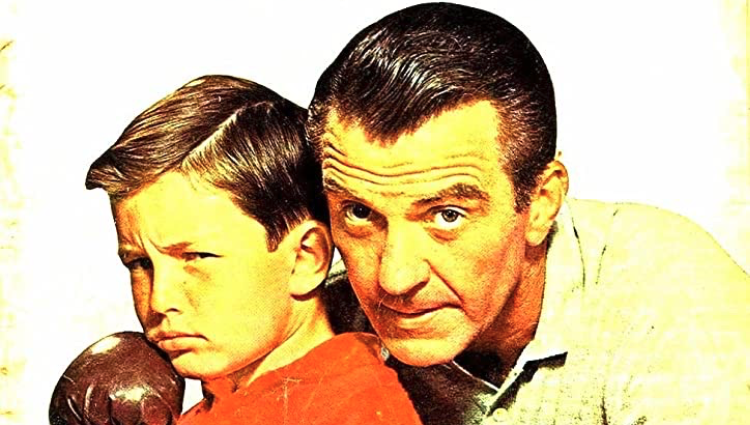
“Leave It to Beaver” was very much a medieval morality play, in which the character of the Beaver repeatedly succumbed to temptation, suffered the consequences, and was guided back on the path of virtue. Russell Kirk defined the moral imagination as “an enduring source of inspiration that elevates us to first principles as it guides [...]

Restoring Poetic Vision in a Myopic Age

By |2021-05-03T15:56:37-05:00September 8th, 2017|Categories: Anthony Esolen, Art, Christian Humanism, Christianity, Culture, Flannery O'Connor, Homer, Imagination, Literature, Moral Imagination, Truth|

In a distorted world, the Christian poet is ultimately like the blind man whose vision Christ restored to see truth through grace, and those who read the poet’s words will find their vision restored as well. Editor’s Note: This essay was originally given as a part of a lecture series for the Cambridge School of [...]

George Panichas, the Moral Imagination, & the Conservative Mind

By |2019-06-17T17:13:20-05:00August 31st, 2017|Categories: Bruce Frohnen, Conservatism, Featured, George A. Panichas, Moral Imagination, Russell Kirk|Tags: , |

There is a divine order of being of which we must be a part. To reject this order and our part therein is to choose madness and make any decent life impossible. As a literary critic, George Panichas shed great light on the relationship between this recognition of the order of being and our ability [...]

What If? The Moral Imagination of Disney’s “Beauty and the Beast”

By |2017-08-31T12:02:36-05:00July 27th, 2017|Categories: Bradley J. Birzer, Charity, Christianity, Conservatism, Edmund Burke, Film, Moral Imagination, Senior Contributors|

The story of Beauty and the Beast is the oldest story in the Christian world. It’s the story about love, sacrifice, and redemption… Several nights ago, I reluctantly watched Disney’s 2017 live version of Beauty and the Beast. I must admit three things before I get into the heart of this essay. First, I’ve never [...]

Edmund Burke, Providence, & Archaism

By |2023-10-19T08:49:55-05:00January 11th, 2017|Categories: Books, Edmund Burke, Moral Imagination, RAK, Russell Kirk|

Practical politics, Edmund Burke knew, is the art of the possible. We cannot alter singlehandedly the climate of opinion, or the institutions of our day, by a haughty adherence to inflexible and abstract doctrines. The Political Reason of Edmund Burke, by Francis Canavan (S.J. Duke University Press, 1960) Edmund Burke and Ireland, by Thomas H.D. [...]

The Romance of Edmund Burke

By |2019-09-05T10:42:41-05:00October 10th, 2016|Categories: Bradley J. Birzer, Conservatism, Edmund Burke, Edmund Burke series by Bradley Birzer, Featured, Moral Imagination, Philosophy, Russell Kirk|

For those of us who love Russell Kirk, T.S. Eliot, and Irving Babbitt, the extravagantly convoluted term, “the moral imagination,” rolls readily off the tongue and warms the heart like few other things. Yet, most of our closest allies on the right scratch their collective and individual heads in confusion. “What is this moral imagination,” [...]

The World of the Poet

By |2021-05-28T12:26:44-05:00June 17th, 2016|Categories: Dante, Fiction, George A. Panichas, Greek Epic Poetry, Homer, Imagination, John Milton, Literature, Moral Imagination, Poetry, Sophocles, Virgil|

Man, it is often said, cannot jump over his own shadow. The poet—and by “poet” I mean a writer of imaginative works in verse or prose—leaps over the universe. Sicut erat in principio et nunc et semper et in saecula saeculorum. I We not only read a novel, we enter into its created world. We [...]

What Is the Moral Imagination?

By |2022-01-20T19:10:28-06:00April 11th, 2016|Categories: Edmund Burke, Eva Brann, Imagination, Irving Babbitt, Moral Imagination, Russell Kirk|

Like many of you, I am sure, my first encounter with the term “the moral imagination” came through reading Russell Kirk. In an attempt to make better sense of what, for me, was a problematic concept, I followed Kirk back to his admitted predecessors on this matter, Irving Babbitt and Edmund Burke. I must confess [...]

Where, Then, Is Time?

By |2023-05-21T11:31:11-05:00January 19th, 2016|Categories: E.B., Eva Brann, Imagination, Moral Imagination, Senior Contributors, St. Augustine, St. John's College, Time|

Let me first explain my odd-sounding title. It is a variation on the most famous question-and-answer about time ever posed. It comes from the eleventh book of Augustine’s Confessions, published about 400 C.E.: This is his question: “What, then, is time?” And this is his preliminary answer: “If nobody asks me, I know; if I [...]

Chesterton, Madmen, and Madhouses

By |2018-10-16T20:24:34-05:00June 14th, 2015|Categories: Christianity, G.K. Chesterton, Literature, Moral Imagination, RAK, Russell Kirk|Tags: |

No man of his time defended more passionately the cause of sanity and “centricity” than did G. K. Chesterton—despite his aversion to watches and his uncalculated picturesqueness of dress. Yet no imaginative writer touched more often than did Chesterton upon lunacy, real or alleged: a prospect of his age with the madhouse for its background. “It [...]

Literature and the Contract of Eternal Society

By |2018-10-16T20:24:35-05:00May 11th, 2015|Categories: Featured, Liberal Learning, Literature, Moral Imagination, RAK, Russell Kirk|

Some years ago, I walked across the braes from Old Cumnock, in Ayrshire, to the village of Ochiltree. Now Ochiltree is the “Barbie” of George Douglas Brown’s grim realistic novel The House with the Green Shutters. And the Scottish village of Ochiltree is dying. Brown described the changes that began to descend upon little Barbie [...]

Conservativism and the Regeneration of the Spirit

By |2018-10-16T20:24:38-05:00April 1st, 2015|Categories: Conservatism, Moral Imagination, Quotation, RAK, Religion, Russell Kirk|

Russell Kirk “The conservative is concerned, first of all, with the regeneration of the spirit and character—with the perennial problem of the inner order of the soul, the restoration of the ethical understanding, and the religious sanction upon which any life worth living is founded. This is conservatism at the highest.” – Russell [...]

Go to Top