The Elephant in the Hearing Room

By |2019-04-25T15:11:33-05:00September 28th, 2018|Categories: Christianity, Congress, Supreme Court|

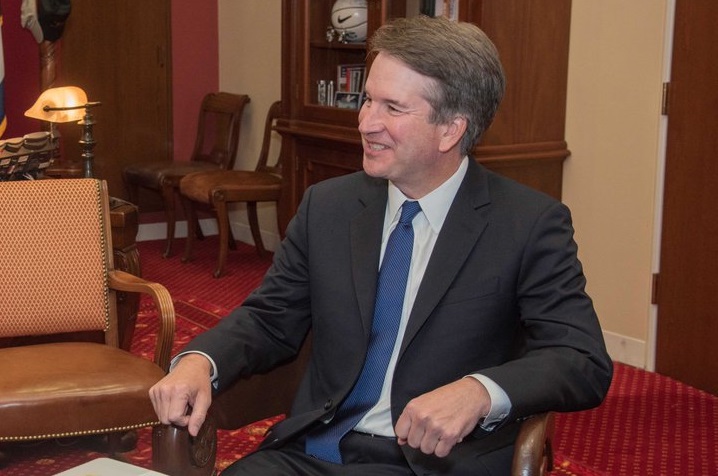
The dual hearing of Christine Blasey Ford and Judge Brett Kavanaugh is portrayed as a mere "he said/she said," with the result hinging on relative credibility. Both appeared credible. But many liars and deceivers appear credible. That is part of our sinful condition. As the Bible says, "The heart of  man is deceitful and desperately [...]
What Andrew Jackson’s Critics Get Wrong

By |2020-12-03T08:11:03-06:00September 24th, 2018|Categories: American Republic, American West, Bradley J. Birzer, In Defense of Andrew Jackson Series by Bradley Birzer, Presidency|

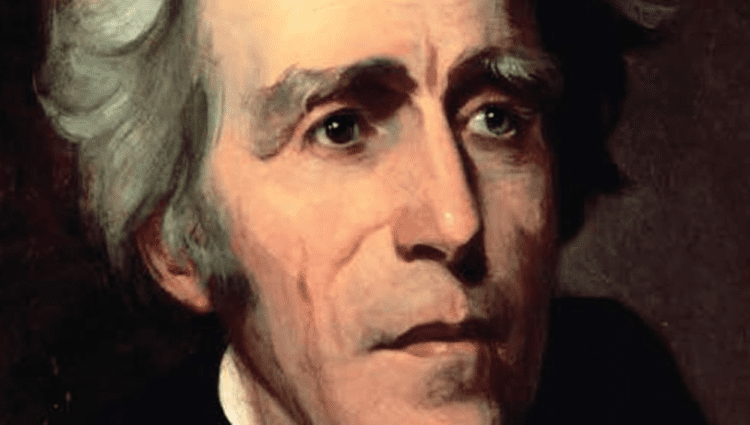
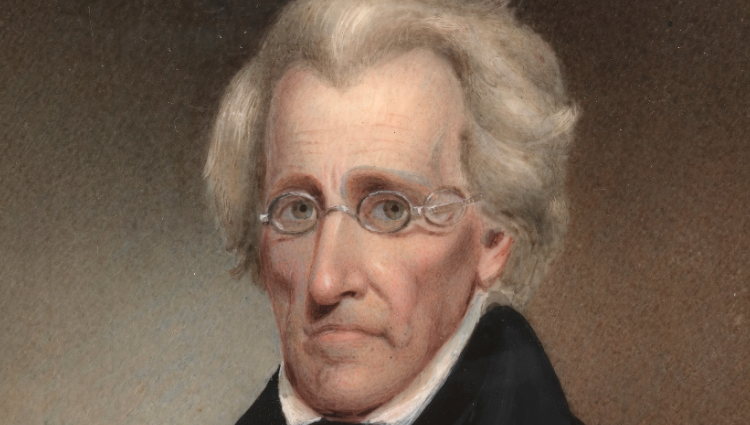
Like all human beings, Andrew Jackson certainly had his faults—sometimes spectacular, brutal, and violent ones—but is it just to label him, as one recent critic has, simply as "a slaver, ethnic cleanser, and tyrant"? Sometime in the last several years, it has become the cultural norm to see President Andrew Jackson as the sum of [...]

Syria: Waist Deep in the Big Muddy

By |2018-09-18T11:01:13-05:00September 18th, 2018|Categories: Foreign Affairs, Joseph Mussomeli, Politics, Terrorism, War|

Like his predecessors, President Trump is now convinced that staying the course militarily throughout the Middle East is our only choice, worrying that a “hasty withdrawal would create a vacuum that terrorists would instantly fill." If that is the standard, we will stay forever... Despite this President’s sometimes confused perspective on international relations, his world [...]

Truth as a Democratic Project

By |2019-04-25T13:09:50-05:00September 18th, 2018|Categories: Democracy, Fr. James Schall, Freedom, Government, Liberty, Philosophy, Reason, Relativism, Truth|

To save democracy from subjectivism, truth must become a democratic project. The greatest of crimes can be enacted in the name of sincerity, authenticity, and “being at peace with oneself.” Each of these criteria looks to one’s own estimate of oneself… During the Presidential Campaign of 1996, in California, President Bill Clinton said that democracy [...]

Seeking No Monsters: Redefining American Exceptionalism

By |2020-07-27T16:13:55-05:00September 16th, 2018|Categories: Foreign Affairs, Ideology, Joseph Mussomeli, Politics, Timeless Essays|

A foreign policy firmly based on consistency, restraint, and adherence to our founding principles would ultimately achieve what most of us mistakenly believe we already possess: an American Exceptionalism admired and envied by the world. Since the founding of the Republic, “American Exceptionalism” has been a guiding principle for candidates seeking high office. Next only [...]

In Defense of Andrew Jackson

By |2021-03-14T14:47:00-05:00September 10th, 2018|Categories: American Republic, Books, Bradley J. Birzer, In Defense of Andrew Jackson Series by Bradley Birzer, Presidency|

The vast majority of Americans think of Andrew Jackson as a despicable man: a scoundrel, an uncouth violent redneck, hell-bent on the imperial expansion of the United States with the American Indians his burnt offerings to whatever god he worshipped. But my research has revealed Jackson as a true American republican, a virtuous man of the [...]

Politics and the Imagination

By |2023-05-21T11:30:17-05:00September 3rd, 2018|Categories: Conservatism, E.B., Eva Brann, Great Books, Imagination, Philosophy, Politics, Senior Contributors|

Applying imagination to politics can lead to political wish-fulfillment fantasies or to the enlivening of real communities from within. The topic "Politics and the Imagination" is at once larger and more restricted than "Politics and the Arts," the theme of this Tocqueville Forum. It is more restricted because I mean to exclude the practical problem [...]

The Tragedy of Democracy Without Authority: Maritain & Thucydides

By |2020-09-11T16:41:40-05:00August 19th, 2018|Categories: Civil Society, Conservatism, Democracy, History, Philosophy, Politics, Thucydides, Timeless Essays|

Democracies were acutely problematic when they did not collectively comprehend the necessity of legitimate authority permeating the polis. Lacking this understanding, power was elevated in authority’s absence. Scrupulous fear of the gods is the very thing which keeps the Roman Commonwealth together. To such an extraordinary height is this carried among them, both in private [...]

The Cornerstone of Conservatism

By |2019-05-07T14:40:38-05:00August 19th, 2018|Categories: American Republic, Christianity, Conservatism, Constitution, Government, Liberalism, Liberty, Politics|

Conservatism is a formal understanding of man. By understanding, I mean a verifiable truth, and by formal, I refer to a distinguishable methodology which permeated the celebrated thoughts of classical antiquity and scholastic medievalism. Conversely, Liberalism is an ideology for man. This is not to say that Conservatism is without its own prescriptions, but only [...]

The Right to Create Your Own Universe?

By |2019-04-25T12:01:47-05:00August 17th, 2018|Categories: Abortion, American Republic, Homosexual Unions, Marriage, Politics, Rights, Supreme Court, Supreme Court Precedent Series|

The Supreme Court apotheosized the right of privacy in its now-famous words: “At the heart of liberty is the right to define one’s own concept of existence, of meaning, of the universe, and of the mystery of human life”… Editor’s Note: This essay continues a discussion of the Supreme Court’s sexual “right of privacy” cases, which [...]

G.K. Chesterton’s “What’s Wrong With the World”

By |2019-04-18T11:17:36-05:00August 8th, 2018|Categories: Civilization, Culture, England, G.K. Chesterton, Politics|

The next time someone tells you that reactionaries and other assorted defenders of the family and private property do not care about the poor, invite them to read G.K. Chesterton’s final words in What’s Wrong with the World… A man of great good cheer, G. K. Chesterton was well known for his sunny disposition and [...]

Immigration: A Troubled History

By |2020-05-18T18:43:08-05:00August 5th, 2018|Categories: American Republic, Culture, History, Immigration, Mark Malvasi|

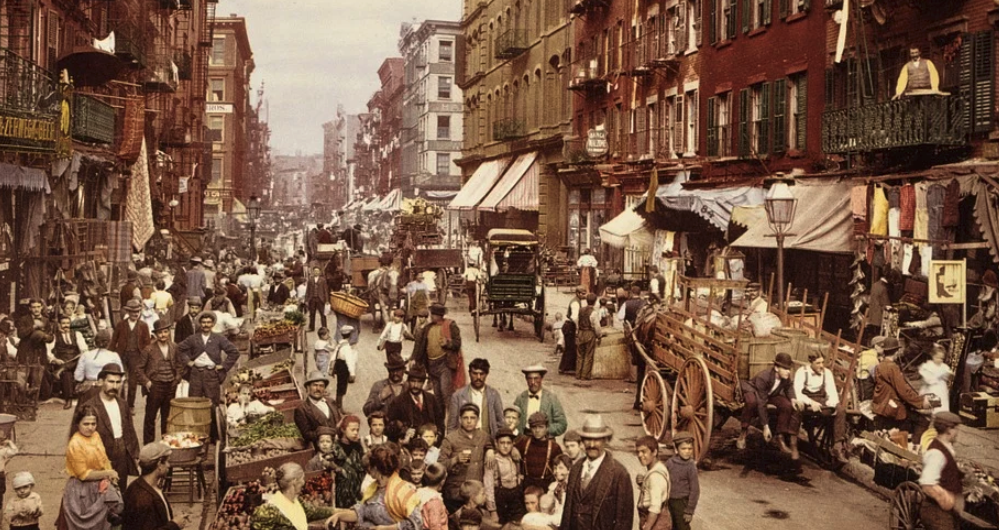
Immigrants became American, or at least what they thought of as American, because they had no alternative. Educated in the rituals and standards of citizenship, they conformed to the vague but robust doctrine of “Americanism,” and sought, above all, to avoid being “un-American.” I. On August 6, 1676, Nicholas Spencer, secretary of the Virginia Colony, [...]

Go to Top