“The Conservative Mind”: An Act of Recovery?

By |2023-05-11T10:39:15-05:00July 10th, 2016|Categories: Conservatism, Democracy in America, Edmund Burke, Featured, Russell Kirk, Ted McAllister, The Conservative Mind, Timeless Essays|

Russell Kirk’s greatest gift to American political thought is his brilliant articulation and cultivation of a rich cultural patrimony that helps define the meaning of our most cherished ideals from within a context that is both historically textured and open to the transcendental. Since the nation’s founding, a salutary tension has informed American political thought—a [...]
Edmund Burke on Healthy & Unhealthy Constitutions

By |2023-10-19T08:50:15-05:00July 8th, 2016|Categories: Conservatism, Constitution, Edmund Burke, Featured, RAK, Russell Kirk|Tags: |

“We are at the beginning of great troubles.” Once upon a time, it was the assumption of most of the people in the world that the fundamental constitutions of their society would endure to the end of time; or at least for a very great while; or certainly for the lifetime of those who had [...]

The Language of Lincoln

By |2020-10-26T00:11:04-05:00July 7th, 2016|Categories: Abraham Lincoln, Language, M. E. Bradford, The Imaginative Conservative|

As a promising young centralist, Abraham Lincoln played the role of champion for what Professor Michael Oakeshott has called the “enterprise associa­tion” theory of the state.[21] While serving as the elected representative of Sangamon (1834—1842), he first made a name for himself by enacting this part. Joining with other soon-to­-be forefathers of the Republican Party, [...]

A Revolution Not Made But Prevented

By |2020-07-08T16:20:05-05:00July 3rd, 2016|Categories: American Founding, Declaration of Independence, Edmund Burke, Featured, RAK, Revolution, Russell Kirk, The Imaginative Conservative, Timeless Essays|

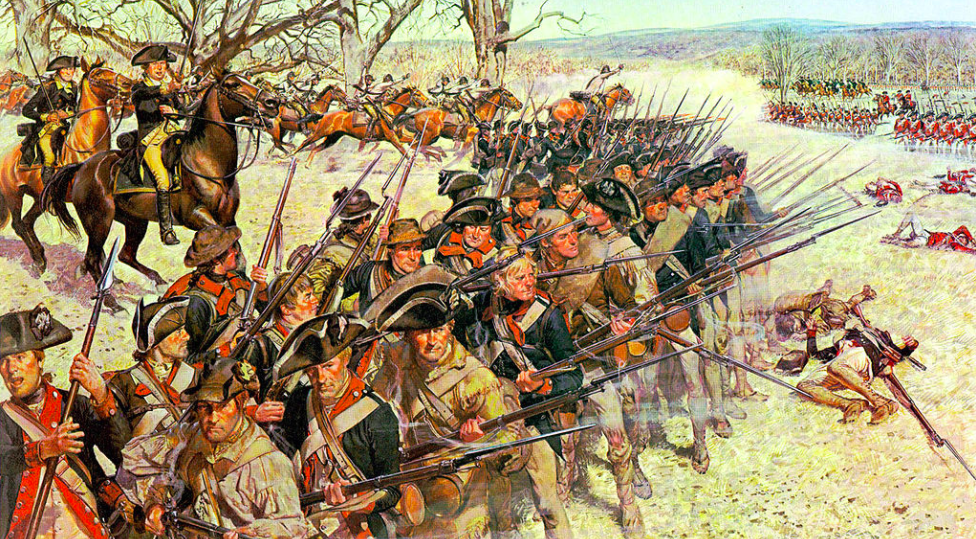
Was the American War of Independence a revolution? It was certainly not the sort of political and social overturn that “revolution” has come to signify. Was the American War of Independence a revolution? In the view of Edmund Burke and of the Whigs generally, it was not the sort of political and social overturn that [...]

The Myth of Abraham Lincoln

By |2020-10-26T00:16:43-05:00June 30th, 2016|Categories: Abraham Lincoln, M. E. Bradford|

After over one hundred years, it continues to be almost impossible for us to ask certain basic questions about the role of Abraham Lincoln in the formation of a characteristically American politics. At every appropriate point of inquiry, the Lincoln myth obtrudes. Since 1865 no one has denied the extraordinary purchase of that imaginative construct upon the idiom and [...]

The Tragic Education

By |2019-06-06T12:30:57-05:00June 22nd, 2016|Categories: Education, Quotation, Richard Weaver, Tragedy|

Perhaps there is nothing in the world as truly educative as tragedy. When you have known it, you’ve known the worst, and probably also you have had a glimpse of the mystery of things. And if this is so, we may infer that there is nothing which educates or matures a man or a people [...]

The Conservatism of Willmoore Kendall

By |2022-03-07T15:48:54-06:00June 20th, 2016|Categories: Conservatism, Featured, Federalist Papers, Richard Weaver, Willmoore Kendall|

(This essay is the fourth in a four-part series; the first may be found here, the second here, and the third here.)   It is clear that Publius’s deliberative process, with its emphasis upon accommodation, harmony, and consensus, is antithetical to the conflict-oriented majoritarianism of the egalitarians. As a corollary proposition, it is essential to note that [...]

The Left-Right Fallacy

By |2021-05-24T13:51:03-05:00June 19th, 2016|Categories: Christendom, Christian Humanism, Christianity, Christopher Dawson, Featured, Politics, Timeless Essays, Western Civilization|

Today’s offering in our Timeless Essay series affords readers the opportunity to join Christopher Dawson as he considers the perils of the left-right fallacy in politics and civil society. —W. Winston Elliott III, Publisher I am very glad to have an opportunity of explaining the reasons why I objected to the current terminology of Left [...]

“Little Gidding”: T.S. Eliot’s Final Answer

By |2022-01-04T04:20:05-06:00June 11th, 2016|Categories: Dwight Longenecker, Literature, Poetry, T.S. Eliot|

The first three of the Four Quartets provide deep connections between significant geography and significant biography for T.S. Eliot. In Burnt Norton, the site of a ruined manor house became the locus for a meditation on what might have been. His visit there with an old college flame, Emily Hale, prompted a poem of nostalgia and [...]

Edmund Burke: A Genius Reconsidered

By |2019-04-07T10:50:44-05:00June 10th, 2016|Categories: Books, Edmund Burke, Featured, George A. Panichas, Russell Kirk|

Edmund Burke: A Genius Reconsidered by Russell Kirk (ISI Books, 2009, 2nd edition). Russell Kirk’s book on Edmund Burke, first published in 1967, now revised and hand­somely re-issued, testifies not only to the “enduring Burke,” but also to the enduring Kirk. As a British statesman and political philosopher of “inspired wisdom,” Burke (1729-1797) continues to address our time [...]

M.E. Bradford & the Intoxicated Air of the Modernist Moment

By |2021-08-12T10:44:26-05:00June 2nd, 2016|Categories: Agrarianism, Aristotle, Books, Dante, Featured, Homer, Literature, M. E. Bradford, Marion Montgomery, Plato, South, Southern Agrarians, St. Augustine|

IV M.E. Bradford The principle underlying the Agrarian­-New Critic’s position as literary critic, shared generally in the New Critical move­ment at large, may be simply put: Some poems are better than other poems. He judges them as things existing in them­selves, made by that intellectual crea­ture—man. The problem term, of course, is better, since it commits intellect, willy­ [...]

M.E. Bradford: Traditionalist as Rememberer

By |2021-08-12T10:47:23-05:00May 26th, 2016|Categories: Agrarianism, Books, Featured, Language, Literature, M. E. Bradford, Marion Montgomery, South, Southern Agrarians, Tradition|

We spoke of much else besides [our business of the day]: of friends and mentors and the tumors of both—their fortunes and misfortunes, their origins and our own; of illustrative stories, many of them drawn from outside the narrow confines of the academy; of adversaries ancient and modern; of our delight in the progress of [...]

Go to Top